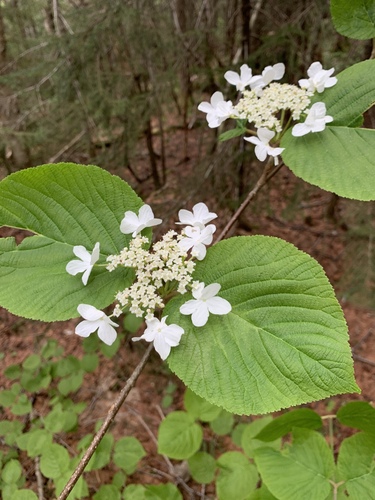


Hobblebush
viburnum lantanoides
Hobblebush (Viburnum lantanoides) is a captivating, native perennial shrub found weaving through the cool, shaded understories of eastern North America's forests. As a quintessential woodland plant, it is widely recognized for its sprawling growth habit, which often creates dense thickets that both shelter wildlife and trip up unwary hikers—giving the plant its memorable common name. Hobblebush provides year-round visual interest and ecological value, from its striking, lacy white flower clusters in the spring to its vibrant purplish-red foliage and dark berries in the autumn. Beyond its aesthetic appeal, this shrub plays a crucial role in the forest ecosystem. Its berries offer vital late-season nourishment to birds and mammals, while its sprawling, rooted branches help stabilize moist woodland soils. Whether you're a hiker navigating its tangled branches or a nature lover admiring its unique floral displays, the hobblebush is a true standout of the Appalachian and northern hardwood forests.
Habitat: Found in cool, moist hardwood forests, often thriving in the shaded understory along stream banks and ravines.
Hobblebush is a sprawling, multi-stemmed shrub typically reaching 1 to 3 meters in height. It is easily identifiable by its large, opposite, heart-shaped (cordate) leaves that feature prominent, deeply impressed veins and serrated edges, turning magnificent shades of deep red and bronze in the fall. In springtime, it produces flat-topped flower clusters up to 15 centimeters across; the cluster boasts a striking ring of large, showy, sterile white flowers that surround a dense center of tiny, fertile, cream-colored blooms. As the season progresses, these flowers give way to clusters of berries that transition from green to bright red, eventually ripening to a dark purplish-black. During winter, the plant exhibits distinctive 'naked' buds—golden-brown, fuzzy, wing-like structures lacking the typical protective scales, which strongly resemble a pair of praying hands.
Category
PlantsRarity
Common
Danger
1/5 · Very low
Snaps
4
Another common name for this plant is 'moosewood,' though it is completely unrelated to the striped maple tree which also shares that nickname.
During the winter, hobblebush buds are entirely 'naked,' meaning they lack the typical protective scales found on most other shrubs, relying instead on a dense coat of fine rusty hairs for protection against the cold.
The common name 'hobblebush' comes from its drooping branches that often take root in the soil, creating loops that 'hobble' or trip passing hikers and horses.
The large, showy outer flowers of its beautiful spring cluster are actually sterile; their sole evolutionary purpose is to act as a billboard to attract pollinators to the tiny, fertile flowers in the middle.
The shrub's long, flexible branches arch downward and naturally take root where they touch the moist forest floor, creating a clonal colony and characteristic tripping loops.
It utilizes a distinct outer ring of large, bright white, sterile flowers acting purely as visual beacons to guide pollinators toward the smaller, less conspicuous fertile flowers in the center.
Highly adapted to the understory, its exceptionally large, heart-shaped leaves maximize surface area to capture limited, dappled sunlight filtering through the dense forest canopy.
As a photosynthetic plant, the hobblebush produces its own energy by utilizing sunlight, water, and atmospheric carbon dioxide.
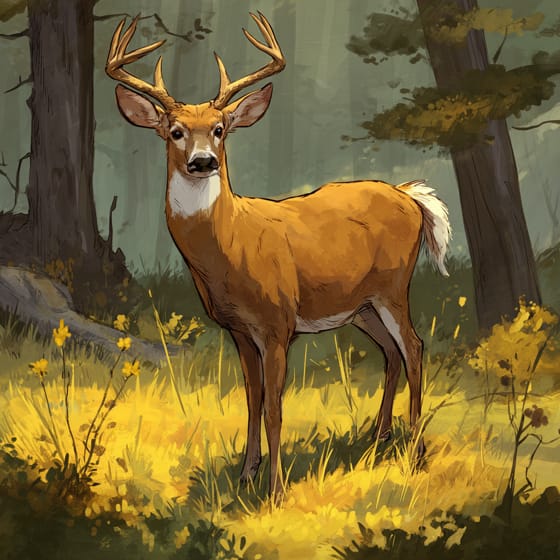
Odocoileus virginianus
Heavily browses on hobblebush twigs and foliage during the winter months.

Bonasa umbellus
Consumes the energy-rich berries during the late summer and fall.
Celastrina ladon
Visits the small, fertile inner flowers for nectar and acts as an early spring pollinator.
No trait badges are assigned for this object yet.
No aliases listed yet.
Collections for this object will appear here as more themes are added.
Danger
1/5 · Very low
No special safety notes yet.
The easiest way to identify Hobblebush is to use the Snappit nature identifier app.
100-300 cm
20-50 years
As a photosynthetic plant, the hobblebush produces its own energy by utilizing sunlight, water, and atmospheric carbon dioxide.
Found in cool, moist hardwood forests, often thriving in the shaded understory along stream banks and ravines.
Zoom in to split clusters and explore where this object has been snapped.

Pennsylvania, US
You might spot Mountain Laurel, Ghost Pipe, and Sweetfern.
View guide →

Massachusetts, US
You might spot Mountain Laurel, Azure Bluet, and Partridgeberry.
View guide →

New York, US
You might spot Allegheny Mountain Dusky Salamander.
View guide →

Pennsylvania, US
You might spot Painted Trillium, Eastern Newt, and Christmas Fern.
View guide →

Massachusetts, US
You might spot Eastern Newt, Ghost Pipe, and Partridgeberry.
View guide →

New York, US
You might spot American Toad and Purple Pitcher Plant.
View guide →
Take the discovery with you
Snap it with Snappit to identify it, learn what makes it special, and add the discovery to your collection.












.jpg&width=800)



_001.jpg&width=800)




