




honey badger
Mellivora capensis
Honey badgers are brave little animals known for their tough skin and fearless nature. They love to dig and can eat many things, including honey, which is why they are named honey badgers!
Habitat: Grasslands
The honey badger has a stocky build with short legs and a distinct appearance. Its body is black, contrasted sharply by a broad white or grayish stripe running from its head down its back to its tail. It also has small eyes and ears.
Category
MammalsRarity
Common
Danger
3/5 · Moderate
Snaps
Be the first to snap!
A honey badger can dig a deep burrow in minutes, disappearing fast from sight!
Honey badgers often eat snakes, even venomous ones, more than actual honey!
One of few animals that uses tools, like logs, to reach food!
Their thick, loose skin makes it tough for predators to bite or hold on!
The honey badger has incredibly thick, loose skin that helps them resist bites and stings from foes.
Honey badgers can resist many snake venoms, which helps them hunt dangerous reptiles safely.
They have long, powerful claws for digging rapidly, helping them find food or escape danger quickly.
The honey badger can use rocks or sticks as tools, which helps them reach hidden food.
These fierce omnivores eat almost anything they can catch, from insects to snakes and roots!
Apis mellifera
Consumes larvae and honey from their nests.

Naja naja
Predates on venomous snakes, resisting their toxins.
Indicator indicator
Bird leads badger to beehives, sharing the sweet reward.
Panthera leo
Occasionally preyed upon by powerful big cats.
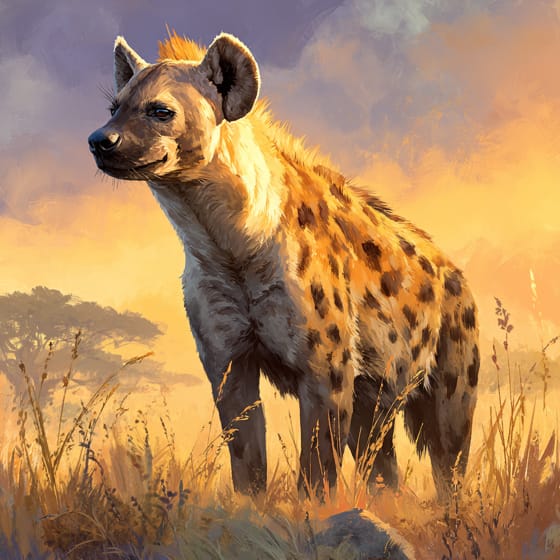
Crocuta crocuta
Hyenas sometimes kill honey badgers over food.
Furry describes animals possessing a dense covering of soft hair or fur.
Solitary animals live alone for most of their lives, only interacting with others for mating or parental care.
This trait identifies organisms whose diet includes both plant and animal matter.
Scavengers consume dead organic matter, helping to decompose carcasses and other waste in the ecosystem.

Burrowing animals dig tunnels and chambers in the ground, using these subterranean structures for shelter, hunting, or breeding.

Grassland habitats are terrestrial biomes dominated by grasses and herbaceous plants, supporting a variety of grazing animals.

This trait describes organisms that manipulate external objects to achieve a specific goal.

Diurnal animals are primarily active during daylight hours, typically resting or sleeping at night.

Describes a species whose presence and role have a disproportionately large effect on its environment.

This trait identifies organisms that exhibit exceptional swiftness in movement for hunting, escape, or travel.
Danger
3/5 · Moderate
Honey badgers are wild animals and should be admired from a safe distance.
The easiest way to identify honey badger is to use the Snappit nature identifier app.
55-107 cm
5-16 kg
8-24 years
28 km/h
These fierce omnivores eat almost anything they can catch, from insects to snakes and roots!
Grasslands
Foraging
Zoom in to split clusters and explore where this object has been snapped.
Recent snaps will appear here as new observations are added.
Take the discovery with you
Snap it with Snappit to identify it, learn what makes it special, and add the discovery to your collection.





.jpg&width=800)


.JPG&width=800)

.jpg&width=800)
