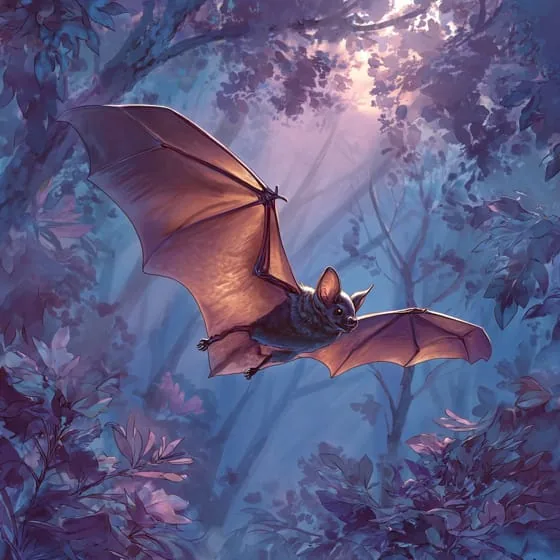





Vampire Bat
Desmodus rotundus
The common vampire bat (Desmodus rotundus) lives from Mexico to Argentina and Chile. It weighs 15–50 g and feeds only on blood, mostly from livestock such as cattle. It finds warm skin with heat-sensing pits around its nose, makes a tiny cut with its razor-sharp teeth and laps up the blood. Unlike almost every other bat, it can walk, run and jump on the ground. Roost-mates share blood meals with bats that went hungry, and the species is a major carrier of rabies to livestock in Latin America.
Also known as Desmodus rotundus, Common Vampire Bat
Rarity: Common
≈30 °C where its heat sensor switches on
≈3 mm cut
≈20 g of blood a night: two tablespoons
59.5% of its weight in one meal (captive bats)
≈4 km/h running speed on a treadmill
9.5× its weight, pushed in about 0.03 s
8.5× past help beats family ties
≈2 days without blood before it starts to starve
20–100 bats in a usual colony
Tap a pin on the model or a part below.
3 heat-sensing pits around the nose
≈3 mm cut in the skin
2 grooves along the sides of the tongue
Not blind large eyes for a bat
Long thumb, with soft pads
9.5× its body weight, pushed in one jump
Hops forwards, backwards and sideways
0 cm of tail
59.5% of its weight in one meal (captive bats)
Only three kinds of bat live on blood. Pick one to repaint the model.
Photos from Wikimedia Commons: faces, teeth, walking, flying, roosting and sharing food.
Measured by scientists and zoos, with comparisons you can picture.
Tap Myth or Fact for each claim, then check the answer.
0 of 8 answered
They make a tiny cut and lap up the blood with their grooved tongue, a bit like a cat drinking milk.[1]
All three vampire bat species live in the Americas. The common vampire bat lives from Mexico to Argentina and Chile.[1, 19, 20]
The bite is described as nearly painless and rarely wakes a sleeping animal.[1]
Pits around the nose contain nerves with a heat sensor that switches on at about 30 °C, so the bat can feel warm skin.[2]
The common vampire bat walks, hops and even runs, using its folded wings as front legs.[1, 4]
In one study, 64% of the pairs of bats that shared food were not related. Past help mattered more than family.[8]
Captive vampire bats drank an average of 59.5% of their body weight in blood in 30 minutes or less.[14]
In Peru, a two-year cull lowered bat numbers but did not cut rabies cases in livestock. Culling after rabies arrived even seemed to help the virus spread faster.[23]
Vampire bats grow up slowly and can live a long time for such a small mammal.
The common vampire bat carries rabies to livestock and sometimes people. Scientists are testing smarter ways to stop it than killing bats.
23
people died in one outbreak
In 2011, 21 school-age children and 2 adults in and around one village in Peru died of rabies passed on by common vampire bats.[22]
6×
more benefit than cost
In Mexico, vaccinating livestock against rabies was worth more than six times what it cost. Killing bats was very unlikely to pay off.[26]
2.6×
more bats protected
Tests with a harmless glowing marker in Peruvian colonies suggest a vaccine gel that bats spread to each other could protect up to 2.6 times more bats than the same effort with a normal vaccine.[24]
86%
roosts in human-made places
In São Paulo state, Brazil, where cattle caught rabies, 86% of the vampire bat roosts mapped were in abandoned houses, manholes and other human-made places.[27]
≈50 km
from the US border
Vampire bats have been found within about 50 km of Texas. Models suggest suitable places may exist in far southern Texas and southern Florida.[25]
Never touch a bat. Anyone bitten or scratched by a bat should see a doctor straight away.
These are the only three bats that live on blood. All three are found in the Americas.
| Common vampire bat | White-winged vampire bat | Hairy-legged vampire bat | |
|---|---|---|---|
| Weight[1, 19, 20] | 15–50 g | 30–45 g | 30–40 g |
| Main food[1, 19, 20] | Blood of mammals, especially livestock | Blood of birds | Blood of birds |
| Look[1, 19, 20] | Greyish-brown, paler below; long thumbs | Cinnamon-brown; white wing edges; short thumb | Reddish to sooty brown; small ears, short nose, hairy legs |
| Teeth[19, 20] | 20 | 22 | 26 |
| Range[1, 19, 20] | Mexico to Argentina and Chile | Mexico and Central America to tropical South America | Southern Texas to eastern Peru and southern Brazil |
All three are listed as Least Concern by the IUCN.
No. It is common, and cattle ranching has given it more food than ever. The bigger problem is how people try to control it.
IUCN Red List
Least Concern (LC)
Least Concern on the IUCN Red List. Populations have grown where livestock were brought in, because cattle and horses are an easy, plentiful food.[21, 1]
IUCN Red List: Least Concern (Red List version 2022.2)
Vaccinate the cattle6×
In Mexico, vaccinating livestock paid back more than six times its cost.[26]
Vaccines that spread by grooming
Scientists are testing vaccines that bats would spread to each other by touch. Models predict they would work better than culling.[24]
Rethinking culls
A study in Peru found that culling did not reduce rabies in livestock, and reactive culls may have sped up the virus’s spread.[23]
12 questions. Every answer is somewhere on this page.
Question 1 of 12Score 0
Answer: It laps it up with its tongue. It makes a tiny cut and laps the blood with its grooved tongue.
Answer: Heat. They sense heat, helping the bat find warm skin where blood runs close to the surface.
Answer: About 30 °C. Its shortened TRPV1 switches on at about 30 °C, compared with about 40 °C for the normal version.
Answer: Stops blood from clotting. Draculin blocks clotting, so the little wound keeps flowing while the bat laps.
Answer: About 60%. On average 59.5% of its body weight, in 30 minutes or less.
Answer: To get rid of water so it is light enough to fly. Blood is mostly water. Getting rid of it quickly keeps the bat light.
Answer: Its folded wings. Its wings are much stronger than its legs, so the front limbs do the pushing.
Answer: Up to about 4 km/h. About 4 km/h (2.5 miles an hour), in a bounding gallop.
Answer: Whether the partner had fed it before. Food received before was 8.5 times more important than being related.
Answer: Two days. It can begin to starve after about two days, which is why shared meals matter.
Answer: Mexico, Central and South America. From Mexico to Argentina and Chile. All three vampire bats live in the Americas.
Answer: Vaccinating livestock. Vaccinating livestock was worth more than six times its cost; bat control was very unlikely to pay off.
Diet, food web, safety and badges from the Snappit field guide.
Vampire bats are unique mammals that exclusively drink blood from sleeping animals, a diet called sanguinivory.
Primary Foods

CattleHunts
feeds on their blood at night.

HorseHunts
drinks blood from sleeping horses.

Domestic DogHunts
occasionally feeds on domestic dogs.
Danger 2/5 · Low
Vampire bats are not found near people, but it's important to stay away from wild animals.
Compare ears, muzzle, tail, feet and coat markings. Size is hard to judge without something nearby for scale, and young mammals may not have adult coloring yet. Mammal Identifier: upload a photo and compare the visible details.
7-9 cm
28-35 cm
0.015-0.05 kg
5-9 years
30 km/h
Caves
Only blood. The common vampire bat prefers livestock such as cattle, but also feeds on wild animals and sometimes on people. It needs about two tablespoons (about 20 g) of blood a night.
No. A vampire bat makes a tiny cut with its razor-sharp front teeth and laps up the blood with its grooved tongue. A protein in its saliva, draculin, stops the blood from clotting.
Sometimes, especially where people sleep in open houses near bat roosts. Bites on livestock are far more common. Because vampire bats can carry rabies, anyone bitten or scratched by a bat should see a doctor straight away.
They use sight, smell, hearing and echolocation to find an animal, then heat-sensing pits around the nose to find a warm spot where blood flows close under the skin.
Yes. A bat that fed well will bring up some blood for a roost-mate that went hungry. Bats share with relatives and with unrelated friends, and a bat that has helped others in the past gets more help when it needs it.
Yes. Unlike most bats, the common vampire bat walks, hops and runs on all fours, using its folded wings and long thumbs as front legs. It can also jump almost straight up into flight.
The common vampire bat has been found within about 50 km of Texas, but not in recent times in the US. The hairy-legged vampire bat’s range is listed as reaching southern Texas.
No. The common vampire bat is listed as Least Concern by the IUCN, and its numbers have grown where livestock were introduced.
Take the discovery with you
Snap it with Snappit to identify it, learn what makes it special, and add the discovery to your collection.


 Regenerative
 Vampiric
 Nocturnal
 Venomous