



House Flies And Allies
muscidae
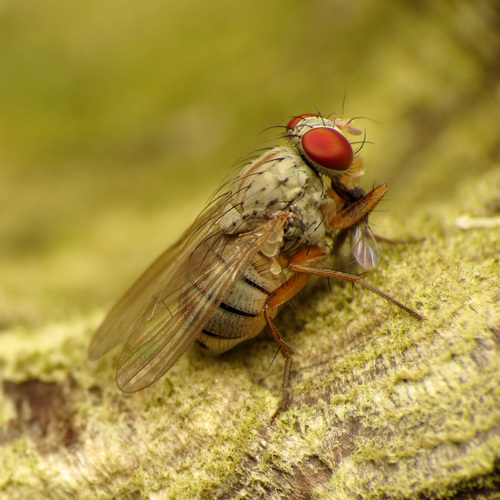
The family Muscidae, commonly known as house flies and their allies, encompasses a vast and globally distributed group of insects. While often dismissed as mere household pests, these remarkable survivors are highly specialized creatures that have successfully adapted to almost every environment on Earth. They play crucial, yet underappreciated, ecological roles as decomposers and scavengers, breaking down decaying organic matter and returning vital nutrients to the soil. Beyond their environmental utility, muscid flies are a cornerstone of the food web, serving as a primary protein source for a multitude of birds, reptiles, amphibians, and predatory insects. Although some species are infamous for transmitting pathogens to humans and livestock, their complex biology, lightning-fast reflexes, and intricate flight mechanics make them fascinating subjects of scientific study and true marvels of evolutionary adaptation.
Habitat: Found in virtually every terrestrial environment globally, they are most heavily concentrated in areas with abundant decaying organic matter, agricultural settings, and human habitations.
Muscid flies are typically stout-bodied, small to medium-sized insects, ranging from dull gray or black to metallic blue and green hues. A key visual identifier for many common species, such as the ubiquitous house fly, is the presence of four dark, longitudinal stripes down the gray thorax. They feature large, reddish compound eyes that dominate the head, a single pair of translucent, membranous wings, and specialized mouthparts adapted either for sponging up liquids or, in some biting species, piercing skin. Their bodies and legs are sparsely covered in sensory hairs.
Category
InsectsRarity
Common
Danger
1/5 · Very low
Snaps
Be the first to snap!
A single female house fly can lay up to 500 eggs in her short lifetime, allowing populations to explode rapidly in warm weather.
Because they lack teeth or jaws to chew, flies must vomit digestive enzymes onto their solid meals to turn them into a liquid soup before eating.
House flies literally taste their food by stepping on it; their tarsi (feet) are covered in highly sensitive chemoreceptors that detect sugars and nutrients.
To a house fly, human movements appear to happen in slow motion due to their incredibly fast visual processing speeds, which is why they are so hard to swat.
They possess an extrudable proboscis that acts like a sponge, allowing them to secrete saliva onto solid food to liquefy it before slurping it up.
Specialized glandular pads on their feet called pulvilli secrete a sticky fluid, enabling them to easily scale smooth vertical surfaces and walk upside down on ceilings.
Their massive compound eyes grant them an exceptional flicker fusion rate, allowing them to process visual information extremely quickly and evade swats in milliseconds.
Adults primarily feed on liquid or semi-liquid organic matter, including food waste and nectar, while some species consume blood; larvae are scavengers of decaying matter.
Age differences: Larvae (maggots) actively consume solid decaying organic matter and feces, whereas adults rely on liquidized foods or nectar.

Hirundo rustica
Provides a crucial aerial food source for insectivorous birds.
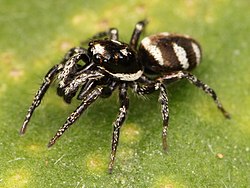
Salticus scenicus
Hunted by active visual predators on walls and window sills.
Bos taurus
Biting species within the family (like the stable fly) parasitize livestock for blood meals.
Social animals live in organized groups, cooperating for survival benefits such as foraging, defense, and raising offspring.
This trait identifies organisms whose diet includes both plant and animal matter.
Scavengers consume dead organic matter, helping to decompose carcasses and other waste in the ecosystem.
Describes organisms that break down dead organic material, recycling nutrients back into the ecosystem.
Diurnal animals are primarily active during daylight hours, typically resting or sleeping at night.
Describes a species whose presence and role have a disproportionately large effect on its environment.
Pertaining to species that are significantly smaller than typical or average for their kind.
This trait identifies organisms that exhibit exceptional swiftness in movement for hunting, escape, or travel.
This habitat trait indicates species that can coexist with humans in urban and suburban environments, utilizing man-made structures and green spaces.
Describes organisms that transfer pollen, enabling the fertilization and reproduction of plants.
No aliases listed yet.
Collections for this object will appear here as more themes are added.
Danger
1/5 · Very low
No special safety notes yet.
Look for six legs, antennae, three body sections and the shape of the wings. Beetles have hardened front wings; flies have just one working pair. Tiny insects may need a close view before their group is clear. Insect Identifier: upload a photo and compare the visible details.
0-1 cm
1-2 cm
0.00001-0.00003 kg
0 years
8 km/h
Adults primarily feed on liquid or semi-liquid organic matter, including food waste and nectar, while some species consume blood; larvae are scavengers of decaying matter.
Found in virtually every terrestrial environment globally, they are most heavily concentrated in areas with abundant decaying organic matter, agricultural settings, and human habitations.
Zoom in to split clusters and explore where this object has been snapped.
Recent snaps will appear here as new observations are added.
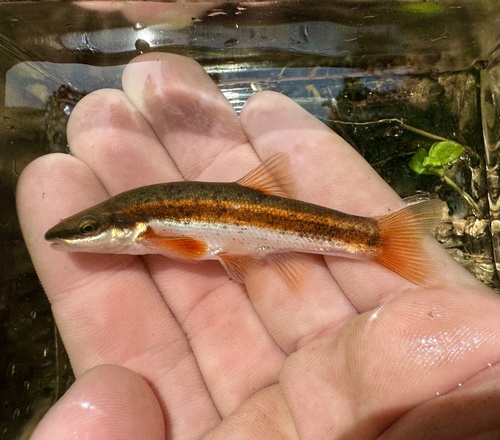
Virginia, US
You might spot Eastern Blacknose Dace and Common Jewelweed.
View guide →

British Columbia, CA
You might spot Pacific Banana Slug and Arctic Butterbur.
View guide →
Take the discovery with you
Snap it with Snappit to identify it, learn what makes it special, and add the discovery to your collection.