





Hump-Backed Beewolf
philanthus gibbosus
The Hump-Backed Beewolf is a fascinating insect that hunts bees! It uses its clever skills to catch its food and is known for its unique hump on its back.
Habitat: Hump-Backed Beewolves can be found in sandy areas and meadows where bees are abundant.
The Hump-Backed Beewolf has a black body adorned with bright yellow markings, especially on its abdomen, which tapers slightly. It features a noticeable 'hump' on its thorax and smoky wings, making it easily distinguishable from other wasps.
Category
InsectsRarity
Common
Danger
1/5 · Very low
Snaps
Be the first to snap!
Each female beewolf can dig multiple tunnels, each housing several bee-filled cells.
Female beewolves carefully stock their underground nurseries with paralyzed bees!
Male beewolves often mark plants with scent to attract females and defend their territory!
They sometimes 'test' their burrows by buzzing loudly to check for vibrations.
Hump-Backed Beewolf can paralyze prey with its powerful venomous stinger, ensuring a fresh food supply for its hungry larvae.
Hump-Backed Beewolf can excavate intricate burrows in sandy soil because its strong legs and mandibles are adapted for digging.
Hump-Backed Beewolf can locate specific bee species by sensing their unique chemical cues, helping it find preferred prey.
Hump-Backed Beewolf can apply a special antibacterial secretion to its paralyzed prey, keeping it fresh for its developing young.
Adult beewolves drink nectar, but hunt and paralyze various bees to feed their hungry larvae.
Age differences: Adults feed on nectar, while larvae consume paralyzed bees brought by the mother.
Apis mellifera
Primary prey item for provisioning beewolf larvae.
Bombus impatiens
Larger bees occasionally targeted as prey for larvae.
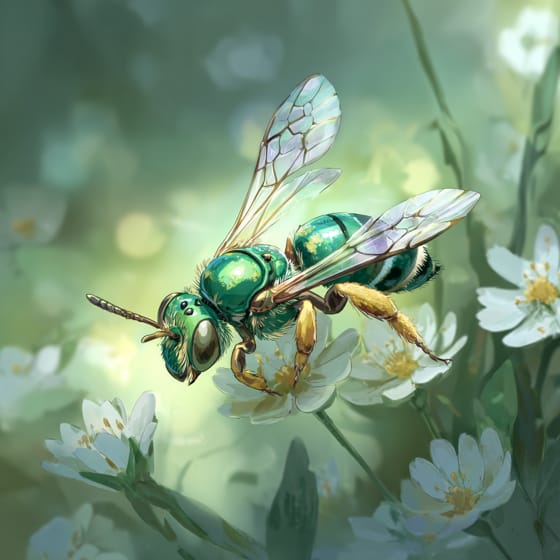
Halictus ligatus
Smaller bees often targeted for larval provisions.
Solidago canadensis
Adult beewolves feed on nectar from its abundant flowers.
Solitary animals live alone for most of their lives, only interacting with others for mating or parental care.
Colorful describes organisms or objects displaying a wide range of bright and distinct colors.
This trait identifies organisms whose diet consists entirely or primarily of animal tissue.
Diurnal animals are primarily active during daylight hours, typically resting or sleeping at night.

Describes organisms that transfer pollen, enabling the fertilization and reproduction of plants.
Danger
1/5 · Very low
No special safety notes yet.
The easiest way to identify Hump-Backed Beewolf is to use the Snappit nature identifier app.
15-30 mm
8-15 mm
20-40 days
25 km/h
Adult beewolves drink nectar, but hunt and paralyze various bees to feed their hungry larvae.
Hump-Backed Beewolves can be found in sandy areas and meadows where bees are abundant.
Pursuit
Zoom in to split clusters and explore where this object has been snapped.
Recent snaps will appear here as new observations are added.

Connecticut, US
You might spot Striped Wintergreen and Common Eastern Bumble Bee.
View guide →

Connecticut, US
You might spot Striped Wintergreen and Common Eastern Bumble Bee.
View guide →
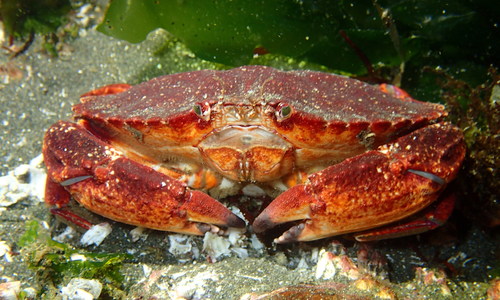
British Columbia, CA
You might spot Red Rock Crab, Dungeness Crab, and Salal.
View guide →
Take the discovery with you
Snap it with Snappit to identify it, learn what makes it special, and add the discovery to your collection.








.jpg&width=800)



