.jpg&width=800)





Indian-Meal Moth
Plodia interpunctella
The Indian-Meal Moth is a small insect that loves to eat grains and dried fruits. They are often found in kitchens and pantries, where they can be a little pesky but are fascinating to watch!
Habitat: Urban areas
The Indian-Meal Moth has distinctive bicolored forewings; the inner third is pale yellowish-gray, contrasting sharply with the reddish-brown or bronze outer two-thirds, which often feature darker streaks. Its hindwings are uniformly a pale, silvery-gray. This striking wing pattern visually sets it apart from other common pantry moths.
Category
InsectsRarity
Common
Danger
1/5 · Very low
Snaps
3
A single female moth can lay over 300 eggs in just a few days!
Despite being tiny, these moths are found on every continent except icy Antarctica!
Their tiny caterpillars can chew through paper, thin plastic, and cardboard food bags!
They get their name because they love to eat cornmeal, historically called 'Indian meal'!
Indian-Meal Moths have mottled wings that help them blend into stored food packaging and dim pantry environments.
Indian-Meal Moth caterpillars can spin protective silken webs over their food source, which helps them feed undisturbed.
Indian-Meal Moths have highly sensitive antennae that help them detect the faint scent of stored grains and nuts.
Larvae munch on dried grains, nuts, and spices.
Age differences: Adult moths do not eat; only the larvae consume food.
Steatoda triangulosa
traps adult moths in its irregular web.
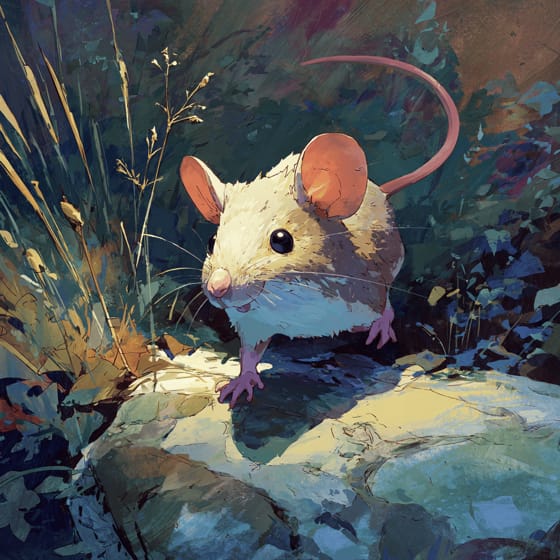
Mus musculus
preys on larvae and pupae in food storage areas.
Trichogramma pretiosum
lays eggs inside Indian-Meal Moth eggs, preventing hatching.
Solitary animals live alone for most of their lives, only interacting with others for mating or parental care.
Colorful describes organisms or objects displaying a wide range of bright and distinct colors.
This trait characterizes organisms whose diet consists entirely or primarily of plant material.
Pertaining to species that are significantly smaller than typical or average for their kind.

This habitat trait indicates species that can coexist with humans in urban and suburban environments, utilizing man-made structures and green spaces.

Nocturnal animals are primarily active during the nighttime hours, typically resting or sleeping during the day.

Describes organisms that transfer pollen, enabling the fertilization and reproduction of plants.
Danger
1/5 · Very low
Don't touch moths or insects without asking an adult first.
The easiest way to identify Indian-Meal Moth is to use the Snappit nature identifier app.
16-20 mm
8-10 mm
5-7 days
Larvae munch on dried grains, nuts, and spices.
Urban areas
Foraging
6
Zoom in to split clusters and explore where this object has been snapped.

Massachusetts, US
You might spot Snow Leopard, Jaguar, and Canis Lupus Baileyi.
View guide →

Arizona, US
You might spot Saguaro.
View guide →

South Carolina, US
You might spot Brown-Headed Cowbird and Eastern Box Turtle.
View guide →
Take the discovery with you
Snap it with Snappit to identify it, learn what makes it special, and add the discovery to your collection.








.jpg&width=800)



