





interrupted clubmoss
Spinulum annotinum
The interrupted clubmoss is a special plant that looks like a tiny tree! It has green, needle-like leaves and grows in shady, damp places. This plant is very old and has been around since the time of dinosaurs!
Habitat: Forests
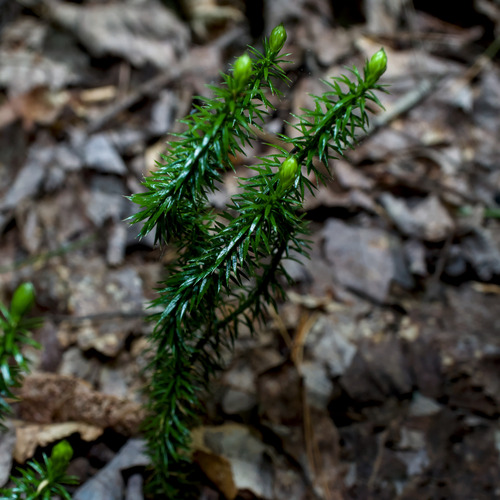
The interrupted clubmoss has upright, branching stems covered in small, needle-like green leaves, giving it a spiky texture. Its unique cone-like spore structures (strobili) are distinctively "interrupted" by a section of regular leaves along the stem.
Category
PlantsRarity
Common
Danger
1/5 · Very low
Snaps
6
Clubmoss spores were once used as flash powder for early photography!
Despite its name, it's not a moss at all, but a "living fossil" plant!
Its ancient ancestors were tree-sized giants millions of years ago!
Some people believe finding clubmoss brings good luck in the forest!
Interrupted clubmoss reproduces using tiny spores, an ancient survival method allowing it to spread widely without needing flowers or seeds.
It grows long underground stems called rhizomes, creating a hidden network that helps it spread across the forest floor and survive.
This clubmoss stays green even in winter, letting it make food from sunlight whenever possible, unlike plants that lose their leaves.
Its spore-bearing cones are uniquely 'interrupted' by regular leaves, creating distinctive towers that release spores for reproduction.

Odocoileus virginianus
Deer may occasionally browse its tough, evergreen leaves.
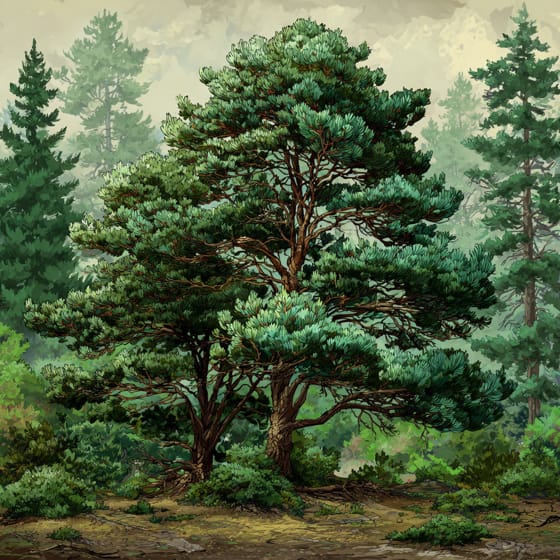
Pinus strobus
Thrives in the cool, shaded understory provided by pine trees.
Sorex cinereus
Small shrews often find cover within its dense, low-growing stems.
Shade tolerant plants are adapted to grow and thrive in areas with low light levels, requiring less direct sunlight.
Spore-producing organisms reproduce by releasing small, often single-celled, reproductive units called spores.
This trait signifies organisms belonging to a very old evolutionary group with ancestors dating back millions of years.
Forest habitats are terrestrial environments dominated by dense tree cover, supporting a high diversity of plant and animal life.

This trait characterizes organisms with an exceptionally long lifespan compared to others of their kind.

Possessing sharp, pointed projections or spines on the body or surface.

Pertaining to species that are significantly smaller than typical or average for their kind.
No aliases listed yet.
Danger
1/5 · Very low
Always look but don't touch plants unless you know they are safe.
The easiest way to identify interrupted clubmoss is to use the Snappit nature identifier app.
10-30 cm
No
None
Perennial
Forests
Zoom in to split clusters and explore where this object has been snapped.
May 17, 2026
Mohawk TrailPhoto attribution
(c) Eli Talhouk, some rights reserved (CC BY)
License: CC BY 4.0 ↗
Image may be shown cropped inside the card frame.

Pennsylvania, US
You might spot Painted Trillium, Eastern Newt, and Christmas Fern.
View guide →

Massachusetts, US
You might spot Eastern Newt, Ghost Pipe, and Partridgeberry.
View guide →

Pennsylvania, US
You might spot Steeplebush, Elk, and Eastern Newt.
View guide →

New Hampshire, US
You might spot Creek Chub, Eastern Newt, and Moose.
View guide →

Massachusetts, US
You might spot American Toad, Hobblebush, and Mountain Laurel.
View guide →

Maine, US
You might spot Northern Whitecedar and Eastern White Pine.
View guide →
Take the discovery with you
Snap it with Snappit to identify it, learn what makes it special, and add the discovery to your collection.








.jpg&width=800)



_001.jpg&width=800)


