

Jalysus
jalysus
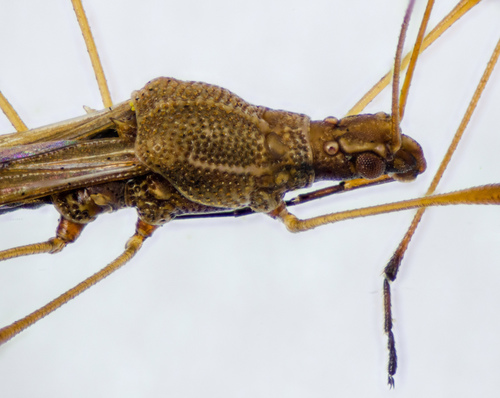
Jalysus is a genus of stilt bugs within the family Berytidae, easily recognized by their exceptionally slender bodies and long, delicate, thread-like legs. These slow-moving insects are often seen navigating through dense vegetation, blending seamlessly with dry grass stems and twigs. While they look fragile, Jalysus species are highly resilient and play an intriguing ecological role as omnivorous feeders. They are particularly known for their close association with plants that have sticky glandular hairs, which they can traverse with remarkable ease without getting stuck.
Habitat: Typically found in meadows, agricultural fields, and domestic gardens, specifically residing on plants with sticky, glandular hairs such as nightshades, tobacco, and evening primroses.
Jalysus bugs feature an elongated, needle-thin body measuring about 1 centimeter in length, colored in shades of pale yellowish-brown, straw, or greenish-brown. Their most prominent identifiers are their remarkably long, thin legs and antennae, which possess distinctive swollen, darker tips. The head features red or dark eyes, and the thorax often bears small spines or nodules depending on the species. Their delicate wings lie flat along their back when at rest, matching the body's coloration to enhance their camouflage against plant stems.
Category
InsectsRarity
Common
Danger
1/5 · Very low
Snaps
Be the first to snap!
Despite their delicate look, they are highly valued by farmers as natural predators that eat the eggs of destructive pests like the corn earworm.
Their extremely long, thin legs have specialized tips that prevent them from getting trapped by the sticky protective glue of hairy plants.
They often display a distinctive rocking behavior when walking, mimicking debris or dry twigs moving in the wind to fool predators.
Specially adapted tarsi allow them to walk freely over sticky, glandular plant trichomes that trap and kill other small insects.
Their ultra-slender frame and slow, swaying movements mimic small twigs swaying in the breeze, effectively hiding them from predators.
Equipped with a versatile piercing-sucking rostrum, they can seamlessly transition from drinking plant juices to preying on insect eggs and small pests.
Feeds opportunistically on both plant juices and small soft-bodied invertebrates, especially insect eggs and aphids.
Helicoverpa zea
Feeds on the eggs of this major agricultural pest, providing natural biological control.

Solanum carolinense
Uses this sticky-haired plant as both a primary shelter and a source of supplementary plant juices.
Nicotiana tabacum
Lays eggs on and feeds upon this cultivated crop, preying on aphids while occasionally sipping plant sap.
No trait badges are assigned for this object yet.
No aliases listed yet.
Collections for this object will appear here as more themes are added.
Danger
1/5 · Very low
No special safety notes yet.
Look for six legs, antennae, three body sections and the shape of the wings. Beetles have hardened front wings; flies have just one working pair. Tiny insects may need a close view before their group is clear. Insect Identifier: upload a photo and compare the visible details.
1+ cm
1+ cm
0.00001+ kg
1+ years
2 km/h
Feeds opportunistically on both plant juices and small soft-bodied invertebrates, especially insect eggs and aphids.
Typically found in meadows, agricultural fields, and domestic gardens, specifically residing on plants with sticky, glandular hairs such as nightshades, tobacco, and evening primroses.
Zoom in to split clusters and explore where this object has been snapped.
Recent snaps will appear here as new observations are added.
Take the discovery with you
Snap it with Snappit to identify it, learn what makes it special, and add the discovery to your collection.