





Carolina horsenettle
Solanum carolinense
The Carolina horsenettle is a plant with spiky leaves and pretty purple flowers. It grows in sunny places and can be found in fields and gardens. Be careful, as its berries can be harmful if eaten!
Habitat: Fields and gardens
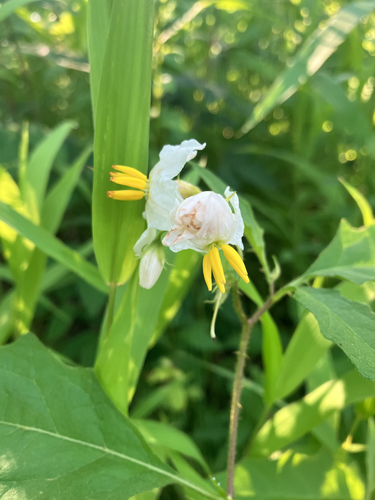
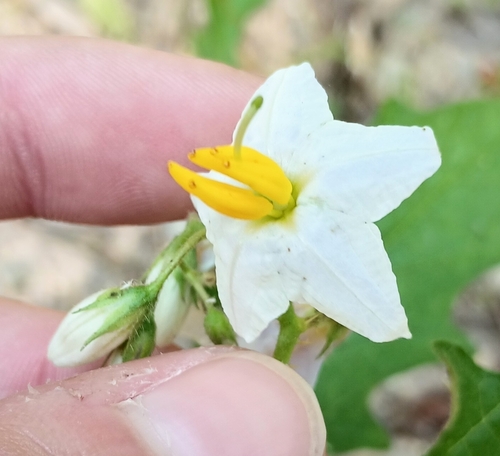
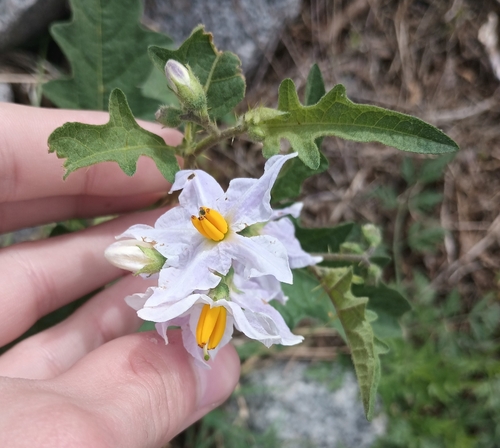
The Carolina horsenettle is a prickly plant featuring thorny stems and small, star-shaped flowers typically purple or white with yellow centers. Its distinctive yellow-orange berries, resembling tiny tomatoes, grow in clusters and are a key identification feature.
Category
PlantsRarity
Common
Danger
3/5 · Moderate
Snaps
60
Each plant can produce hundreds of berries, spreading thousands of tiny seeds!
It's a cousin to tomatoes and potatoes, even though its berries are not safe to eat!
Its name comes from the plant's prickliness and its potential to harm grazing animals!
The seeds can stay alive in the soil for over 100 years, waiting to grow!
Carolina horsenettle has sharp thorns on its stems and leaves that help it defend against hungry animals trying to eat it.
Carolina horsenettle can grow deep, spreading roots that help it survive droughts and sprout new plants after being cut.
Carolina horsenettle produces toxic compounds throughout its parts, which helps deter most herbivores from making it their meal.

Lema trilineata
Its larvae and adults feed on the leaves.
Apis mellifera
Visits its flowers for nectar and pollen collection.
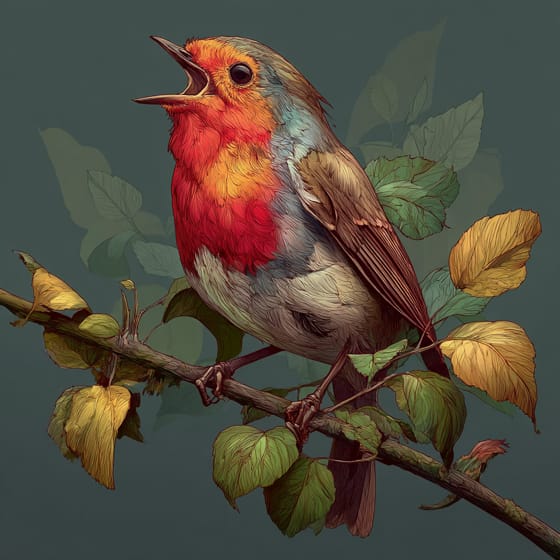
Turdus migratorius
Birds eat the berries, helping to disperse the seeds.
Flowering plants are any plants that produce flowers as part of their reproductive cycle.
Summer blooming plants produce their flowers during the summer season, often providing vibrant color when many other plants have finished.
Fruit-bearing plants produce fruits, which are the mature ovaries of flowering plants containing seeds.
Colorful describes organisms or objects displaying a wide range of bright and distinct colors.

Grassland habitats are terrestrial biomes dominated by grasses and herbaceous plants, supporting a variety of grazing animals.

Possessing sharp, pointed projections or spines on the body or surface.

Toxic organisms contain substances that are poisonous and can cause adverse effects upon exposure.

Poisonous organisms produce toxins that can cause harm when ingested, inhaled, or absorbed through contact.
No aliases listed yet.
Danger
3/5 · Moderate
Don't eat the berries or touch the spiky parts of the plant.
The easiest way to identify Carolina horsenettle is to use the Snappit nature identifier app.
30-100 cm
30-60 cm
1-2.5 cm
Late spring to early fall
No
Moderate
Perennial
Zoom in to split clusters and explore where this object has been snapped.
Jun 19, 2026
Shaw Nature ReservePhoto attribution
(c) Laurie, some rights reserved (CC BY)
License: CC BY 4.0 ↗
Image may be shown cropped inside the card frame.
May 17, 2026
Caldwell Street Historic DistrictPhoto attribution
(c) Raven Dandridge, some rights reserved (CC BY)
License: CC BY 4.0 ↗
Image may be shown cropped inside the card frame.
May 1, 2026
Columbia CanalPhoto attribution
(c) Raven Dandridge, some rights reserved (CC BY)
License: CC BY 4.0 ↗
Image may be shown cropped inside the card frame.

Tennessee, US
You might spot House Sparrow, Northern Mockingbird, and Gulf Fritillary.
View guide →

Alabama, US
You might spot Anole, Eastern Gray Squirrel, and Asian Lady Beetle.
View guide →

Maryland, US
You might spot Crane-Fly Orchid, Fragile Forktail, and Ebony Jewelwing.
View guide →

District of Columbia, US
You might spot Eastern Gray Squirrel, Duck, and House Sparrow.
View guide →

New York, US
You might spot American Robin, Pond Slider, and Northern Cardinal.
View guide →

Alabama, US
You might spot American Beautyberry, White-Tailed Deer, and Peppervine.
View guide →
Take the discovery with you
Snap it with Snappit to identify it, learn what makes it special, and add the discovery to your collection.








.jpg&width=800)



_001.jpg&width=800)




