





Java mouse-deer
Tragulus javanicus
The Java mouse-deer is a tiny deer that looks like a baby deer all grown up! They are very shy and like to hide in the forest, making them hard to spot.
Habitat: Forests
The Java mouse-deer is a tiny hoofed mammal, with a sleek, reddish-brown coat and striking white markings on its throat and chest. It has slender legs, a small head, and large, dark eyes, resembling a miniature deer without antlers.
Category
MammalsRarity
Rare
Danger
1/5 · Very low
Snaps
Be the first to snap!
A baby mouse-deer can stand up and walk around just 30 minutes after being born!
Despite their name, mouse-deer are not true deer; they belong to their own special family!
Male mouse-deer have tiny tusks instead of antlers, which they use for defending their territory.
They are the smallest hoofed mammals in the world, about the size of a rabbit!
Java mouse-deer can disappear into dense undergrowth quickly because their small size and camouflage fur helps them hide from predators.
Java mouse-deer can run into water to escape danger, even diving and walking underwater, helping them evade pursuit.
Java mouse-deer has large dark eyes that help them see very well in low light, making it easier to find food and avoid predators at night.
These tiny herbivores munch on fallen fruits, leaves, and tender shoots found on the forest floor.
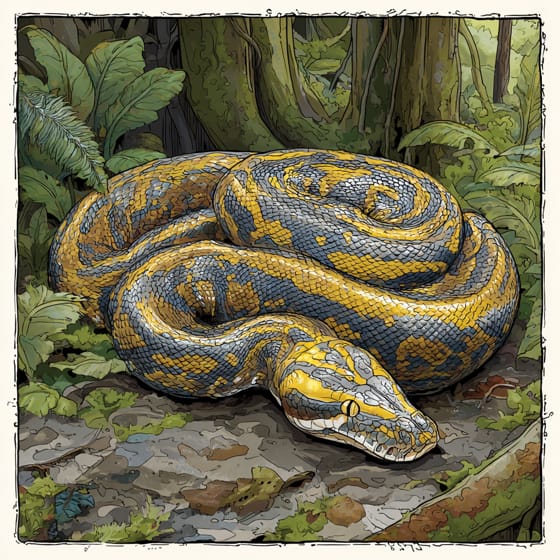
Python reticulatus
A common predator that ambushes mouse-deer in their habitat.
Nisaetus bartelsi
A raptor that preys on small mammals and birds in Javan forests.
Furry describes animals possessing a dense covering of soft hair or fur.
Marked with spots or patches of a different color.
Solitary animals live alone for most of their lives, only interacting with others for mating or parental care.
This trait characterizes organisms whose diet consists entirely or primarily of plant material.

Forest habitats are terrestrial environments dominated by dense tree cover, supporting a high diversity of plant and animal life.

Pertaining to species that are significantly smaller than typical or average for their kind.

This trait identifies organisms that exhibit exceptional swiftness in movement for hunting, escape, or travel.

Nocturnal animals are primarily active during the nighttime hours, typically resting or sleeping during the day.

Endangered status indicates a species is at a very high risk of extinction in the wild in the near future.
No aliases listed yet.
Danger
1/5 · Very low
If you see a wild animal, it's best to watch from a distance and not approach it.
The easiest way to identify Java mouse-deer is to use the Snappit nature identifier app.
45-55 cm
1.5-2 kg
8-12 years
20 km/h
These tiny herbivores munch on fallen fruits, leaves, and tender shoots found on the forest floor.
Forests
Foraging
Zoom in to split clusters and explore where this object has been snapped.
Recent snaps will appear here as new observations are added.
Take the discovery with you
Snap it with Snappit to identify it, learn what makes it special, and add the discovery to your collection.




.jpg&width=800)



.JPG&width=800)


.jpg&width=800)
