jelly blubber
Catostylus mosaicus
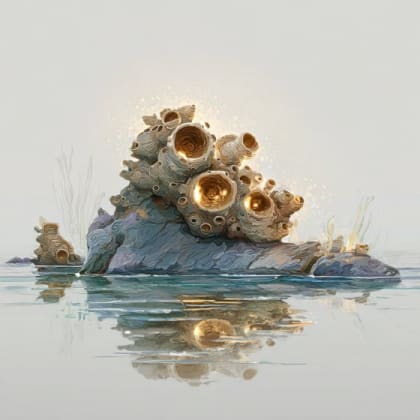
The jelly blubber is a soft, jelly-like creature that floats in the ocean. It has a beautiful, colorful body and can be found in warm waters, making it a fascinating sight for ocean explorers!
Habitat: Coastal areas
The jelly blubber is a sleek marine mammal with smooth, semi-translucent grey skin that glistens like wet jelly. It has a robust, rounded body and a distinctive, bulbous head. Its exceptionally thick, gelatinous blubber gives it a somewhat flexible and fluid appearance underwater.
Category
InvertebrateRarity
Common
Danger
3/5 · Moderate
Snaps
Be the first to snap!
Baby jelly blubbers are born live and can swim immediately after birth!
The jelly blubber communicates with squeaks and whistles that travel far underwater!
Their blubber isn't just for warmth; it stores energy for long migrations!
This unique mammal can hold its breath for over an hour during deep dives!
jelly blubber has thick, buoyant blubber that helps them float effortlessly and withstand immense pressures in deep ocean dives.
jelly blubber can navigate and locate prey in dark, murky waters using its advanced echolocation system to 'see' with sound.
Jelly blubbers hunt fish and squid, using their keen senses to find food in the vast ocean.
Age differences: Young jelly blubbers consume their mother's milk before learning to hunt small fish.
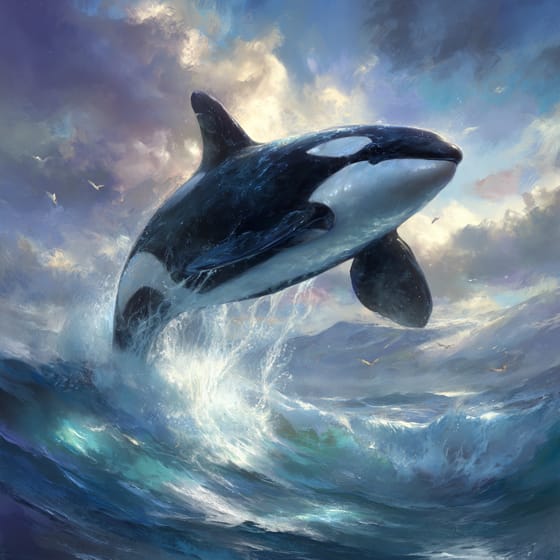
Orcinus orca
Adult orcas are known to hunt larger marine mammals.
Thunnus thynnus
Young tuna are a common prey for the jelly blubber.
Kogia breviceps
Sometimes found sharing feeding grounds, avoiding competition.

Stenella longirostris
Indirectly benefits from shared schooling fish populations.
Solitary animals live alone for most of their lives, only interacting with others for mating or parental care.
Camouflaged describes organisms that possess coloring or patterns that allow them to blend into their environment.
Colorful describes organisms or objects displaying a wide range of bright and distinct colors.
Filter feeders obtain nutrients by straining suspended food particles and small organisms from water.

This trait characterizes organisms whose diet consists entirely or primarily of plant material.

Coastal habitats are dynamic environments located along the interface between land and sea, influenced by tides, waves, and saltwater.

Diurnal animals are primarily active during daylight hours, typically resting or sleeping at night.

Aquatic habitats encompass environments where organisms live predominantly in water, including oceans, rivers, lakes, and wetlands.

Marine habitats encompass all saltwater environments of the Earth's oceans, supporting an immense diversity of aquatic life.

Pertaining to organisms that emit light through bioluminescence or fluorescence.
No aliases listed yet.
Danger
3/5 · Moderate
Don't touch jelly blubbers; they can sting and make you feel uncomfortable.
The easiest way to identify jelly blubber is to use the Snappit nature identifier app.
150-300 cm
100-350 kg
25-40 years
45 km/h
Jelly blubbers hunt fish and squid, using their keen senses to find food in the vast ocean.
Coastal areas
Pursuit
Zoom in to split clusters and explore where this object has been snapped.
Recent snaps will appear here as new observations are added.
Take the discovery with you
Snap it with Snappit to identify it, learn what makes it special, and add the discovery to your collection.