Round-Backed Millipedes
juliformia
Round-Backed Millipedes are fascinating creatures with lots of tiny legs that help them move around! They curl up into a ball when they feel scared, making them look like little round shapes in the leaf litter.
Habitat: They usually live in damp, dark places like under logs, rocks, or leaf litter in forests.
The Round-Backed Millipedes has a distinctive, elongated cylindrical body, often dark brown or black, sometimes with lighter stripes. Its smooth, hard exoskeleton gives it a shiny appearance, differentiating it from flatter centipedes. It moves slowly, with pairs of tiny legs under each segment.
Category
InvertebrateRarity
Common
Danger
1/5 · Very low
Snaps
Be the first to snap!
Millipedes were among the very first animals to walk on land, over 400 million years ago!
Some millipedes, found in places like California, can actually glow in the dark!
The fastest millipede still only crawls at about 1.6 meters per minute, taking its time!
Unlike insects, millipedes continuously add new body segments and pairs of legs as they grow!
Round-Backed Millipedes can coil into a tight spiral because it protects their soft underside from predators like birds and shrews.
Round-Backed Millipedes has special glands that release foul-smelling or irritating chemicals to deter attackers.
Round-Backed Millipedes can burrow into soil and leaf litter using their many legs to escape danger and find moist hiding spots.
These creatures are decomposers, helping clean up by munching on dead plant material.
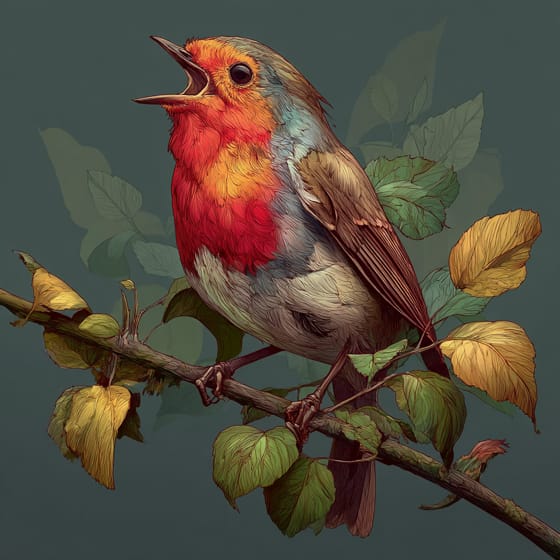
Turdus migratorius
Robins commonly feed on millipedes found in gardens and leaf litter.
Sorex cinereus
Shrews often hunt and consume millipedes among their invertebrate prey.

Carabus violaceus
Some ground beetles are predatory and will include millipedes in their diet.
Solitary animals live alone for most of their lives, only interacting with others for mating or parental care.
Burrowing animals dig tunnels and chambers in the ground, using these subterranean structures for shelter, hunting, or breeding.
This trait characterizes organisms whose diet consists entirely or primarily of plant material.
Describes organisms that break down dead organic material, recycling nutrients back into the ecosystem.

Forest habitats are terrestrial environments dominated by dense tree cover, supporting a high diversity of plant and animal life.
Danger
1/5 · Very low
Always wash your hands after handling any bugs.
The easiest way to identify Round-Backed Millipedes is to use the Snappit nature identifier app.
2.5 cm
These creatures are decomposers, helping clean up by munching on dead plant material.
They usually live in damp, dark places like under logs, rocks, or leaf litter in forests.
Foraging
200
50
Zoom in to split clusters and explore where this object has been snapped.
Recent snaps will appear here as new observations are added.
Take the discovery with you
Snap it with Snappit to identify it, learn what makes it special, and add the discovery to your collection.