





knapweeds
Centaurea
Knapweeds are colorful flowers that grow in fields and meadows. They have pretty petals and attract many butterflies and bees, making them a lovely part of nature!
Habitat: Grasslands
The knapweeds has often vibrant purple or pink thistle-like flowers, though some can be white or yellow. Its distinguishing feature is the papery bracts beneath the flower head, often fringed or spiky, giving it a unique layered look.
Category
PlantsRarity
Common
Danger
1/5 · Very low
Snaps
Be the first to snap!
Knapweeds can grow in really tough, dry places!
Some knapweeds were once used to make yellow dye!
The word "knapweed" comes from an old word for "knob"!
Their seeds are a favorite snack for many small birds!
Knapweeds has a long taproot that helps it find water deep underground during dry periods to survive.
Knapweeds protect their developing flower heads with tough, often spiny, overlapping bracts, defending against hungry herbivores.
Knapweeds can fling their seeds a short distance when dry, helping them spread to new sunny spots to reproduce.
Bombus terrestris
Gathers nectar and pollen from flowers.
Vanessa cardui
Feeds on nectar, aiding pollen transfer.
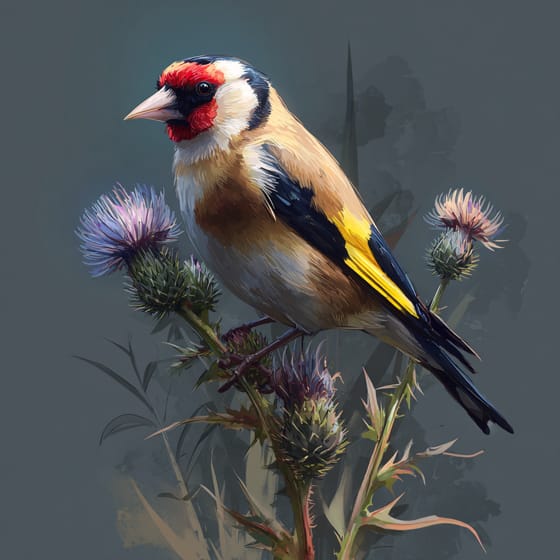
Carduelis carduelis
Feeds on the nutritious seeds.

Larinus minutus
Larvae feed on developing seeds inside the flower.
Flowering plants are any plants that produce flowers as part of their reproductive cycle.
Summer blooming plants produce their flowers during the summer season, often providing vibrant color when many other plants have finished.
Fragrant flowers emit a pleasant aroma, often to attract pollinators or for defense.
Medicinal plants possess chemical compounds that can be used for therapeutic purposes to treat illnesses or maintain health.

Colorful describes organisms or objects displaying a wide range of bright and distinct colors.

Edible plants are those parts of a plant that are considered safe for human consumption.

Grassland habitats are terrestrial biomes dominated by grasses and herbaceous plants, supporting a variety of grazing animals.

Describes plants that are particularly attractive and beneficial to a wide range of pollinating organisms.
No aliases listed yet.
Danger
1/5 · Very low
Do not touch or eat any flowers without asking an adult first.
The easiest way to identify knapweeds is to use the Snappit nature identifier app.
30-150 cm
20-60 cm
2-5 cm
Summer to early fall
No
None
Perennial
Zoom in to split clusters and explore where this object has been snapped.
Recent snaps will appear here as new observations are added.
Take the discovery with you
Snap it with Snappit to identify it, learn what makes it special, and add the discovery to your collection.








.jpg&width=800)


_001.jpg&width=800)



