





lanceleaf arrowhead
Sagittaria lancifolia
The lanceleaf arrowhead is a fun plant with long, pointy leaves that look like arrows! It grows in wet places and has pretty white flowers that attract butterflies and bees.
Habitat: Wetlands
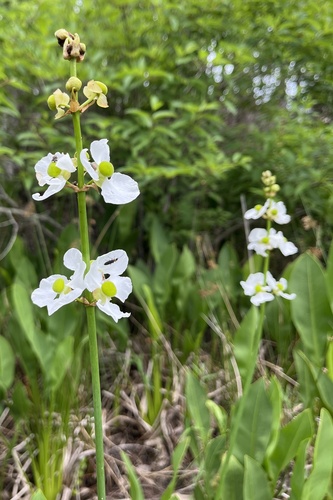
The lanceleaf arrowhead has long, sturdy, dark green leaves that are distinctly lance-shaped and emerge prominently from the water. Its tall stalks bear clusters of delicate white flowers, each with three rounded petals and a bright yellow center, arranged in whorls.
Category
PlantsRarity
Common
Danger
1/5 · Very low
Snaps
1
Despite its name, its leaves look more like long spears than typical arrowheads!
Its scientific name, Sagittaria, actually means 'arrow-bearer' in Latin, even though its leaves are lance-shaped.
Its starchy underground tubers were once a delicious and vital food for many Native American tribes.
This plant's roots help clean water and provide shelter for tiny aquatic creatures.
Lanceleaf arrowhead can store energy in starchy tubers underground, helping it survive winter and regrow in spring.
Its sturdy leaves emerge above the water, allowing it to easily breathe air even when its roots are submerged.
Lanceleaf arrowhead can thrive in constantly changing water levels, adapting to both shallow and slightly deeper wetland environments.

Aix sponsa
eats its seeds and starchy tubers
Anas platyrhynchos
forages on its seeds and underground tubers
Bombus impatiens
visits its white flowers for nectar and pollen
Procambarus clarkii
may consume its tender roots and tubers
Flowering plants are any plants that produce flowers as part of their reproductive cycle.
Grass-like plants are herbaceous plants that visually resemble true grasses, typically having long, narrow leaves.
Summer blooming plants produce their flowers during the summer season, often providing vibrant color when many other plants have finished.
Medicinal plants possess chemical compounds that can be used for therapeutic purposes to treat illnesses or maintain health.

Describes plants that are particularly attractive and beneficial to a wide range of pollinating organisms.

This habitat trait identifies species found in wetlands, which are areas of land saturated with water, either permanently or seasonally, including marshes, swamps, and bogs.

Freshwater habitats include non-saline aquatic environments such as rivers, lakes, ponds, and wetlands, vital for numerous species.

Aquatic habitats encompass environments where organisms live predominantly in water, including oceans, rivers, lakes, and wetlands.
No aliases listed yet.
Danger
1/5 · Very low
Always look but don't touch plants without asking an adult first!
The easiest way to identify lanceleaf arrowhead is to use the Snappit nature identifier app.
30-150 cm
1-2 cm
Summer
Yes
None
Perennial
Insect
Zoom in to split clusters and explore where this object has been snapped.
May 9, 2026
Matanzas State ForestPhoto attribution
(c) Pam Kleinsasser, some rights reserved (CC BY)
License: CC BY 4.0 ↗
Image may be shown cropped inside the card frame.
Take the discovery with you
Snap it with Snappit to identify it, learn what makes it special, and add the discovery to your collection.










.jpg&width=800)



_001.jpg&width=800)




