


Lanceleaf Figwort
scrophularia lanceolata
The Lanceleaf Figwort (Scrophularia lanceolata) is an intriguing native perennial herb of North America, prized by wildlife and native plant enthusiasts alike. Reaching heights of up to 2.5 meters, this tall, upright wildflower features a distinctive square stem and opposite, sharply toothed leaves. While its tiny, cup-shaped flowers might seem inconspicuous to the casual passerby, they are absolute powerhouses of nectar production, acting as a vital fuel station for a diverse array of insects, particularly predatory wasps. Historically valued in traditional herbal medicine, this species thrives in transitional habitats like forest edges and open meadows. It plays an essential role in local ecosystems by supporting beneficial predatory insects that control pest populations.
Habitat: Typically found in open woodlands, forest edges, thickets, fields, and along disturbed roadsides.
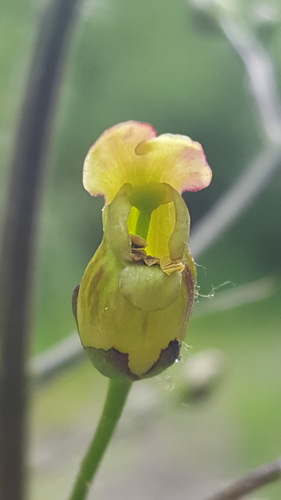
This tall, erect perennial stands 100 to 250 cm high, featuring sharply four-angled, grooved square stems. Its leaves are oppositely arranged, lance-shaped, and display prominent, sharp, double-toothed margins. The flowering structure is a narrow, elongated panicle covered in small, 1-cm long, urn-shaped flowers that are greenish-brown or dull red in color.
Category
PlantsRarity
Common
Danger
1/5 · Very low
Snaps
Be the first to snap!
Its scientific name Scrophularia refers to its traditional use in treating scrofula, a historical form of tuberculosis affecting the neck.
The name Figwort originates from the historical belief that the plant could heal a medical condition known as 'figs' (hemorrhoids).
Unlike most garden flowers that court bees, this species has evolved a strong evolutionary relationship with predatory wasps.
Produces abundant, easily accessible sucrose-rich nectar tailored specifically to attract and reward predatory wasps for pollination.
Possesses a rigid, four-angled stem reinforced with collenchyma tissues that allow the plant to stand tall without wood.
Synthesizes bitter iridoid glycosides throughout its foliage to deter grazing mammals and generalist insect pests.
As a photosynthetic plant, it converts sunlight, water, and carbon dioxide into sugars while absorbing essential soil nutrients.
Age differences: Seedlings initially rely on endosperm reserves before developing chlorophyll to begin active photosynthesis.

Dolichovespula maculata
Feeds heavily on the nectar, acting as one of the plant's primary pollinating agents.
Euphrydyas phaeton
Utilizes the leaves as a critical host food source for its developing larvae.

Archilochus colubris
Visits the small cup-like flowers during migration to feed on the sugary nectar.
No trait badges are assigned for this object yet.
No aliases listed yet.
Collections for this object will appear here as more themes are added.
Danger
1/5 · Very low
No special safety notes yet.
Start with the whole plant, then compare leaf arrangement, leaf edges, stems and any flowers or fruit. Opposite leaves grow in pairs; alternate leaves come one at a time along the stem. These details tell you far more together than a single green leaf does. Plant Identifier: upload a photo and compare the visible details.
100-250 cm
3-10 years
As a photosynthetic plant, it converts sunlight, water, and carbon dioxide into sugars while absorbing essential soil nutrients.
Typically found in open woodlands, forest edges, thickets, fields, and along disturbed roadsides.
Photosynthesis
Zoom in to split clusters and explore where this object has been snapped.
Recent snaps will appear here as new observations are added.
Take the discovery with you
Snap it with Snappit to identify it, learn what makes it special, and add the discovery to your collection.


















