




Landfowl
galliformes
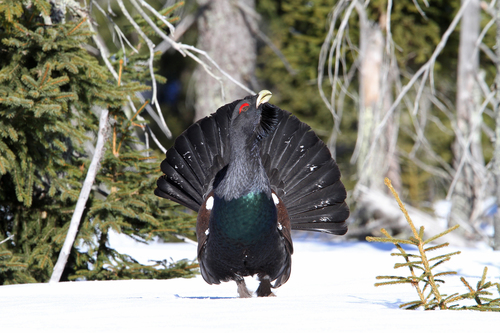
Landfowl, scientifically known as Galliformes, comprise a diverse and widespread order of ground-dwelling birds. This group includes familiar species like chickens, turkeys, pheasants, quail, and grouse. They are characterized by their robust bodies, strong legs and feet well-suited for scratching and foraging, and relatively short, rounded wings that enable short, explosive bursts of flight. Galliformes play crucial ecological roles as seed dispersers and prey animals, while many species also hold significant economic importance as poultry or game birds worldwide. Their adaptability allows them to inhabit a wide range of environments, from dense forests to open grasslands.
Habitat: Found in a vast array of terrestrial environments, including forests, woodlands, grasslands, savannas, mountains, and agricultural areas, often preferring areas with dense undergrowth for cover.
Galliformes typically present with stout, robust bodies and relatively small heads. Their plumage often features cryptic patterns of browns, greys, and blacks, providing excellent camouflage in their terrestrial habitats. However, males of many species, such as pheasants and peacocks, exhibit strikingly vibrant and iridescent coloration, elaborate tail feathers, or distinctive wattles and combs. They possess strong, clawed feet for scratching the ground, and their wings are generally short and rounded, designed for powerful, short-distance flight rather than sustained aerial movement. Size varies significantly within the order, from small quail to large turkeys and peacocks.
Category
BirdsRarity
Common
Danger
1/5 · Very low
Snaps
Be the first to snap!
Many Galliform species engage in 'dust bathing,' where they roll around in dry soil or dust to remove parasites and maintain feather health.
Most landfowl chicks are precocial, meaning they are born relatively mature and able to feed themselves and move around shortly after hatching.
The domestic chicken, the most numerous bird on Earth, is a direct descendant of the Red Junglefowl (Gallus gallus), a wild species native to Southeast Asia.
Unlike many bird orders, most Galliformes are non-migratory, preferring to stay within a relatively confined home range throughout their lives.
Galliformes possess powerful legs and feet with strong claws, perfectly adapted for scratching and digging through leaf litter and soil to uncover seeds, insects, and roots.
Despite their short, rounded wings, these birds are capable of sudden, powerful bursts of flight for escaping predators, often taking off with a loud whirring sound.
Many species exhibit mottled or earthy-toned plumage that blends seamlessly with their natural surroundings, providing effective concealment from predators when stationary.
Landfowl are opportunistic omnivores, with their diet primarily consisting of plant matter supplemented by various invertebrates. Their exact diet can vary seasonally and geographically.
Age differences: Chicks and juvenile birds tend to consume a higher proportion of insects and other protein-rich invertebrates to support rapid growth.

Vulpes vulpes
Landfowl are a common prey item for a variety of predatory mammals.

Accipiter gentilis
Many species of diurnal raptors prey on landfowl.
Quercus robur
Landfowl consume the acorns, providing food for the birds and sometimes aiding in seed dispersal.
Caelifera
Insects form a significant part of the diet, especially for younger birds, providing essential protein.
Social animals live in organized groups, cooperating for survival benefits such as foraging, defense, and raising offspring.
This trait identifies organisms whose diet includes both plant and animal matter.
Colorful describes organisms or objects displaying a wide range of bright and distinct colors.
Grassland habitats are terrestrial biomes dominated by grasses and herbaceous plants, supporting a variety of grazing animals.
Diurnal animals are primarily active during daylight hours, typically resting or sleeping at night.
No aliases listed yet.
Collections for this object will appear here as more themes are added.
Danger
1/5 · Very low
No special safety notes yet.
Compare the silhouette, bill shape, tail length, wing bars and markings around the eyes. The same small brown bird at your feeder can look quite different in breeding plumage, winter plumage or its first year. Bird Identifier: upload a photo and compare the visible details.
15-125 cm
25-160 cm
0.05-11.5 kg
2-10 years
70 km/h
Landfowl are opportunistic omnivores, with their diet primarily consisting of plant matter supplemented by various invertebrates. Their exact diet can vary seasonally and geographically.
Found in a vast array of terrestrial environments, including forests, woodlands, grasslands, savannas, mountains, and agricultural areas, often preferring areas with dense undergrowth for cover.
Zoom in to split clusters and explore where this object has been snapped.
Recent snaps will appear here as new observations are added.
Take the discovery with you
Snap it with Snappit to identify it, learn what makes it special, and add the discovery to your collection.