

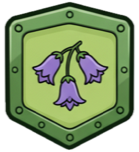



Lily of the Valley
Convallaria majalis
Lily of the Valley is a delicate flower with tiny white bells that grow in shady woodland areas. Its sweet scent fills the air in spring, attracting bees and butterflies.
Habitat: Woodlands
The Lily of the Valley has broad, glossy, emerald-green leaves that emerge from the ground. Delicate, pure white, bell-shaped flowers hang in a row along a slender stalk, creating an elegant, arching display. Its visually distinct feature is the uniform, downward-facing bells.
Category
PlantsRarity
Common
Danger
3/5 · Moderate
Snaps
14
After blooming, it grows bright red berries that attract birds for seed dispersal!
In France, May 1st is "Muguet Day," where people give Lily of the Valley for good luck!
The scent is so special, it's used to calibrate perfume-making machines!
This plant can live for many decades, spreading its beauty for generations!
Lily of the Valley can spread rapidly using underground stems (rhizomes) that help it colonize large areas quickly.
Lily of the Valley has toxic compounds in all its parts that help it defend against most hungry animals.
Lily of the Valley has an incredibly strong, sweet fragrance that helps it attract pollinators from a distance.
Apis mellifera
collects nectar and pollen
Bombus terrestris
visits bell-shaped flowers
Arion vulgaris
feeds on leaves and stems
Perennial plants live for more than two years, typically returning to grow and bloom each year from their roots.
Bell-shaped flowers possess petals fused or arranged to form a cup-like or campanulate structure resembling a bell.
Shade tolerant plants are adapted to grow and thrive in areas with low light levels, requiring less direct sunlight.
Spring blooming plants produce their flowers during the spring season, often signifying the end of winter and the start of new growth.

Fragrant flowers emit a pleasant aroma, often to attract pollinators or for defense.

Medicinal plants possess chemical compounds that can be used for therapeutic purposes to treat illnesses or maintain health.

Forest habitats are terrestrial environments dominated by dense tree cover, supporting a high diversity of plant and animal life.

This trait characterizes organisms with an exceptionally long lifespan compared to others of their kind.
Danger
3/5 · Moderate
Never eat or touch the Lily of the Valley plant as it can be harmful. Enjoy its beauty from a safe distance.
The easiest way to identify Lily of the Valley is to use the Snappit nature identifier app.
15-30 cm
30-60 cm
0.5-1 cm
Spring
No
Deadly
Perennial
Zoom in to split clusters and explore where this object has been snapped.

Vermont, US
You might spot Eastern White Pine, Staghorn Sumac, and Box Elder.
View guide →

Michigan, US
You might spot Hickory Tussock Moth, Mayapple, and Winged Euonymus.
View guide →

Indiana, US
You might spot Monarch, Black Swallowtail, and American Pokeweed.
View guide →

Maine, US
You might spot Rugosa Rose and European Green Crab.
View guide →

Pennsylvania, US
You might spot Spotted Lanternfly and Japanese Knotweed.
View guide →

Michigan, US
You might spot Prairie Trillium, Large White Trillium, and Wild Geranium.
View guide →
Take the discovery with you
Snap it with Snappit to identify it, learn what makes it special, and add the discovery to your collection.








.jpg&width=800)


_001.jpg&width=800)


