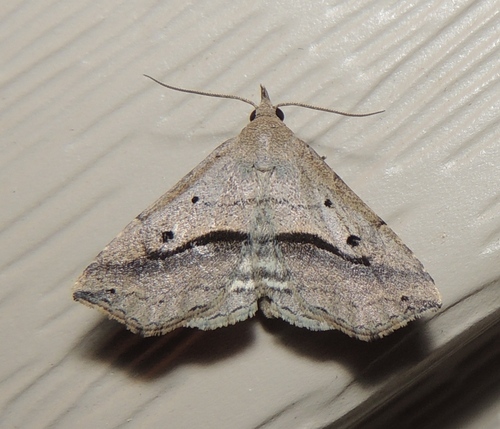


Lost Owlet
ledaea perditalis
The Lost Owlet (Ledaea perditalis) is a small, fascinating moth belonging to the family Erebidae. Native to the damp wetlands and riparian corridors of eastern North America, this species is noted for its cryptic camouflage and nocturnal behaviors. Though modest in size, it serves as an important ecological player, acting as a nocturnal pollinator in its adult stage and providing a crucial food source for various insectivores during its larval development.
Habitat: Found in damp deciduous forests, shrubby swamps, and freshwater marshes, particularly where its host plants grow.
This small moth has a wingspan ranging from 2.0 to 2.6 centimeters. Its forewings are pale tan to light yellowish-brown, accented by thin, wavy, dark brown transverse lines and a distinctive small dark dot near the center of each wing that resembles a tiny eye. When at rest, it holds its wings flat, creating a triangular silhouette. The hindwings are slightly lighter and more uniform in coloration, blending into a pale greyish-tan near the margins.
Category
InsectsRarity
Common
Danger
1/5 · Very low
Snaps
1
Its common name, 'Lost Owlet', is inspired by the faint markings on its forewings which can resemble the eyes and facial disk of a tiny owl.
Like many nocturnal moths, they are highly sensitive to ultraviolet light and are frequently documented by community scientists using light traps.
The caterpillars are bright green with faint stripes, rendering them nearly invisible when aligned with the veins of buttonbush leaves.
Its mottled tan and brown wing coloration mimics dead leaves, allowing it to remain completely hidden from predators on the forest floor during the day.
Males utilize highly sensitive antennae to track chemical signals released by females over long distances through dense wetland vegetation.
Possesses a highly flexible proboscis adapted to extract nectar from deep-throated wetland wildflowers.
The larvae feed strictly on the leaves of specific wetland shrubs, while the adult moths feed on floral nectar.
Age differences: Larvae are foliage grazers feeding on host plant leaves, whereas adults are nectar-feeding pollinators.
Cephalanthus occidentalis
The caterpillars of the Lost Owlet feed preferentially on the leaves of the Common Buttonbush.
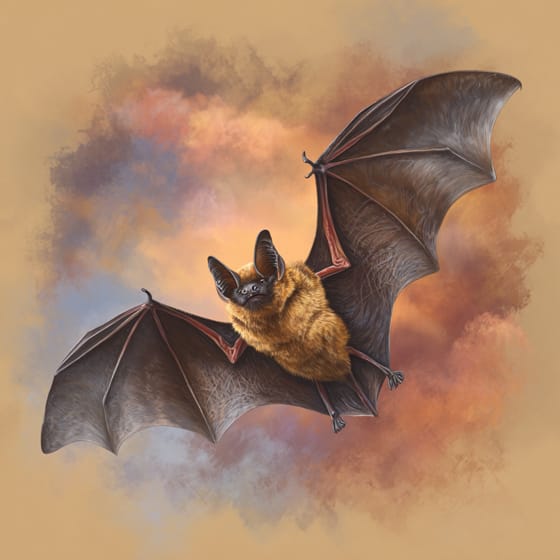
Eptesicus fuscus
Adult moths are hunted mid-flight during the night by echolocating bats.
No trait badges are assigned for this object yet.
No aliases listed yet.
Collections for this object will appear here as more themes are added.
Danger
1/5 · Very low
No special safety notes yet.
The easiest way to identify Lost Owlet is to use the Snappit nature identifier app.
1-2 cm
2-3 cm
0.0001-0.0003 kg
up to 1 years
12 km/h
The larvae feed strictly on the leaves of specific wetland shrubs, while the adult moths feed on floral nectar.
Found in damp deciduous forests, shrubby swamps, and freshwater marshes, particularly where its host plants grow.
Zoom in to split clusters and explore where this object has been snapped.
Take the discovery with you
Snap it with Snappit to identify it, learn what makes it special, and add the discovery to your collection.













.jpg&width=800)




