Map Turtles
Graptemys
Map turtles are special reptiles known for their beautiful, patterned shells that look like a map! They love to bask in the sun on logs and are great swimmers.
Habitat: Wetlands
The Map Turtles has a unique shell with intricate, maze-like patterns, often green or brown, resembling contour lines on a map. Their keeled shell and serrated rear edge help them glide through water, making them visually distinct from many other freshwater turtles.
Category
ReptilesRarity
Common
Danger
1/5 · Very low
Snaps
Be the first to snap!
Each Map Turtle has unique shell patterns, like a fingerprint, to tell them apart!
Female Map Turtles can grow much bigger than males, sometimes twice as long!
Map Turtles clean themselves by shedding scutes, the top layers of their shells!
They often dive under logs or rocks to hide from dangers really fast!
Map Turtles has intricate shell patterns that help them blend seamlessly with rocky riverbeds and submerged logs, making them hard to spot.
Map Turtles can crush hard-shelled prey like snails and clams because of their strong jaws and broad heads, allowing them to access tough meals.
Map Turtles can swiftly navigate strong river currents and evade predators because of their webbed feet and streamlined, keeled shells.
Map Turtles has sensitive whisker-like structures that help them find food in murky water by detecting vibrations.
Map Turtles eat a mix of snails, insects, fish, and some plants they find underwater.
Age differences: Young turtles eat more insects, while older, larger females specialize in snails and clams.

Procyon lotor
Raccoons often raid turtle nests for eggs.
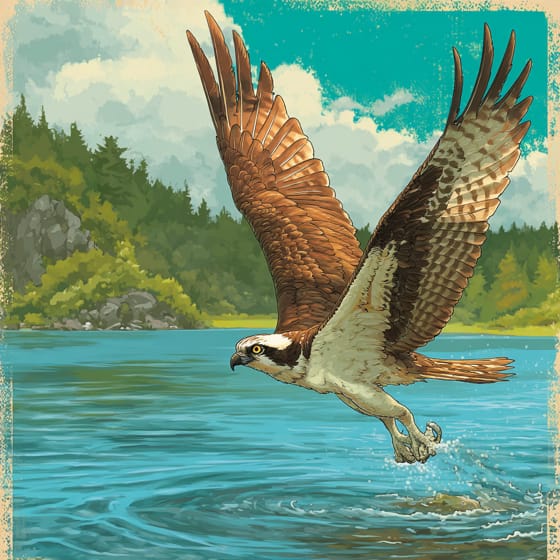
Pandion haliaetus
Ospreys can snatch young turtles from water.
Physa acuta
Many map turtles use strong jaws to crush snails.
Orconectes virilis
Young map turtles feed on small crustaceans.
Solitary animals live alone for most of their lives, only interacting with others for mating or parental care.
This trait identifies organisms whose diet includes both plant and animal matter.
Camouflaged describes organisms that possess coloring or patterns that allow them to blend into their environment.
This habitat trait identifies species found in wetlands, which are areas of land saturated with water, either permanently or seasonally, including marshes, swamps, and bogs.

Armored describes animals protected by a hard, external covering or shell for defense.

Diurnal animals are primarily active during daylight hours, typically resting or sleeping at night.

Describes a species whose presence and role have a disproportionately large effect on its environment.

Endangered status indicates a species is at a very high risk of extinction in the wild in the near future.
No aliases listed yet.
Danger
1/5 · Very low
Always watch from a distance and never try to touch wild turtles.
The easiest way to identify Map Turtles is to use the Snappit nature identifier app.
10-33 cm
0.1-3 kg
15-30 years
8 km/h
Map Turtles eat a mix of snails, insects, fish, and some plants they find underwater.
8 km/h
Wetlands
Zoom in to split clusters and explore where this object has been snapped.
Recent snaps will appear here as new observations are added.
Take the discovery with you
Snap it with Snappit to identify it, learn what makes it special, and add the discovery to your collection.