





Marbled Grasshopper
Spharagemon marmoratum
The Marbled Grasshopper is a colorful insect that loves to hop around in grassy areas. With its beautiful patterns, it can blend in with the grass and stay safe from predators.
Habitat: Grasslands
The Marbled Grasshopper has a striking mottled pattern of browns, grays, and tans, blending seamlessly with dry grass and stony ground. Its robust body and strong hind legs are often highlighted by subtle yellow or orange markings on its inner thighs.
Category
InsectsRarity
Common
Danger
1/5 · Very low
Snaps
Be the first to snap!
Grasshoppers can sometimes change color after molting to better match their new home.
Males have special 'teeth' on their legs to make music for attracting females.
Their ears aren't on their head; they're tiny slits on their belly!
They use their powerful jaws to munch through tough plant stems like tiny shredders.
Marbled Grasshopper can jump incredibly far because of its powerful hind legs, that helps them escape predators quickly.
Marbled Grasshopper has a marbled pattern of browns and grays that helps them perfectly camouflage into their surroundings.
Marbled Grasshopper can create chirping sounds by rubbing its hind legs against its wings, that helps them attract mates.
Marbled Grasshopper can fly short distances with its strong wings, that helps them escape from danger or find new food.
Marbled Grasshoppers munch on plants like grass and leaves, helping keep nature tidy.
Pardosa milvina
Hunts and eats grasshoppers as a protein source.
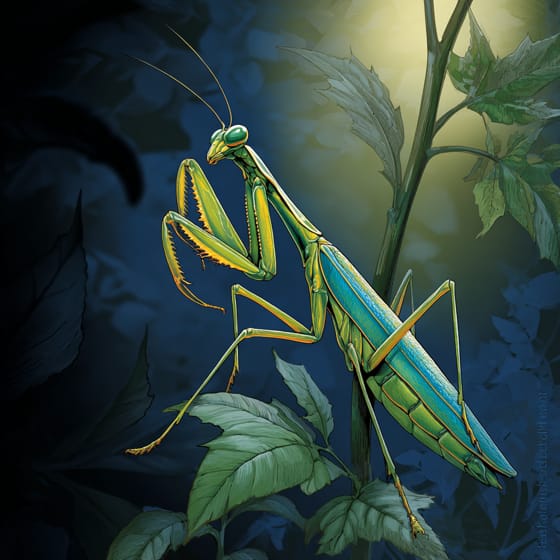
Mantis religiosa
Ambushes and preys on various insects, including grasshoppers.

Bromus inermis
A common grass species that provides food for grasshoppers.
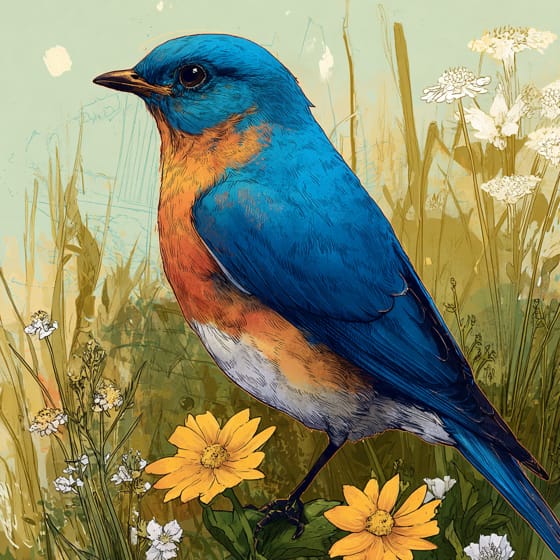
Sialia sialis
Feeds on large insects, especially grasshoppers during summer.
Singing animals produce complex vocalizations, often for purposes of attracting mates, defending territory, or communicating within their species.
Camouflaged describes organisms that possess coloring or patterns that allow them to blend into their environment.
Colorful describes organisms or objects displaying a wide range of bright and distinct colors.
Grassland habitats are terrestrial biomes dominated by grasses and herbaceous plants, supporting a variety of grazing animals.

This trait characterizes organisms whose diet consists entirely or primarily of plant material.

Diurnal animals are primarily active during daylight hours, typically resting or sleeping at night.

This trait identifies organisms that exhibit exceptional swiftness in movement for hunting, escape, or travel.
No aliases listed yet.
Danger
1/5 · Very low
Grasshoppers are safe to watch, but don't try to catch them; they like to hop away!
The easiest way to identify Marbled Grasshopper is to use the Snappit nature identifier app.
40-80 mm
25-50 mm
60-120 days
5-10 km/h
Marbled Grasshoppers munch on plants like grass and leaves, helping keep nature tidy.
Grasslands
Foraging
Zoom in to split clusters and explore where this object has been snapped.
Recent snaps will appear here as new observations are added.
Take the discovery with you
Snap it with Snappit to identify it, learn what makes it special, and add the discovery to your collection.






.jpg&width=800)



