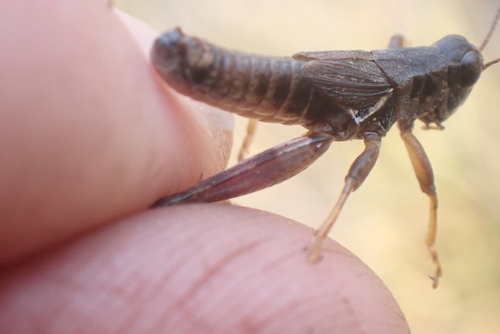





Melanoplus Molothrus
melanoplus molothrus
The Melanoplus Molothrus is a vibrant grasshopper known for its playful jumps! Kids will love watching these little creatures hop around in the grass.
Habitat: Open fields, grasslands, and meadows.
The Melanoplus Molothrus is a sturdy grasshopper, typically 25-35mm long, often displaying earthy greens and browns. It features a prominent spiny 'spur' between its front legs and subtle black banding on its powerful hind legs, making it visually distinct.
Category
InsectsRarity
Common
Danger
1/5 · Very low
Snaps
Be the first to snap!
Female grasshoppers lay their eggs underground in a foamy pod, protecting them through winter.
Their long antennae are like super sensors, helping them feel their way around and detect changes.
They hear sounds using special organs called tympana, located on their belly, not their heads!
Unlike butterflies, grasshoppers go through incomplete metamorphosis, meaning young nymphs look like tiny adults!
Melanoplus Molothrus can launch itself high into the air because of its powerful hind legs, helping it escape predators quickly.
Melanoplus Molothrus has a body coloration that perfectly matches grasses and leaves, helping them hide from hungry birds.
Melanoplus Molothrus can rub its legs and wings together to make chirping sounds, which helps them find mates.
Melanoplus Molothrus are plant-eaters, munching on leaves and grasses found in their habitat.

Passer domesticus
A common bird that frequently preys on grasshoppers.

Peromyscus maniculatus
Small mammals like mice forage for insects as part of their diet.
Dactylis glomerata
Feeds on the leaves of this widespread grass species.

Trifolium pratense
Enjoys munching on the leaves of this common flowering plant.
Solitary animals live alone for most of their lives, only interacting with others for mating or parental care.
Colorful describes organisms or objects displaying a wide range of bright and distinct colors.
Grassland habitats are terrestrial biomes dominated by grasses and herbaceous plants, supporting a variety of grazing animals.
This trait characterizes organisms whose diet consists entirely or primarily of plant material.
Diurnal animals are primarily active during daylight hours, typically resting or sleeping at night.
Danger
1/5 · Very low
No special safety notes yet.
Look for six legs, antennae, three body sections and the shape of the wings. Beetles have hardened front wings; flies have just one working pair. Tiny insects may need a close view before their group is clear. Insect Identifier: upload a photo and compare the visible details.
40-60 mm
25-35 mm
60-120 days
5 km/h
Melanoplus Molothrus are plant-eaters, munching on leaves and grasses found in their habitat.
Open fields, grasslands, and meadows.
Foraging
Zoom in to split clusters and explore where this object has been snapped.
Recent snaps will appear here as new observations are added.
Take the discovery with you
Snap it with Snappit to identify it, learn what makes it special, and add the discovery to your collection.