





Green Immigrant Leaf Weevil
Polydrusus formosus
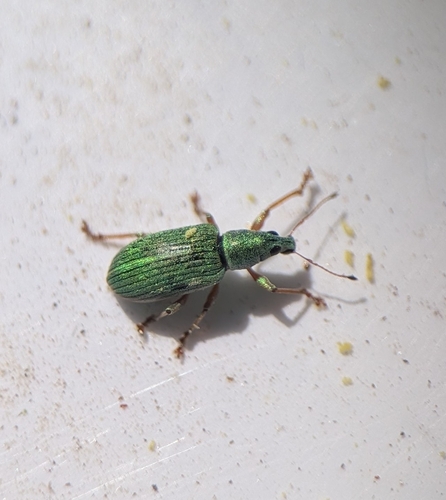
The Green Immigrant Leaf Weevil is a small, green bug that loves to munch on leaves. It has a long snout and tiny legs, making it look quite unique among insects!
Habitat: Forests
The Green Immigrant Leaf Weevil is a small beetle, typically bright metallic green with a coating of iridescent scales that can give it a coppery or golden sheen. It has a distinctive short, broad snout (rostrum) and sturdy legs, making it look quite robust on leaves.
Category
InsectsRarity
Common
Danger
1/5 · Very low
Snaps
6
If it falls, it plays dead by tucking in its legs and dropping motionless!
Its babies (larvae) live underground and munch on roots instead of leaves!
This weevil has tiny scales on its body that reflect light like a disco ball!
Wow, it's called an "immigrant" because it traveled across the ocean to new homes!
Green Immigrant Leaf Weevil has shimmering green scales that help them blend perfectly into leafy foliage, hiding from hungry birds.
Green Immigrant Leaf Weevil can sometimes reproduce without a mate, allowing them to rapidly spread in new environments.
Green Immigrant Leaf Weevil has specialized mandibles at its snout's end that help them neatly chew holes in plant leaves.
This leaf-loving weevil enjoys munching on leaves from many different trees and shrubs.
Age differences: Larvae feed on roots underground, while adults eat plant leaves.
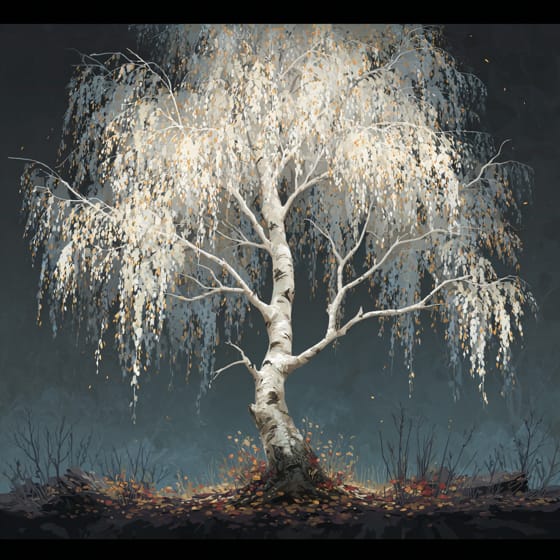
Betula pendula
Adults feed on its leaves and lay eggs.
Salix caprea
A favored food source for adult weevils.
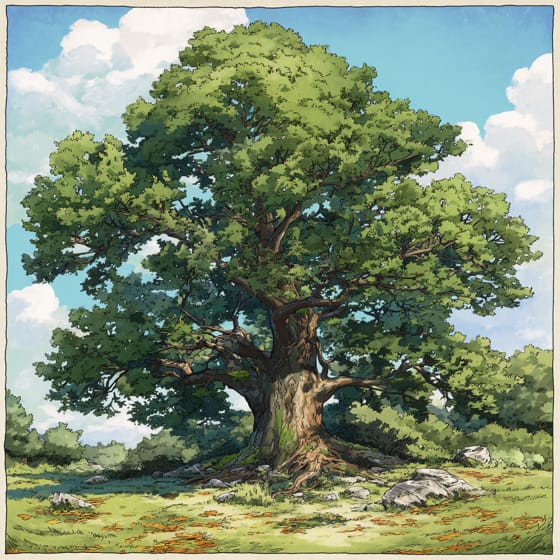
Quercus robur
Adult weevils feed on the leaves of this tree.
%2C_Parc_de_Woluw%C3%A9%2C_Brussels_(13042792905).jpg&width=800)
Parus major
Insectivorous birds often prey on weevils.
Solitary animals live alone for most of their lives, only interacting with others for mating or parental care.
Camouflaged describes organisms that possess coloring or patterns that allow them to blend into their environment.
This trait characterizes organisms whose diet consists entirely or primarily of plant material.
Forest habitats are terrestrial environments dominated by dense tree cover, supporting a high diversity of plant and animal life.

Diurnal animals are primarily active during daylight hours, typically resting or sleeping at night.

Pertaining to species that are significantly smaller than typical or average for their kind.

Describes organisms that transfer pollen, enabling the fertilization and reproduction of plants.
No aliases listed yet.
Danger
1/5 · Very low
These bugs are harmless, but it's best to look and not touch them.
The easiest way to identify Green Immigrant Leaf Weevil is to use the Snappit nature identifier app.
4.5-6.5 mm
30-90 days
This leaf-loving weevil enjoys munching on leaves from many different trees and shrubs.
Forests
Foraging
6
Zoom in to split clusters and explore where this object has been snapped.
Jun 4, 2026
Ashton Historic DistrictPhoto attribution
(c) Tyler Ekholm, some rights reserved (CC BY)
License: CC BY 4.0 ↗
Image may be shown cropped inside the card frame.

Ohio, US
You might spot Eastern Fox Squirrel and Spotted Lanternfly.
View guide →

Rhode Island, US
You might spot Common Mugwort, Duck, and Azure Bluet.
View guide →

Ohio, US
You might spot Spotted Lanternfly and Eastern Fox Squirrel.
View guide →

Ohio, US
You might spot Humboldt Penguin, Sea Lion, and Polar Bear.
View guide →

Massachusetts, US
You might spot Common Eastern Bumble Bee, Bee, and Duck.
View guide →
Ohio, US
You might spot Polar Bear, Giraffes, and Tiger.
View guide →
Take the discovery with you
Snap it with Snappit to identify it, learn what makes it special, and add the discovery to your collection.







.jpg&width=800)



