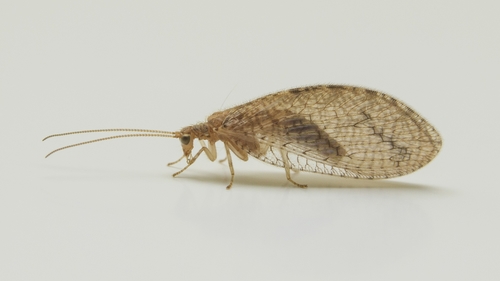


Micromus Posticus
micromus posticus
Micromus posticus, commonly known as the brown lacewing, is a tiny but mighty ally to gardeners and farmers alike. Belonging to the family Hemerobiidae, this delicate insect is a fierce predator of agricultural pests during both its larval and adult stages. Found throughout North America, it plays a vital role in natural pest control, maintaining the balance of ecosystems by keeping aphid populations in check. Unlike their green lacewing cousins, these insects prefer shaded, woody areas and are highly adapted to blending in with dry leaves and bark. Watching one flutter through the garden is a testament to the complex, miniature food webs that support our environment.
Habitat: Found in deciduous forests, orchards, and agricultural fields, often resting on the undersides of leaves or blending into bark.
This small insect is characterized by its dull brownish-tan body and intricately veined, membrane-like wings that fold tent-like over its back when at rest. It features prominent, dark compound eyes and long, bead-like antennae. Unlike green lacewings, its wings are covered in tiny, fine hairs and often display subtle, darker brown mottling or spots, which serve as excellent camouflage against decaying foliage.
Category
InsectsRarity
Common
Danger
1/5 · Very low
Snaps
1
Due to their high efficiency at consuming crop pests, they are occasionally reared and released for biological pest control in greenhouses.
Their larvae are colloquially known as 'aphid lions' due to their ferocious appetite and rapid, sweeping movements when hunting.
Unlike green lacewings, brown lacewing eggs are not laid on long, silken stalks but are glued directly to the surface of leaves or twigs.
Its mottled brown wings and body mimic dead vegetation, allowing it to remain completely hidden from predators while resting on twigs and dried leaves.
Both larvae and adults possess powerful mandibles specialized for grasping and consuming large quantities of soft-bodied agricultural pests like aphids.
Unlike many other insects, this species can remain active and forage during cooler spring and autumn temperatures, giving it an ecological head start.
Both larvae and adults are active predators that feed almost exclusively on small, soft-bodied insects and mites.
Age differences: While both larvae and adults feed on the same prey types, larvae are much more aggressive searchers and consume significantly higher volumes.
Aphis glycines
Feeds heavily on this widespread plant pest in gardens and crops.

Phidippus audax
Falls prey to this common garden predator.
Tetranychus urticae
Consumes these microscopic pests, protecting garden foliage.
No trait badges are assigned for this object yet.
No aliases listed yet.
Collections for this object will appear here as more themes are added.
Danger
1/5 · Very low
No special safety notes yet.
The easiest way to identify Micromus Posticus is to use the Snappit nature identifier app.
0-1 cm
1-2 cm
0 kg
0 years
5 km/h
Both larvae and adults are active predators that feed almost exclusively on small, soft-bodied insects and mites.
Found in deciduous forests, orchards, and agricultural fields, often resting on the undersides of leaves or blending into bark.
Zoom in to split clusters and explore where this object has been snapped.
Take the discovery with you
Snap it with Snappit to identify it, learn what makes it special, and add the discovery to your collection.













.jpg&width=800)




