





Bold Jumping Spider
Phidippus audax
The Bold Jumping Spider is a small, colorful spider that loves to jump! It has big eyes and can leap many times its body length to catch its food or escape danger.
Habitat: Urban areas
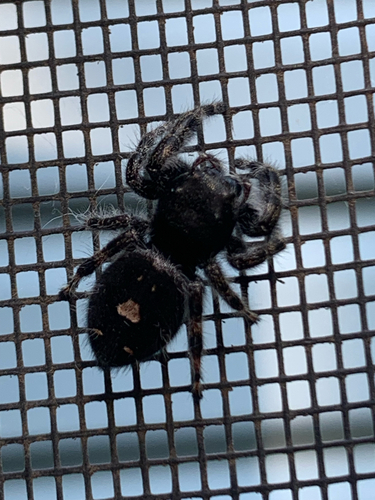
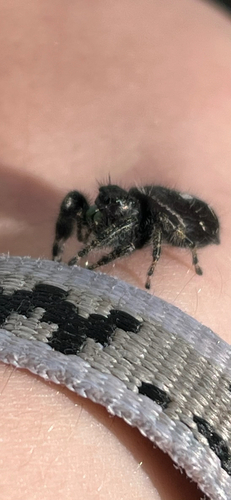
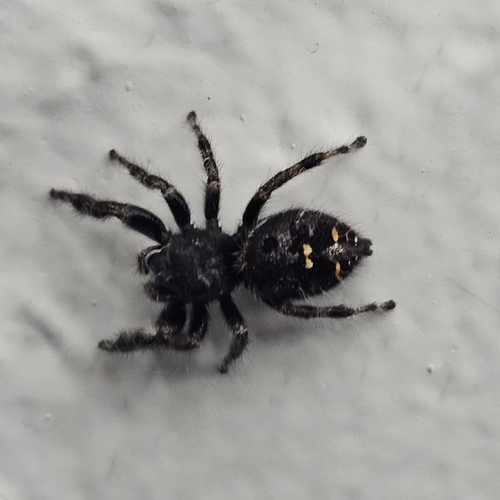
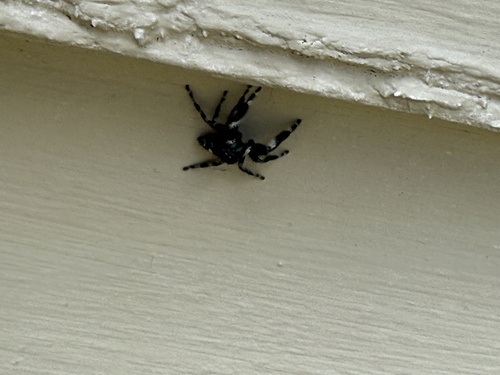
The Bold Jumping Spider has a fuzzy, jet-black body, often with a distinctive, triangular white or orange spot on its abdomen. Its large forward-facing eyes and iridescent green or blue chelicerae (mouthparts) make it visually striking and different from most dull-colored spiders.
Category
InsectsRarity
Common
Danger
1/5 · Very low
Snaps
227
Despite being spiders, they are often curious and might turn to look right at you!
Male Bold Jumping Spiders perform a special dance to impress females!
These clever spiders can learn and remember where food and shelter are!
They don't build webs to catch food, but rather for sleeping and molting!
Bold Jumping Spiders have eight eyes, including two huge ones, that help them see in almost 360 degrees and judge distances perfectly for hunting.
Bold Jumping Spiders can jump up to 50 times their body length by suddenly increasing blood pressure in their legs, helping them ambush prey.
Bold Jumping Spiders spin a silk dragline as they move and jump, helping them secure themselves and quickly climb back up if they fall.
Tiny hunters that pounce on small insects using their amazing eyesight and powerful jumps.
Musca domestica
a common food source
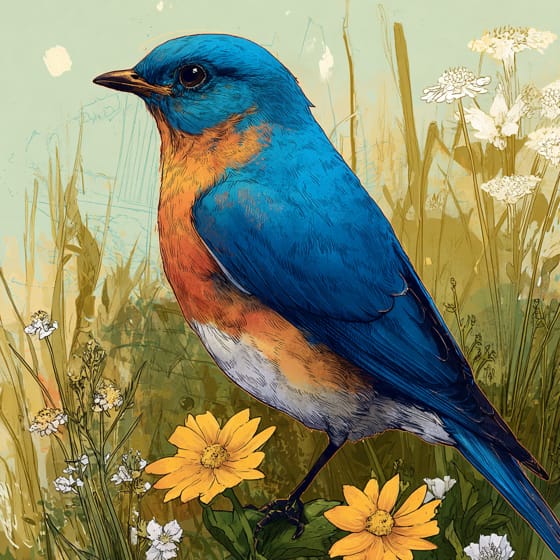
Sialia sialis
a tasty snack for birds
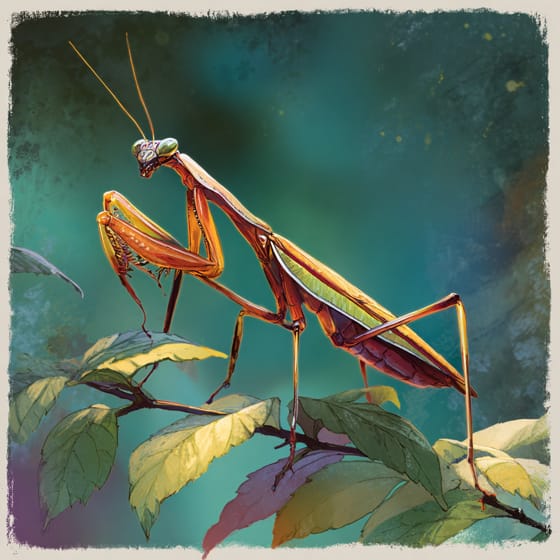
Mantis religiosa
can fall prey to larger hunters
Culex pipiens
helps control mosquito populations
Solitary animals live alone for most of their lives, only interacting with others for mating or parental care.
Colorful describes organisms or objects displaying a wide range of bright and distinct colors.
This trait identifies organisms whose diet primarily consists of insects and other small invertebrates.
An ambush predator hunts by patiently waiting and concealing itself, then launching a sudden attack when unsuspecting prey comes within range.

This trait identifies organisms whose diet consists entirely or primarily of animal tissue.

Diurnal animals are primarily active during daylight hours, typically resting or sleeping at night.

This trait identifies organisms that exhibit exceptional swiftness in movement for hunting, escape, or travel.

This habitat trait indicates species that can coexist with humans in urban and suburban environments, utilizing man-made structures and green spaces.
No aliases listed yet.
Danger
1/5 · Very low
If you see a spider, it's best to observe from a distance and not touch it.
The easiest way to identify Bold Jumping Spider is to use the Snappit nature identifier app.
6-15 mm
365-730 days
Tiny hunters that pounce on small insects using their amazing eyesight and powerful jumps.
Urban areas
Ambush
8
Zoom in to split clusters and explore where this object has been snapped.
Jun 6, 2026
J. Edward Roush LakePhoto attribution
no rights reserved
License: CC0 1.0 ↗
Image may be shown cropped inside the card frame.
Jun 4, 2026
Buffalo and Erie County Botanical GardensPhoto attribution
(c) lult, some rights reserved (CC BY)
License: CC BY 4.0 ↗
Image may be shown cropped inside the card frame.
Jun 4, 2026
Old Beechwold Historic DistrictPhoto attribution
(c) Zeke Blankenship, some rights reserved (CC BY)
License: CC BY 4.0 ↗
Image may be shown cropped inside the card frame.
May 30, 2026
Rockdale Common Housing DistrictPhoto attribution
(c) Betsy Lambert, some rights reserved (CC BY)
License: CC BY 4.0 ↗
Image may be shown cropped inside the card frame.
May 28, 2026
Cheyenne Botanic GardensPhoto attribution
(c) Austin Saunders, some rights reserved (CC BY)
License: CC BY 4.0 ↗
Image may be shown cropped inside the card frame.

New Jersey, US
You might spot Garlic Mustard, Sensitive Fern, and Common Mugwort.
View guide →

Massachusetts, US
You might spot Eastern White Pine and Common Eastern Bumble Bee.
View guide →

Illinois, US
You might spot Common Eastern Bumble Bee and Brown-Belted Bumble Bee.
View guide →

Rhode Island, US
You might spot Common Eastern Bumble Bee and Osprey.
View guide →

Arkansas, US
You might spot Eastern Gray Squirrel and Asian Lady Beetle.
View guide →

Rhode Island, US
You might spot Rugosa Rose and American Herring Gull.
View guide →
Take the discovery with you
Snap it with Snappit to identify it, learn what makes it special, and add the discovery to your collection.








.jpg&width=800)



