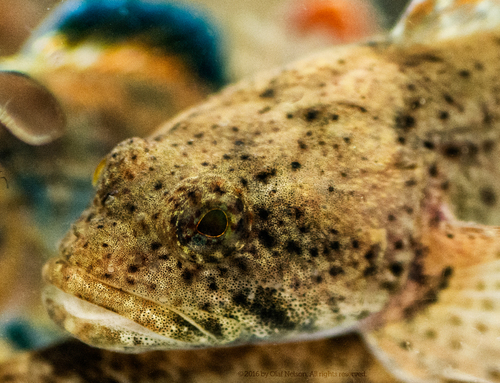


Mottled Sculpin
cottus bairdii
The Mottled Sculpin (Cottus bairdii) is a fascinating freshwater fish, often overlooked due to its cryptic appearance and bottom-dwelling habits. This small, torpedo-shaped fish is a crucial component of many stream ecosystems across North America, serving as both a predator of small invertebrates and a prey item for larger fish and birds. Known for its remarkable camouflage, the Mottled Sculpin is a master of blending into its rocky surroundings, making it a challenging but rewarding find for naturalists. Its presence is often an indicator of good water quality, as it prefers cool, clear, and well-oxygenated streams and rivers.
Habitat: The Mottled Sculpin is typically found in cool, clear, well-oxygenated freshwater environments such as rocky streams, rivers, and the shallow, stony margins of lakes.
Mottled Sculpins are small, bottom-dwelling fish characterized by a large, flattened head and a body that tapers towards the tail. Their coloration is typically mottled brown, olive, and grey, featuring irregular dark blotches and bands that provide excellent camouflage against rocky stream beds. They possess large pectoral fins that are often spread wide, aiding in their ability to perch on the bottom. The dorsal fins are distinct, with one spiny and one soft-rayed, and they lack scales, instead having a smooth skin or scattered prickles. Adults typically range from 6 to 12 cm in length.
Category
FishRarity
Common
Danger
1/5 · Very low
Snaps
Be the first to snap!
Despite their name, 'sculpin' refers to their spiny head and lack of scales, not a specific fish family.
Male Mottled Sculpins are dedicated parents; they construct a nest under a rock or log and guard the eggs until they hatch.
Mottled Sculpins often use their large pectoral fins to 'walk' along the bottom of streams rather than swimming continuously, allowing them to conserve energy in swift currents.
They are excellent indicators of water quality because they require cool, clear, and unpolluted water to thrive.
Their mottled brown, grey, and olive coloration, combined with irregular blotches, allows them to perfectly blend with the stony, gravelly substrate of their habitat, making them nearly invisible to predators and prey alike.
Mottled Sculpins use their large, fan-like pectoral fins to 'walk' or scoot along the stream bottom, efficiently maneuvering through currents and navigating complex rocky terrain without being swept away.
Equipped with a highly sensitive lateral line system, these fish can detect subtle water movements and vibrations caused by prey or approaching predators, even in low light conditions or turbid waters.
The Mottled Sculpin is an opportunistic bottom-dwelling carnivore, primarily feeding on a variety of aquatic invertebrates found among the rocks and gravel of its habitat.
Age differences: Juveniles typically consume smaller invertebrates, while adults may include larger insect larvae and occasionally small fish eggs or fry in their diet.

Salvelinus fontinalis
A common predator of Mottled Sculpins in many freshwater systems.
Ephemeroptera species
Mottled Sculpins primarily feed on these aquatic insect larvae.
Gammarus species
Mottled Sculpins consume these small crustaceans, which also compete for similar food resources.

Megaceryle alcyon
These birds often prey on small fish, including Mottled Sculpins, found in shallow waters.
No trait badges are assigned for this object yet.
No aliases listed yet.
Collections for this object will appear here as more themes are added.
Danger
1/5 · Very low
No special safety notes yet.
Look at body shape, where the fins sit and their outline, mouth position, stripes and spots. Young fish and breeding adults can wear different patterns, and aquarium color varieties can look nothing like wild fish. Fish Identifier: upload a photo and compare the visible details.
6-15 cm
0.01-0.05 kg
3-6 years
The Mottled Sculpin is an opportunistic bottom-dwelling carnivore, primarily feeding on a variety of aquatic invertebrates found among the rocks and gravel of its habitat.
The Mottled Sculpin is typically found in cool, clear, well-oxygenated freshwater environments such as rocky streams, rivers, and the shallow, stony margins of lakes.
Ambush
100-2000
Zoom in to split clusters and explore where this object has been snapped.
Recent snaps will appear here as new observations are added.
Take the discovery with you
Snap it with Snappit to identify it, learn what makes it special, and add the discovery to your collection.