Brook Trout
Salvelinus fontinalis
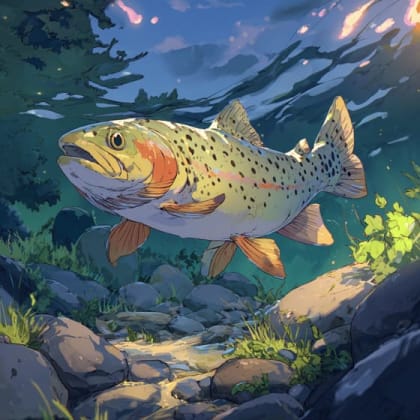
The Brook Trout is a small, colorful fish known for its bright spots! They are often found in clear, cold streams.
Habitat: Cold, clean freshwater streams
The Brook Trout has a distinctive olive-green back with light, worm-like markings and striking red spots with blue halos along its sides. Its lower fins are orange with a prominent white leading edge, edged in black, making it easy to identify.
Category
FishRarity
Common
Danger
2/5 · Low
Snaps
12
Brook Trout build nests called "redds" on the riverbed to lay their eggs.
Male Brook Trout grow a hooked jaw called a "kype" during mating season. Wow!
They are actually a type of "char," not a true trout!
They are an indicator species, showing if water is clean and healthy. Wow!
Brook Trout has intricate patterns that help them blend perfectly with rocky riverbeds, hiding from predators.
Brook Trout can thrive in super cold, oxygen-rich water because their bodies are adapted for chilly environments.
Brook Trout can sense tiny vibrations in the water using a special lateral line, helping them find hidden prey.
They are clever hunters, munching on aquatic insects, small fish, and other tiny water critters.
Age differences: Young fish eat mostly insects, while larger adults consume more small fish and crustaceans.
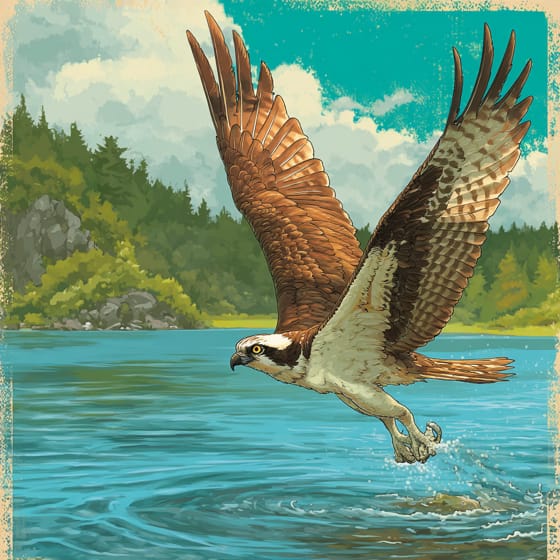
Pandion haliaetus
Ospreys dive from the sky to snatch Brook Trout from rivers and lakes.
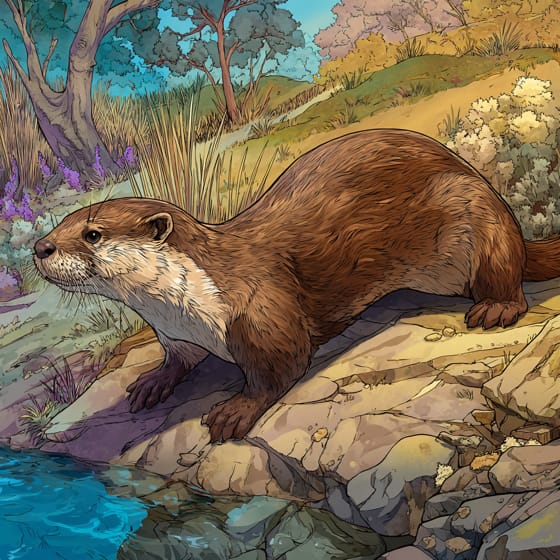
Lontra canadensis
River otters are playful hunters that frequently prey on fish like trout.
Ephemera danica
Young Brook Trout love to feast on emerging mayfly nymphs and adults.
Wildlife encompasses all undomesticated animal and plant life existing in their natural habitats.
Colorful describes organisms or objects displaying a wide range of bright and distinct colors.
Piscivorous organisms are animals that primarily subsist on a diet of fish.
This trait characterizes organisms with an exceptionally long lifespan compared to others of their kind.

Freshwater habitats include non-saline aquatic environments such as rivers, lakes, ponds, and wetlands, vital for numerous species.

Aquatic habitats encompass environments where organisms live predominantly in water, including oceans, rivers, lakes, and wetlands.

Nocturnal animals are primarily active during the nighttime hours, typically resting or sleeping during the day.
Danger
2/5 · Low
Watch quietly from a distance and never try to feed or chase wild animals.
The easiest way to identify Brook Trout is to use the Snappit nature identifier app.
25-65 cm
0.3-3 kg
3-7 years
They are clever hunters, munching on aquatic insects, small fish, and other tiny water critters.
15 km/h
Cold, clean freshwater streams
Ambush
Zoom in to split clusters and explore where this object has been snapped.

Pennsylvania, US
You might spot Mountain Laurel, Ghost Pipe, and Sweetfern.
View guide →

Connecticut, US
You might spot Green Frog and Mountain Laurel.
View guide →

New Hampshire, US
You might spot Eastern White Pine and White-Tailed Deer.
View guide →

Colorado, US
You might spot Rocky Mountain Marsh-Marigold and American Bistort.
View guide →

Pennsylvania, US
You might spot Steeplebush, Elk, and Eastern Newt.
View guide →

New Hampshire, US
You might spot Eastern Newt, Common Loon, and Hickory Tussock Moth.
View guide →
Take the discovery with you
Snap it with Snappit to identify it, learn what makes it special, and add the discovery to your collection.