



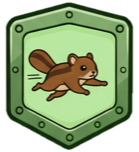

Northern Flying Squirrel
Glaucomys sabrinus
The Northern Flying Squirrel is a cute little animal that can glide through the air! It has big eyes and soft fur, making it a special friend of the night.
Habitat: Forests
The Northern Flying Squirrel has soft, reddish-brown fur on its back and a creamy white belly. It has very large, dark eyes for seeing at night, and a flattened, bushy tail. A loose skin membrane, called a patagium, stretches from its wrists to ankles, making it look distinct from other squirrels.
Category
MammalsRarity
Common
Danger
1/5 · Very low
Snaps
Be the first to snap!
Northern Flying Squirrels help spread tree seeds and fungi spores throughout forests.
These furry friends 'talk' using chirps, clicks, and hisses in the darkness.
They can flip 180 degrees in the air just before landing on a tree!
They sometimes use old woodpecker holes or abandoned bird nests as homes.
Northern Flying Squirrel can glide hundreds of feet because of its special skin membrane that acts like a parachute.
Northern Flying Squirrel has huge, dark eyes that help them see very well, even on the darkest nights, to find food.
Northern Flying Squirrel can steer itself mid-air because its flattened tail acts like a rudder, guiding its glides.
Eats a mix of forest treats like nuts, seeds, fungi, and even some insects.
Strix occidentalis
A main predator in some forest regions.
.jpg&width=800)
Martes americana
A swift ground and tree predator.
Quercus rubra
Relies on acorns from this tree for food.
Rhizopogon vinicolor
An important part of their fungi diet.
Furry describes animals possessing a dense covering of soft hair or fur.
This trait identifies organisms whose diet includes both plant and animal matter.
Arboreal animals live primarily in trees, utilizing them for shelter, food, and protection from predators.
Gliding animals move through the air by launching themselves and maintaining flight with specialized body structures, without flapping wings.

This trait characterizes organisms whose diet consists entirely or primarily of plant material.

Forest habitats are terrestrial environments dominated by dense tree cover, supporting a high diversity of plant and animal life.

Nocturnal animals are primarily active during the nighttime hours, typically resting or sleeping during the day.
No aliases listed yet.
Danger
1/5 · Very low
Always watch from a distance and don't try to touch wild animals.
The easiest way to identify Northern Flying Squirrel is to use the Snappit nature identifier app.
22-31 cm
0.065-0.14 kg
3-5 years
19 km/h
Eats a mix of forest treats like nuts, seeds, fungi, and even some insects.
Forests
Foraging
Zoom in to split clusters and explore where this object has been snapped.
Recent snaps will appear here as new observations are added.

British Columbia, CA
You might spot Salal, Northern Red Belt, and Western Sword Fern.
View guide →

New Hampshire, US
You might spot Diapensia, Eastern Mountain Avens, and Bog Bilberry.
View guide →
Take the discovery with you
Snap it with Snappit to identify it, learn what makes it special, and add the discovery to your collection.




.jpg&width=800)


.JPG&width=800)


.jpg&width=800)
