





Notamacropus parma
Notamacropus parma
The Parma wallaby is a small, friendly marsupial that loves to hop around in the forests. They have soft fur and big eyes, making them adorable and fun to watch!
Habitat: Forests
The Notamacropus parma is a small wallaby, featuring reddish-brown fur on its back, greyish underparts, and a white chest. A faint pale stripe runs across its cheek, helping it blend into dense forest foliage.
Category
MammalsRarity
Common
Danger
1/5 · Very low
Snaps
Be the first to snap!
A baby wallaby, called a joey, is born super tiny, like a jelly bean!
Parma wallabies can quietly communicate with soft clicking sounds and low hisses.
Their super strong tail helps them balance perfectly, even when making sharp turns.
They were once thought extinct for decades, only to be rediscovered on an island!
Notamacropus parma can hop swiftly on powerful hind legs, helping them escape predators quickly and efficiently.
Notamacropus parma has a special pouch that helps them carry and protect their tiny, undeveloped joey as it grows.
Notamacropus parma can see well in low light, which helps them find food and avoid danger when it's dark.
Notamacropus parma can move quietly through dense undergrowth, which helps them forage undisturbed and evade detection.
These small wallabies munch on grasses, herbs, and fallen leaves found in their dense forest homes.
Canis dingo
An apex predator that hunts wallabies in their native habitat.
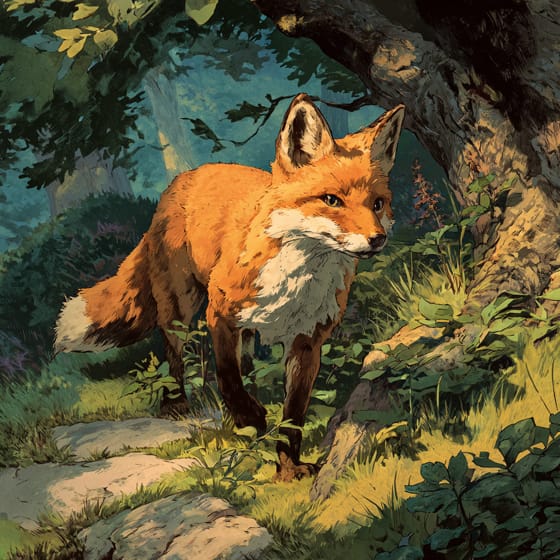
Vulpes vulpes
An introduced predator that preys on vulnerable Parma wallabies.
Felis catus
Introduced predators, especially dangerous to young wallabies and joeys.
Aquila audax
A large raptor that occasionally preys on smaller wallabies.

Pteridium esculentum
A common understory plant that provides part of their leafy diet.
Furry describes animals possessing a dense covering of soft hair or fur.
Social animals live in organized groups, cooperating for survival benefits such as foraging, defense, and raising offspring.
This trait characterizes organisms whose diet consists entirely or primarily of plant material.
Forest habitats are terrestrial environments dominated by dense tree cover, supporting a high diversity of plant and animal life.

Nocturnal animals are primarily active during the nighttime hours, typically resting or sleeping during the day.

Endangered status indicates a species is at a very high risk of extinction in the wild in the near future.
No aliases listed yet.
Danger
1/5 · Very low
Always observe animals from a distance and never try to touch them in the wild.
The easiest way to identify Notamacropus parma is to use the Snappit nature identifier app.
45-55 cm
3.2-7 kg
6-11 years
40 km/h
These small wallabies munch on grasses, herbs, and fallen leaves found in their dense forest homes.
Forests
Foraging
Zoom in to split clusters and explore where this object has been snapped.
Recent snaps will appear here as new observations are added.
Take the discovery with you
Snap it with Snappit to identify it, learn what makes it special, and add the discovery to your collection.




.jpg&width=800)


.JPG&width=800)


.jpg&width=800)
