





Oak Bush-cricket
Meconema thalassinum
The Oak Bush-cricket is a small green insect that loves to hide in bushes and trees. It makes a special sound by rubbing its wings together, which is called 'stridulation'.
Habitat: Forests
The Oak Bush-cricket is slender and typically bright to yellowish-green, blending seamlessly with leaves. It has extremely long, thread-like antennae that can be twice its body length. Females possess a distinct, sword-like ovipositor curving upwards.
Category
InsectsRarity
Common
Danger
1/5 · Very low
Snaps
3
A female Oak Bush-cricket uses her sword-like 'tail' to lay eggs inside tree bark!
Their super-long antennae are their main way to sense the world in the dark!
These crickets don't chirp; they communicate by tapping their antennae on leaves!
You'll often find them living high up in oak trees, rarely coming to the ground!
Oak Bush-crickets can 'sing' by tapping their antennae rhythmically on leaves, creating a unique, quiet song that attracts mates.
Oak Bush-crickets have a brilliant green colouration that helps them disappear perfectly among leaves, hiding from hungry predators.
Oak Bush-crickets can make powerful jumps with their strong hind legs, quickly launching themselves away from danger or to new perches.
They munch on tiny insects and soft leaves found high up in trees.
%2C_Parc_de_Woluw%C3%A9%2C_Brussels_(13042792905).jpg&width=800)
Parus major
A tasty meal for hungry birds in the canopy.
Pipistrellus pipistrellus
Hunted by bats using echolocation during night flights.
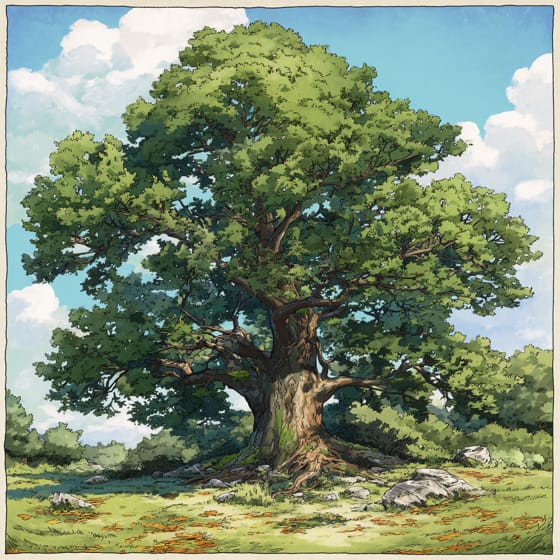
Quercus robur
Lays eggs and finds shelter and food on oak tree leaves.
Aphis fabae
Preys on these small, soft-bodied insects found on tree leaves.
Solitary animals live alone for most of their lives, only interacting with others for mating or parental care.
Singing animals produce complex vocalizations, often for purposes of attracting mates, defending territory, or communicating within their species.
Camouflaged describes organisms that possess coloring or patterns that allow them to blend into their environment.
This trait characterizes organisms whose diet consists entirely or primarily of plant material.

Forest habitats are terrestrial environments dominated by dense tree cover, supporting a high diversity of plant and animal life.

Pertaining to species that are significantly smaller than typical or average for their kind.

Nocturnal animals are primarily active during the nighttime hours, typically resting or sleeping during the day.
No aliases listed yet.
Danger
1/5 · Very low
These crickets are harmless, but it's best to watch them from a distance.
The easiest way to identify Oak Bush-cricket is to use the Snappit nature identifier app.
25-35 mm
12-16 mm
30-60 days
They munch on tiny insects and soft leaves found high up in trees.
Forests
Foraging
6
Zoom in to split clusters and explore where this object has been snapped.

Massachusetts, US
You might spot Snow Leopard, Jaguar, and Canis Lupus Baileyi.
View guide →

Illinois, US
You might spot Eastern Cottontail, American Robin, and Monarch.
View guide →

New York, US
You might spot White-Tailed Deer and Eastern Cottontail.
View guide →
Take the discovery with you
Snap it with Snappit to identify it, learn what makes it special, and add the discovery to your collection.








.jpg&width=800)



