

Ochre Sea Star
pisaster ochraceus
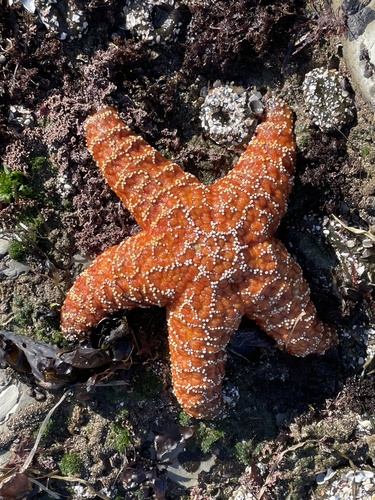
The Ochre Sea Star, scientifically known as Pisaster ochraceus, is an iconic and incredibly important resident of the rocky intertidal zones along the Pacific coast of North America. Often hailed as the classic 'keystone species,' its voracious appetite for mussels prevents these bivalves from monopolizing the rocky shores. By doing so, it maintains a balanced ecosystem where algae, barnacles, and a diverse array of other marine creatures can flourish. Known for their striking colors and robust, textured bodies, they are a favorite discovery for tide pool explorers. Despite facing severe population declines in recent years due to Sea Star Wasting Syndrome, they remain a resilient symbol of marine biodiversity. Their slow-moving nature masks a predatory prowess that literally shapes the very landscape of the shorelines they inhabit.
Habitat: Found in rocky intertidal zones, often clinging to wave-swept coastal rocks or resting in shallow tide pools.
The Ochre Sea Star is a large, heavily built starfish typically sporting five thick, tapering arms, though individuals with four to seven arms are occasionally found. True to its name, it can be bright ochre or orange, but it is just as frequently a deep, vibrant purple or brown. Its upper surface is famously rough, covered in small, white, blunt spines called ossicles that often form a distinct pentagonal or net-like pattern on the central disk. Reaching up to 36 centimeters in diameter, its underside features a mouth and deep grooves lined with thousands of tiny, sucker-tipped tube feet used for both locomotion and tightly gripping prey.
Category
AnimalRarity
Common
Danger
1/5 · Very low
Snaps
5
Despite being named the 'Ochre' Sea Star, the most common color variation found in the wild is actually a vibrant purple.
It only needs a microscopic gap of 0.1 millimeters in a mussel's shell to slip its stomach inside and begin digesting the occupant.
The crucial ecological concept of a 'keystone species' was actually coined in 1969 by zoologist Robert Paine based specifically on his research of the Ochre Sea Star.
They breathe directly through their skin using tiny, delicate, tube-like structures called papulae, which extract oxygen from the surrounding seawater.
It can push its stomach out through its mouth to digest prey, like mussels, directly inside their own shells.
Utilizing a complex water vascular system, it powers thousands of tube feet to slowly but relentlessly pry open tightly sealed bivalve shells.
If an arm is lost to a predator or injury, the sea star can completely regrow the missing appendage over time, provided the central disk remains intact.
The Ochre Sea Star is a formidable predator in the intertidal zone, primarily feeding on bivalves by prying them open and digesting them externally.
Age differences: Larvae are planktivorous, feeding on microscopic phytoplankton, before transitioning to a carnivorous diet of small invertebrates after metamorphosis.
Mytilus californianus
Primary prey species whose population is heavily controlled by the sea star's predatory habits.
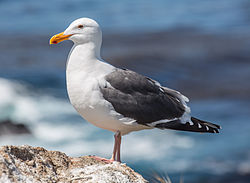
Larus occidentalis
An avian predator that occasionally pries sea stars off rocks to eat them when other food is scarce.
Pollicipes polymerus
Competes with the sea star's primary prey for space on rocky substrates in the intertidal zone.
No trait badges are assigned for this object yet.
No aliases listed yet.
Collections for this object will appear here as more themes are added.
Danger
1/5 · Very low
No special safety notes yet.
Look for fins, arms, tentacles, shells and body symmetry. Underwater light shifts colors, so structure and markings usually matter more than shade. Sea Creature Identifier: upload a photo and compare the visible details.
10-36 cm
0.2-1 kg
10-20 years
The Ochre Sea Star is a formidable predator in the intertidal zone, primarily feeding on bivalves by prying them open and digesting them externally.
Found in rocky intertidal zones, often clinging to wave-swept coastal rocks or resting in shallow tide pools.
Foraging
1000000-40000000
Zoom in to split clusters and explore where this object has been snapped.

California, US
You might spot Sunburst Anemone, Ochre Sea Star, and Striped Shore Crab.
View guide →

Washington, US
You might spot Great Blue Heron, Aggregating Anemone, and Ochre Sea Star.
View guide →

Washington, US
You might spot Bigleaf Maple, Mule Deer, and Oregon Grape.
View guide →

Alaska, US
You might spot Bald Eagle, Salmonberry, and Ochre Sea Star.
View guide →

California, US
You might spot Slender Banana Slug, Western Gull, and Red-Tailed Hawk.
View guide →

California, US
You might spot Harbor Seal, Ochre Sea Star, and Sea Thrift.
View guide →
Take the discovery with you
Snap it with Snappit to identify it, learn what makes it special, and add the discovery to your collection.