





Oleander Hawkmoth
Daphnis nerii
The Oleander Hawkmoth is a colorful insect that looks like a small bird when it flies. It has beautiful green and brown patterns on its wings, making it easy to spot in gardens and parks.
Habitat: Gardens
The Oleander Hawkmoth has striking camouflage, with a vibrant mix of green, pink, and white patterns that mimic foliage. Its forewings display intricate wavy lines, while the hindwings are reddish-brown. This large moth's intricate coloration makes it hard to spot among leaves.
Category
InsectsRarity
Common
Danger
2/5 · Low
Snaps
2
Adult Oleander Hawkmoths only drink nectar; they don't eat any solid food!
Caterpillars reveal scary 'eye spots' when threatened, looking like a snake's head!
Their caterpillars safely munch toxic oleander leaves, gaining protection from predators!
These moths are amazing long-distance flyers, migrating across oceans and continents!
Oleander Hawkmoth can hover like a hummingbird because of its powerful wings that help them sip nectar while flying.
Oleander Hawkmoth has a very long proboscis that helps them reach nectar deep inside tubular flowers.
Adults drink flower nectar, while caterpillars munch on plant leaves, especially oleander.
Age differences: Larvae eat plant leaves, while adults only drink flower nectar using a long proboscis.
Jasminum officinale
Adults feed on its nectar, aiding in its reproduction.
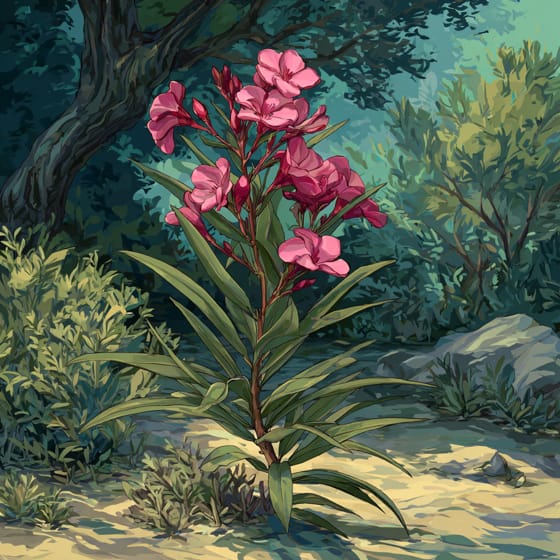
Nerium oleander
Caterpillars consume its leaves, absorbing its toxic compounds.
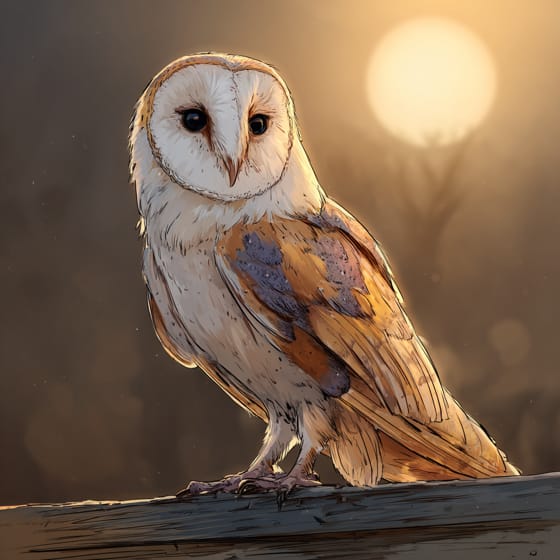
Tyto alba
These nocturnal hunters can catch adult moths in flight.
Sturmia bella
Its larvae develop inside the moth caterpillar, eventually killing it.
Solitary animals live alone for most of their lives, only interacting with others for mating or parental care.
Colorful describes organisms or objects displaying a wide range of bright and distinct colors.
This trait characterizes organisms whose diet consists entirely or primarily of plant material.
Diurnal animals are primarily active during daylight hours, typically resting or sleeping at night.

This trait identifies organisms that exhibit exceptional swiftness in movement for hunting, escape, or travel.

Migratory animals undertake seasonal movements from one region to another, typically in response to changes in climate or food availability.

This habitat trait indicates species that can coexist with humans in urban and suburban environments, utilizing man-made structures and green spaces.

Describes organisms that transfer pollen, enabling the fertilization and reproduction of plants.
No aliases listed yet.
Danger
2/5 · Low
Don't touch the caterpillars, as they can be a bit prickly!
The easiest way to identify Oleander Hawkmoth is to use the Snappit nature identifier app.
90-120 mm
50-60 mm
45-60 days
45 km/h
Adults drink flower nectar, while caterpillars munch on plant leaves, especially oleander.
Gardens
Foraging
Zoom in to split clusters and explore where this object has been snapped.

Hawaii, US
You might spot Red-Crested Cardinal and Zebra Dove.
View guide →

Hawaii, US
You might spot Red-Crested Cardinal and Zebra Dove.
View guide →

Hawaii, US
You might spot Red-Crested Cardinal and Zebra Dove.
View guide →

Hawaii, US
You might spot Zebra Dove and Red-Crested Cardinal.
View guide →

Hawaii, US
You might spot Red-Crested Cardinal and Zebra Dove.
View guide →

Hawaii, US
You might spot Hawaiian Monk Seal, Ant, and Seahorse.
View guide →
Take the discovery with you
Snap it with Snappit to identify it, learn what makes it special, and add the discovery to your collection.







.jpg&width=800)



