

Orange Faint Foot Mushroom
heimiomyces tenuipes
The Orange Faint Foot Mushroom (Heimiomyces tenuipes) is a striking saprotrophic fungus famed for its vibrant golden-orange coloration and delicate, umbrella-like appearance. Gracing mossy logs and decaying hardwood forests worldwide, this species plays a vital role in recycling organic matter back into woodland soil ecosystems. Mycologists and nature enthusiasts are drawn to its bright presence, which contrasts beautifully against dark, damp forest floors, highlighting the unexpected beauty of fungal decomposition. Historically grouped under different genera due to its unique features, this species possesses a remarkably tough, slender stem that belies its fragile appearance. It thrives in humid environments, particularly following heavy rainstorms, when clusters of these mushrooms erupt from rotting timber. While not typically sought after for culinary use, it remains a favorite subject for forest photography and ecological studies.
Habitat: Found in wet temperate and subtropical forests, growing in clusters on decaying deciduous hardwood logs and stumps.
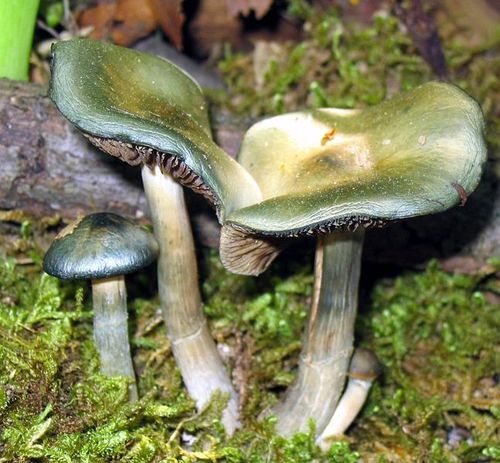
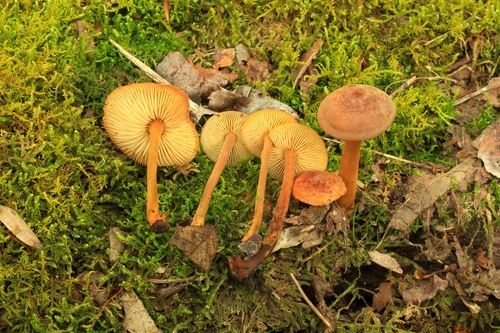
This mushroom features a bright yellow-orange to reddish-orange cap, which measures 1 to 5 centimeters in diameter, initially convex and maturing to a flattened or slightly depressed shape. The gills underneath are pale yellow, moderately crowded, and slightly attached to the stem. Its most identifying feature is the slender, tough, wire-like stem, which measures 2 to 7 centimeters long and is covered in fine, velvety brownish-yellow hairs, darkening significantly toward the base.
Category
FungiRarity
Common
Danger
1/5 · Very low
Snaps
Be the first to snap!
The scientific name 'tenuipes' comes from Latin roots meaning 'slender foot', referring to its thin stem.
This mushroom species is capable of regenerating its cap if environmental conditions improve during early growth.
Unlike many delicate mushrooms, its stem is incredibly tough, fibrous, and difficult to break by hand.
Produces powerful extracellular enzymes like cellulase and laccase to break down tough plant cell walls.
The velvety hairs on its stem help retain moisture and prevent drying out during dry spells.
Exudes microscopic droplets to maintain optimal pressure and excrete metabolic waste in humid conditions.
Obtains nutrients through saprotrophic absorption, breaking down dead wood matter into simple organic compounds.

Fagus grandifolia
Grows on and decomposes dead wood of this deciduous tree species.
Orchesella cincta
Feeds on the organic tissue of the mushroom cap.

Trametes versicolor
Competes for space and decaying wood nutrients on the forest floor.
No trait badges are assigned for this object yet.
No aliases listed yet.
Collections for this object will appear here as more themes are added.
Danger
1/5 · Very low
No special safety notes yet.
Compare the cap shape, the underside, the stem and base, and whether the fungus grows on wood or soil. Some fungi have gills, others pores or teeth. A cap seen only from above often hides the most useful features. Mushroom Identifier: upload a photo and compare the visible details.
1-7 cm
0.001-0.01 kg
1-10 years
Obtains nutrients through saprotrophic absorption, breaking down dead wood matter into simple organic compounds.
Found in wet temperate and subtropical forests, growing in clusters on decaying deciduous hardwood logs and stumps.
Zoom in to split clusters and explore where this object has been snapped.
Recent snaps will appear here as new observations are added.
Take the discovery with you
Snap it with Snappit to identify it, learn what makes it special, and add the discovery to your collection.