

Orange Milkwort
senega lutea
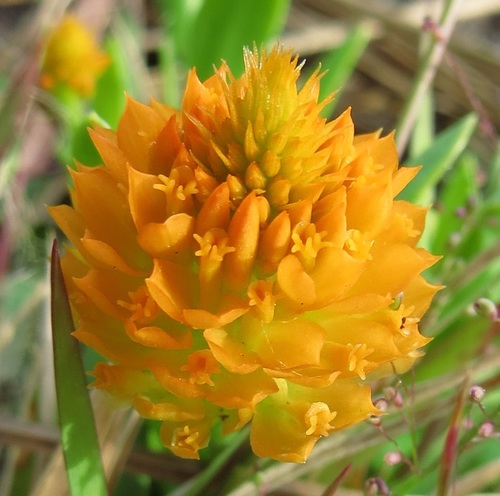
The Orange Milkwort (Senega lutea, formerly Polygala lutea) is a striking biennial wildflower native to the coastal plains of the southeastern United States. Renowned for its brilliant, warm coloration, this plant adds a vibrant splash of tangerine orange to the damp, acidic environments it calls home. It stands out in damp pine flatwoods and wet savannas, where its unique 'drumstick' inflorescences can be spotted from spring through autumn. Historically classified within the Polygala genus, its common name 'milkwort' reflects an ancient folk belief that consuming these plants could promote milk production in nursing mothers and livestock. Today, this plant is celebrated by botanists as a key indicator of healthy, fire-maintained wetland ecosystems. Its ability to thrive in nutrient-poor soils and its dependency on natural fire cycles make it a fascinating study in evolutionary adaptation.
Habitat: Typically found in wet, acidic, sandy soils of pine flatwoods, pitcher plant bogs, and grassy savannas across the southeastern coastal plain.
This herb typically grows to a height of 15 to 50 cm, featuring an upright, smooth green stem rising from a basal rosette of fleshy, spatulate leaves. The most distinctive feature is the dense, compact, head-like cluster of flowers at the top of the stem, which measures 1 to 3 cm in length and resembles a bright orange or golden-yellow drumstick. The individual flowers are tiny and structurally complex, featuring fused petals that form a tubular shape. When dried, these vibrant blossoms surprisingly retain their rich orange color rather than turning brown, distinguishing them from other nearby flora.
Category
PlantsRarity
Common
Danger
1/5 · Very low
Snaps
4
The common name 'milkwort' is derived from a historic European belief that cows eating these plants would yield higher volumes of rich milk.
The plant's root system emits a pleasant wintergreen scent when crushed, a characteristic shared with several members of the Polygalaceae family.
Unlike many other wildflowers, the bright orange color of its blossom does not easily fade when dried, making it a historic favorite for pressed floral arts.
Its seeds respond positively to heat and chemical cues from forest fires, allowing them to germinate rapidly in newly cleared, ash-fertilized soil.
Its seeds develop lipid-rich appendages called elaiosomes to attract ants, which carry the seeds underground and protect them from predators.
It possesses roots adapted to extract vital phosphorus from waterlogged, highly acidic soils while resisting toxic aluminum accumulation.
As a photosynthetic plant, it synthesizes its own sugars from sunlight, water, and carbon dioxide, while absorbing minerals through its roots.
Bombus pensylvanicus
Provides nectar to native long-tongued bees in exchange for pollination services.
Aphaenogaster treatae
Ants gather the seeds to feed on the elaiosomes, inadvertently planting them in underground nests.
No trait badges are assigned for this object yet.
No aliases listed yet.
Collections for this object will appear here as more themes are added.
Danger
1/5 · Very low
No special safety notes yet.
The easiest way to identify Orange Milkwort is to use the Snappit nature identifier app.
15-50 cm
1-2 years
As a photosynthetic plant, it synthesizes its own sugars from sunlight, water, and carbon dioxide, while absorbing minerals through its roots.
Typically found in wet, acidic, sandy soils of pine flatwoods, pitcher plant bogs, and grassy savannas across the southeastern coastal plain.
Zoom in to split clusters and explore where this object has been snapped.

South Carolina, US
You might spot American Alligator, Anole, and Great Blue Heron.
View guide →
Florida, US
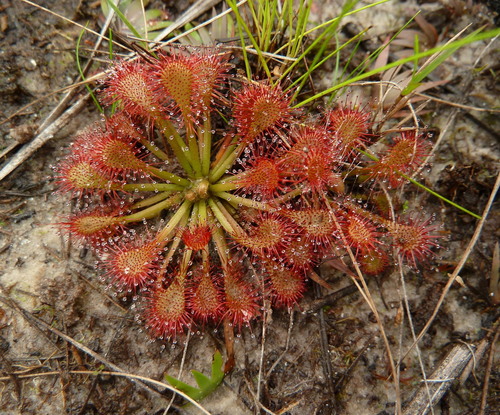
You might spot Pink Sundew, Drooping Forked Fern, and Netted Pawpaw.
View guide →

Florida, US
You might spot Coastalplain Chaffhead, Slimleaf Pawpaw, and Woolly Pawpaw.
View guide →
Take the discovery with you
Snap it with Snappit to identify it, learn what makes it special, and add the discovery to your collection.











.jpg&width=800)



_001.jpg&width=800)




