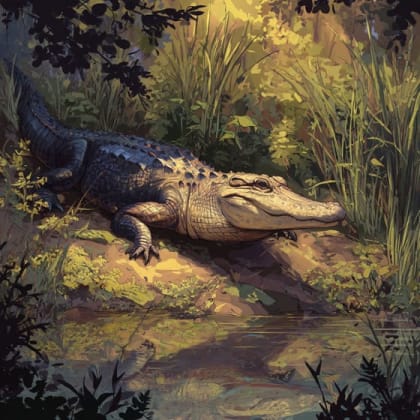





American Alligator

The Ashley River Historic District is a sweeping tableau of South Carolina's layered past.
The Ashley River Historic District is a sweeping tableau of South Carolina's layered past.
This nationally significant cultural landscape, stretching along the Ashley River in South Carolina, offers an immersive journey through over 300 years of American history. Encompassing a vast 23,828 acres, it's not a single park but a collection of some of the nation's most important historic sites, including Drayton Hall, Middleton Place, and Magnolia Plantation and Gardens, all connected by the ancient, moss-draped Ashley River Road. Designated a National Register of Historic Places site, the district provides a unique and comprehensive opportunity to explore the breadth of South Carolina's evolution, from its colonial beginnings through the mid-20th century.
Visitors can step back in time at these iconic estates, each offering distinct insights. Drayton Hall stands as America's oldest unrestored plantation house open to the public, a remarkable example of Georgian-Palladian architecture. Middleton Place boasts America's oldest landscaped gardens, with breathtaking terraced lawns, the iconic "Butterfly Lakes," and vibrant seasonal displays of camellias and azaleas. Magnolia Plantation and Gardens, another of the country's oldest gardens, captivates with its extensive botanical collections, a fascinating Audubon Swamp Garden, and a Wildlife Center showcasing rescued native animals like alligators and bobcats, alongside free-roaming peacocks.
Beyond the grandeur of the estates, the district reveals a deeper, more complex narrative, including former Native American trade routes, slave settlements, archaeological sites, and remnants of post-Civil War communities. The intertwining of natural beauty—from ancient live oaks draped in Spanish moss to the serene Ashley River—with profound human history makes this a profoundly memorable and enriching destination, inviting reflection on the diverse stories that shaped the Lowcountry and the nation. Be ready to snap and learn! Get the Snappit app to identify any nature species you find here.
The Ashley River Historic District embodies more than three centuries of cultural and ecological significance in the South Carolina Lowcountry. Its history traces from 17th-century colonial settlement through the mid-20th century, profoundly shaped by the Ashley River itself, which served as a crucial transportation artery. The district's landscape reflects a succession of economic and social eras, including the lucrative rice culture, phosphate mining, and the timber industry. Many of the grand plantations, such as Drayton Hall, Middleton Place, and Magnolia Plantation, began as rice plantations, their success intricately tied to the labor and specialized knowledge of enslaved Africans and African Americans. Officially recognized for its national importance, the district was listed on the National Register of Historic Places in 1994, with its boundaries expanded significantly in 2010 to encompass over 23,000 acres. The historic Ashley River Road, itself a National Scenic Byway and the oldest road in continuous use in South Carolina, links many of these sites, preserving the area's historic character with its iconic live oak canopy. Today, the district continues to face modern challenges, with ongoing efforts by preservation organizations and landowners to protect its irreplaceable historical and ecological resources from development pressures.
Take guided house tours at Drayton Hall and Middleton Place to learn about colonial life and the lives of enslaved people.
* Stroll through the world-renowned gardens, admiring the diverse flora, especially during bloom seasons.
* Experience the unique Lowcountry ecosystem and observe wildlife like alligators, birds, and otters, particularly at Magnolia's Audubon Swamp Garden and Wildlife Center.
* Paddle the Ashley River for a historical and ecological perspective, spotting shipwrecks visible at low tide.
* Drive or cycle along the scenic Ashley River Road, enjoying the canopy of live oaks and historic vistas.
Spring (March-May): Peak blooming season for azaleas and camellias, perfect for garden enthusiasts. Mild weather is ideal for walking. Expect larger crowds and higher accommodation prices.
Summer (June-August): Hot and humid. Good for water activities on the Ashley River. Wildlife is active. Consider early morning visits to avoid the highest heat.
Fall (September-November): Pleasant temperatures, less humidity, and beautiful fall foliage. Fewer crowds make for a more relaxed visit.
Winter (December-February): Mild temperatures with fewer tourists and potentially lower prices. Some camellias bloom in early winter.
While historic houses like Drayton Hall may have limited accessibility due to their authentic, unrestored nature (with tours covering multiple floors and cellars), the grounds and gardens of many plantations often feature paved paths or boardwalks. Magnolia Plantation, for instance, offers boardwalks in its Audubon Swamp Garden. It's advisable to check individual plantation websites for specific accessibility information.
Tour the impeccably preserved 18th-century main house, explore the African-American cemetery, and discover the authentic antebellum landscape.
Wander through America's oldest landscaped gardens, featuring the symmetrical "Butterfly Lakes," historic camellia and azalea collections, and the ancient Middleton Oak. Visit the stableyards to see historic trades and animals.
Explore the vibrant historic gardens, delve into the unique ecosystem of the Audubon Swamp Garden via boardwalks, and encounter rescued native animals at the Wildlife Center.
Each card links to a full Explore page with photos, traits, and fun facts.
Start with the big picture, then zoom in to explore individual wildlife observations around this place.
Allow Ample Time
The district contains multiple major attractions; dedicate at least a full day, or preferably two, to explore Drayton Hall, Middleton Place, and Magnolia Plantation and Gardens thoroughly.
Prioritize Your Visits
Research each plantation beforehand and decide which aspects (e.g., unrestored architecture, formal gardens, wildlife) are most important to you to manage your time effectively.
Dress for Comfort
Wear comfortable walking shoes, as you'll be doing a lot of walking across extensive grounds and gardens. Layers are advisable, especially during spring and fall.
Hydrate, Especially in Summer
South Carolina summers are hot and humid. Bring water, wear sunscreen, and consider a hat, or plan to visit during cooler seasons.
Book Tours in Advance
Especially during peak season (spring), popular guided tours at individual plantations can fill up quickly. Check their websites for booking options.
Consider a Combined Ticket or Package
Some plantations may offer combined tickets or packages, which can be cost-effective if you plan to visit multiple sites.
Jun 16, 2026
Jun 15, 2026
Jun 13, 2026
Jun 13, 2026
Jun 12, 2026

Maryland, US
You might spot White-Tailed Deer and Eastern Gray Squirrel.
View guide →
.jpg)
District of Columbia, US
You might spot Eastern Gray Squirrel, Duck, and House Sparrow.
View guide →

Illinois, US
You might spot American Robin, Canada Goose, and House Sparrow.
View guide →

Virginia, US
You might spot Spotted Lanternfly and Northern Cardinal.
View guide →
Take the discovery with you
Identify the wildlife you spot, learn as you go, and keep a collection of the adventure.