Pacific Stubby Rose Anemone
urtibrina clandestina
The Pacific Stubby Rose Anemone is a colorful sea creature that loves to dance with the waves! Its soft tentacles sway gracefully underwater, making it a beautiful sight to see.
Habitat: Pacific Ocean, typically found in rocky crevices and coral reefs.
The Pacific Stubby Rose Anemone has a stout, column-like body with a wide oral disc, typically appearing in shades of reddish-brown or pink. Its many short, stubby tentacles are arranged in dense rings, giving it a compact, rose-like or cauliflower-like texture, distinct from other long-tentacled anemones.
Category
InvertebrateRarity
Common
Danger
1/5 · Very low
Snaps
Be the first to snap!
Anemones are animals, but they look like colorful, soft underwater flowers!
If cut in half, some anemones can grow into two separate animals!
Some anemones can actually slide along rocks very slowly to find a better spot.
They don't have a brain or heart, yet they can still eat, grow, and react.
Pacific Stubby Rose Anemone has a strong, disc-shaped foot that helps them anchor firmly to rocks, resisting powerful waves and currents.
Pacific Stubby Rose Anemone can sting prey using special cells on its tentacles to catch small organisms swimming too close.
Pacific Stubby Rose Anemone can regrow lost parts because of its simple body structure, helping it survive injuries from predators.
They snatch small critters swimming by using their tentacles, stinging and pulling them into their mouths!
Dermasterias imbricata
A sea star that feeds on various invertebrates, including anemones.
Aeolidia papillosa
A sea slug specialized in preying on sea anemones, including this one.
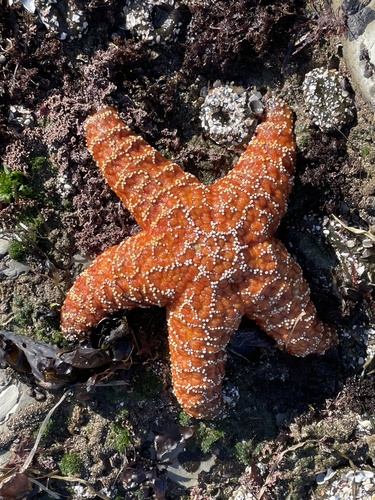
Pisaster ochraceus
A common sea star that consumes anemones and other sessile organisms.
Solitary animals live alone for most of their lives, only interacting with others for mating or parental care.
Colorful describes organisms or objects displaying a wide range of bright and distinct colors.
Filter feeders obtain nutrients by straining suspended food particles and small organisms from water.
Aquatic habitats encompass environments where organisms live predominantly in water, including oceans, rivers, lakes, and wetlands.

Marine habitats encompass all saltwater environments of the Earth's oceans, supporting an immense diversity of aquatic life.
Danger
1/5 · Very low
No special safety notes yet.
The easiest way to identify Pacific Stubby Rose Anemone is to use the Snappit nature identifier app.
2-5 cm
1-4 cm
5-20 years
They snatch small critters swimming by using their tentacles, stinging and pulling them into their mouths!
Pacific Ocean, typically found in rocky crevices and coral reefs.
Ambush
50-100
Zoom in to split clusters and explore where this object has been snapped.
Recent snaps will appear here as new observations are added.
Take the discovery with you
Snap it with Snappit to identify it, learn what makes it special, and add the discovery to your collection.