


Dungeness crab
Metacarcinus magister
The Dungeness crab is a tasty crab found along the Pacific Coast. It has a hard shell and big claws, and it loves to hide in the sand and rocks.
Habitat: Coastal areas
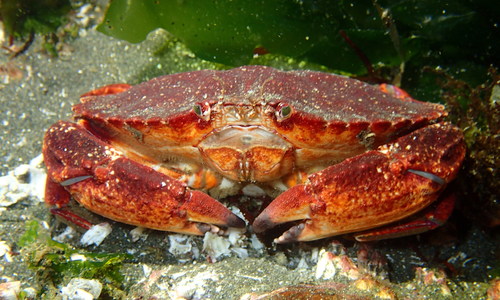
The Dungeness crab has a broad, oval-shaped shell that ranges from reddish-brown to purplish. Its most distinctive features are its large, strong claws tipped with white, setting it apart from other brown-shelled crabs.
Category
InvertebrateRarity
Common
Danger
2/5 · Low
Snaps
1
A female Dungeness crab can carry over a million tiny eggs under her tail!
Their mighty claws are strong enough to crack open tough clam and oyster shells for a meal!
These clever crabs taste and smell the ocean floor using special sensors on their legs!
When they grow, Dungeness crabs shed their entire old shell in a process called molting!
Dungeness crab can quickly burrow into sand because of its powerful legs, which helps them hide from predators.
Dungeness crab can regrow lost limbs because of its amazing biology, which helps them survive attacks from predators.
Dungeness crab has powerful, white-tipped claws that help them crush tough shells of prey and defend against threats.
A Dungeness crab is an omnivore, eating small animals and plants found on the seafloor.
Age differences: Younger crabs eat smaller prey and more detritus.
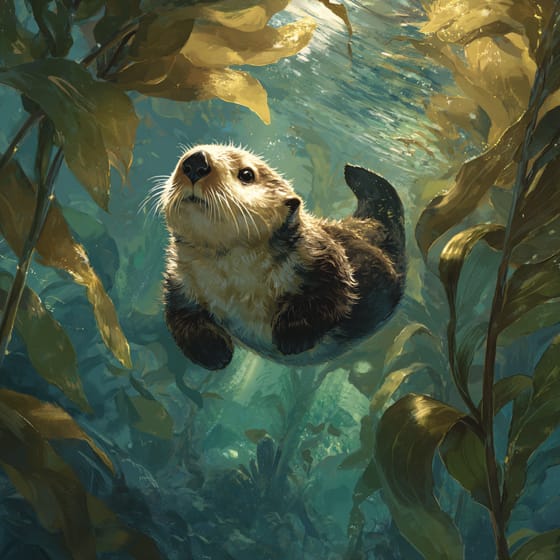
Enhydra lutris
Sea otters use rocks to crack open their hard shells.
Enteroctopus dofleini
Giant Pacific octopuses grab and eat Dungeness crabs.
Hippoglossus stenolepis
Large halibut prey on Dungeness crabs on the ocean floor.
Mytilus californianus
Dungeness crabs use their strong claws to crack mussel shells.
Solitary animals live alone for most of their lives, only interacting with others for mating or parental care.
Scavengers consume dead organic matter, helping to decompose carcasses and other waste in the ecosystem.
This trait characterizes organisms with an exceptionally long lifespan compared to others of their kind.
Coastal habitats are dynamic environments located along the interface between land and sea, influenced by tides, waves, and saltwater.

Armored describes animals protected by a hard, external covering or shell for defense.

This trait identifies organisms whose diet consists entirely or primarily of animal tissue.

Describes a species whose presence and role have a disproportionately large effect on its environment.

This trait identifies organisms that exhibit exceptional swiftness in movement for hunting, escape, or travel.

Marine habitats encompass all saltwater environments of the Earth's oceans, supporting an immense diversity of aquatic life.
Danger
2/5 · Low
Be careful around crabs; their claws can pinch!
The easiest way to identify Dungeness crab is to use the Snappit nature identifier app.
10-25 cm
0.5-2 kg
8-13 years
2 km/h
A Dungeness crab is an omnivore, eating small animals and plants found on the seafloor.
Coastal areas
Ambush
Zoom in to split clusters and explore where this object has been snapped.

Washington, US
You might spot Mule Deer, Yellow Sand Verbena, and Bald Eagle.
View guide →
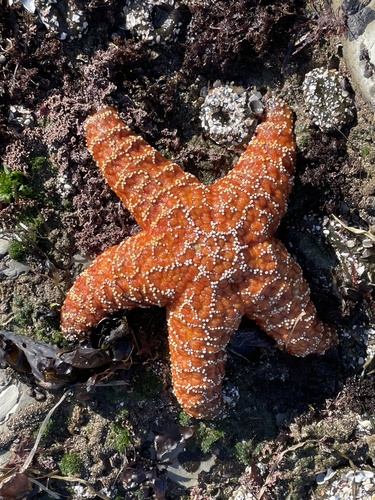
British Columbia, CA
You might spot Ochre Sea Star, Fringe Cups, and Moonglow Anemone.
View guide →
British Columbia, CA
You might spot Red Rock Crab, Dungeness Crab, and Salal.
View guide →
Take the discovery with you
Snap it with Snappit to identify it, learn what makes it special, and add the discovery to your collection.