.jpeg&width=800)





Atlantic Sand Crab
emerita talpoida
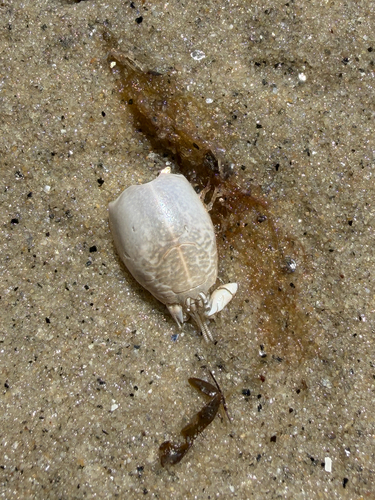
The Atlantic Sand Crab is a small, lively creature that burrows in the sand at the beach. Kids love to dig for them and watch them scurry back to their sandy homes!
Habitat: Shallow coastal waters and sandy beaches along the Atlantic Ocean.
The Atlantic Sand Crab has a smooth, oval-shaped carapace, typically grayish-tan or light brown, that blends perfectly with the sand. Unlike many crabs, it lacks prominent pincer claws, instead featuring flattened, paddle-like legs and feathery antennae.
Category
InvertebrateRarity
Common
Danger
1/5 · Very low
Snaps
5
Female sand crabs can carry thousands of tiny, bright orange eggs under their tail!
If you dig carefully near the surf, you might find dozens living together!
They always face the ocean, even when buried, patiently waiting for the next wave!
Unlike most crabs, they walk backward, not sideways, to quickly escape into the sand!
Atlantic Sand Crab can burrow into wet sand in seconds because of its specialized legs that help it disappear from predators.
Atlantic Sand Crab has long, feathery antennae that help it filter tiny food particles from receding ocean waves.
Atlantic Sand Crab can move up and down the beach with the tide because it uses wave action to travel efficiently.
This crab uses its feathery antennae to catch tiny bits of food from ocean waves as they wash over the sand.
Age differences: null
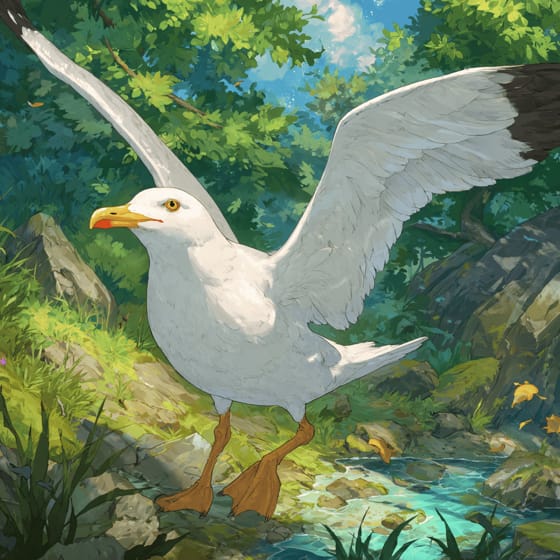
Larus argentatus
Important food source for shorebirds picking them from sand.
Menticirrhus saxatilis
Fish like kingfish dig them up from the sandy bottom.
Paralichthys dentatus
Flounder prey on these crabs when partially buried.
Solitary animals live alone for most of their lives, only interacting with others for mating or parental care.
Burrowing animals dig tunnels and chambers in the ground, using these subterranean structures for shelter, hunting, or breeding.
This trait identifies organisms whose diet consists entirely or primarily of animal tissue.
Diurnal animals are primarily active during daylight hours, typically resting or sleeping at night.

Marine habitats encompass all saltwater environments of the Earth's oceans, supporting an immense diversity of aquatic life.
Danger
1/5 · Very low
Always wash your hands after handling crabs.
The easiest way to identify Atlantic Sand Crab is to use the Snappit nature identifier app.
3.5 cm
5 g
3 years
0.5 km/h
This crab uses its feathery antennae to catch tiny bits of food from ocean waves as they wash over the sand.
Shallow coastal waters and sandy beaches along the Atlantic Ocean.
Filter Feeding
Zoom in to split clusters and explore where this object has been snapped.
Jun 20, 2026
Harkness Memorial State ParkPhoto attribution
(c) Sawyer Baran, some rights reserved (CC BY)
License: CC BY 4.0 ↗
Image may be shown cropped inside the card frame.

New Jersey, US
You might spot Brant, Laughing Gull, and Great Black-Backed Gull.
View guide →

Connecticut, US
You might spot Brant, American Herring Gull, and Double-Crested Cormorant.
View guide →

Delaware, US
You might spot Atlantic Horseshoe Crab and Atlantic Ghost Crab.
View guide →

New Jersey, US
You might spot Laughing Gull, Yellow-Crowned Night Heron, and White Ibis.
View guide →

Rhode Island, US
You might spot Rugosa Rose, Chicory, and Northern Bayberry.
View guide →

New York, US
You might spot Eastern Box Turtle, Osprey, and Monarch.
View guide →
Take the discovery with you
Snap it with Snappit to identify it, learn what makes it special, and add the discovery to your collection.