





Pacific Wren
Troglodytes pacificus
The Pacific Wren is a tiny bird with a big voice! It loves to hop around in dense forests, singing beautiful songs to its friends. Look closely to spot its quick movements among the trees.
Habitat: Forests
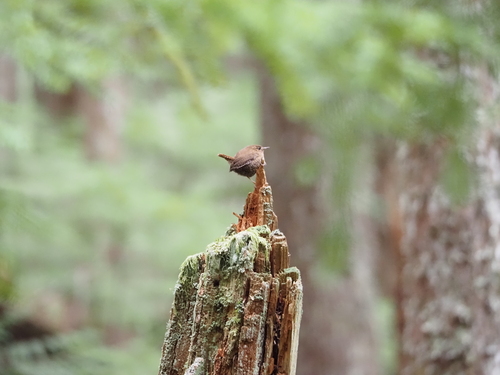
The Pacific Wren is a tiny, plump bird with dark reddish-brown feathers intricately barred with black, giving it a mottled look. It has a very short, often cocked-up tail and a pale buffy belly, appearing darker and smaller than many other wren species.
Category
BirdsRarity
Common
Danger
1/5 · Very low
Snaps
29
Despite their tiny size, Pacific Wrens are incredibly feisty and territorial.
Its scientific name, Troglodytes, means "cave-dweller," referring to its secluded habits.
Males may build several "dummy" nests to impress a female before she picks one.
They build dome-shaped nests, often hidden in tree roots or mossy crevices.
Pacific Wrens can sing incredibly complex, loud songs that help them attract mates and defend their territory.
Pacific Wrens have cryptic plumage that helps them blend perfectly into dark, mossy forest environments, avoiding predators.
Pacific Wrens can expertly climb and forage through dense undergrowth and mossy logs, finding hidden insects.
These small forest birds mainly hunt insects and spiders among moss, logs, and undergrowth.

Accipiter striatus
A common raptor that preys on small forest birds.
Tamiasciurus douglasii
Known to raid nests of small birds like wrens.
Pseudotsuga menziesii
Provides essential nesting and foraging habitat in forests.
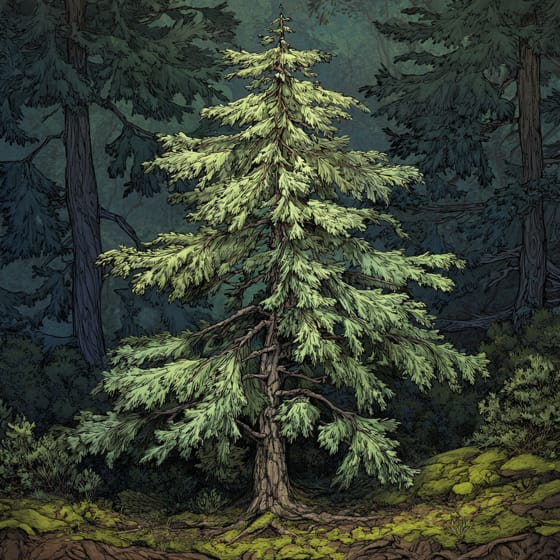
Tsuga heterophylla
Provides essential nesting and foraging habitat in forests.
Solitary animals live alone for most of their lives, only interacting with others for mating or parental care.
Singing animals produce complex vocalizations, often for purposes of attracting mates, defending territory, or communicating within their species.
Arboreal animals live primarily in trees, utilizing them for shelter, food, and protection from predators.
Camouflaged describes organisms that possess coloring or patterns that allow them to blend into their environment.

This trait identifies organisms whose diet primarily consists of insects and other small invertebrates.

This trait signifies organisms belonging to a very old evolutionary group with ancestors dating back millions of years.

Forest habitats are terrestrial environments dominated by dense tree cover, supporting a high diversity of plant and animal life.

This habitat trait identifies species found in temperate rainforests, characterized by significant rainfall, mild temperatures, and dense evergreen or deciduous forests in coastal regions.
No aliases listed yet.
Danger
1/5 · Very low
Enjoy watching these birds from a distance to keep them safe in their natural habitat.
The easiest way to identify Pacific Wren is to use the Snappit nature identifier app.
8-10 cm
12-14 cm
0.008-0.012 kg
2-5 years
These small forest birds mainly hunt insects and spiders among moss, logs, and undergrowth.
Forests
Foraging
Zoom in to split clusters and explore where this object has been snapped.
Apr 10, 2026
Sunrise Historic DistrictPhoto attribution
no rights reserved
License: CC0 1.0 ↗
Image may be shown cropped inside the card frame.

Oregon, US
You might spot Duck, Pacific Trillium, and Wood Duck.
View guide →

Washington, US
You might spot Great Blue Heron, Aggregating Anemone, and Ochre Sea Star.
View guide →

California, US
You might spot Western Fence Lizard and Pacific Poison Oak.
View guide →

Washington, US
You might spot Rock Pigeon, Great Blue Heron, and Duck.
View guide →

Alaska, US
You might spot Bald Eagle, Salmonberry, and Ochre Sea Star.
View guide →

British Columbia, CA
You might spot Vanilla Leaf, Western Maidenhair Fern, and Salal.
View guide →
Take the discovery with you
Snap it with Snappit to identify it, learn what makes it special, and add the discovery to your collection.





.jpg&width=800)










