





Muscovy Duck
Cairina moschata
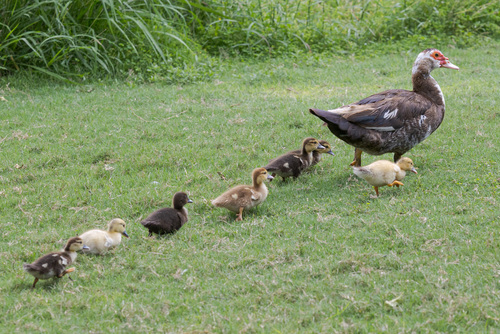
Muscovy ducks are friendly birds that come in many colors! They love to swim and can often be found waddling around farms.
Habitat: Farms and wetlands
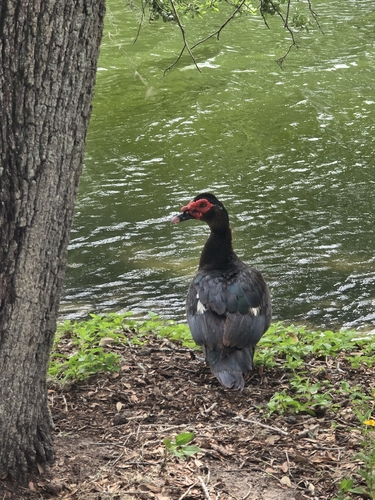
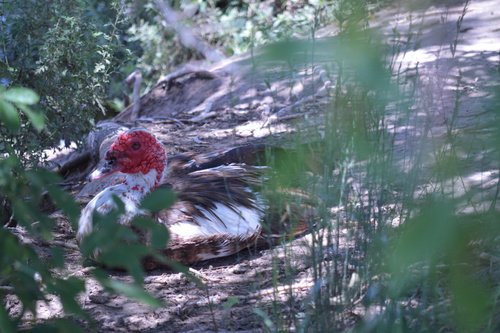
The Muscovy Duck is a large, sturdy duck recognized by its unique warty, red face, especially on males. Its plumage is typically dark, shimmering with iridescent green and purple, often featuring distinctive white patches on its wings visible during flight.
Category
BirdsRarity
Common
Danger
1/5 · Very low
Snaps
57
Male Muscovy Ducks are much bigger and heavier than females, sometimes twice the size!
Muscovy Ducks are one of the few duck species that prefer to perch in trees!
Their babies, called ducklings, are able to swim and find food just hours after hatching!
Unlike most ducks, Muscovy Ducks do not 'quack' but rather hiss and make soft trilling sounds.
Muscovy Ducks have strong, clawed feet that help them perch easily in trees, unlike most other ducks.
Muscovy Ducks can fly with surprising quietness because of their wing structure, aiding stealth.
Muscovy Ducks have distinctive red, fleshy caruncles on their face that help protect against injury.
Muscovy Ducks can forage effectively on land and in water, allowing them to find diverse food sources.
These adaptable ducks eat a wide variety of plants, insects, and small aquatic creatures from land and water.
Gambusia affinis
Ducks hunt small fish in shallow waters.
Procambarus clarkii
They forage for crustaceans like crayfish.
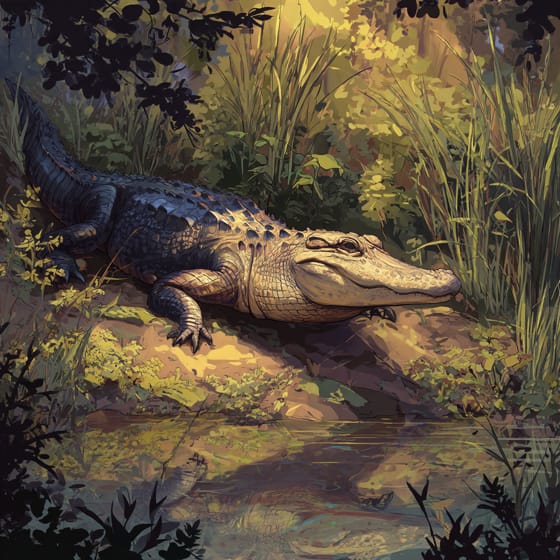
Alligator mississippiensis
Adult ducks are prey for alligators.
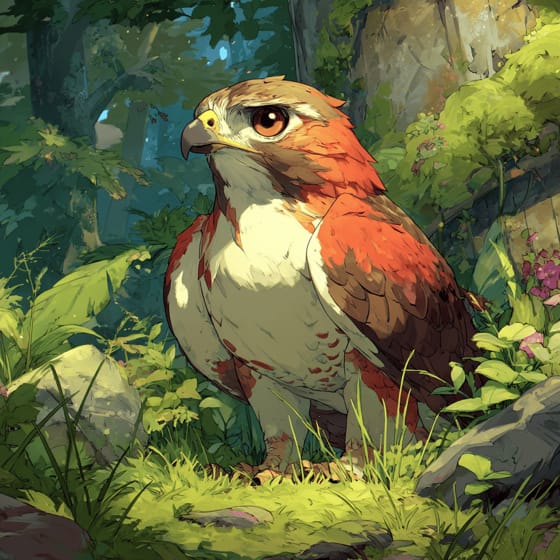
Buteo jamaicensis
Ducklings are targeted by birds of prey.
Wildlife encompasses all undomesticated animal and plant life existing in their natural habitats.
Feathered describes animals, primarily birds, possessing a covering of feathers.
Characterized by having toes connected by a membrane, typically aiding in swimming.
Social animals live in organized groups, cooperating for survival benefits such as foraging, defense, and raising offspring.

This trait identifies organisms whose diet includes both plant and animal matter.

This habitat trait identifies species found in wetlands, which are areas of land saturated with water, either permanently or seasonally, including marshes, swamps, and bogs.
Danger
1/5 · Very low
Muscovy ducks are generally gentle, but it's best to observe them from a distance and not to chase them.
The easiest way to identify Muscovy Duck is to use the Snappit nature identifier app.
66-84 cm
137-152 cm
3-8 kg
8-12 years
80 km/h
These adaptable ducks eat a wide variety of plants, insects, and small aquatic creatures from land and water.
Farms and wetlands
Zoom in to split clusters and explore where this object has been snapped.
Jun 6, 2026
Congress Avenue Historic DistrictPhoto attribution
(c) Victor Engel, some rights reserved (CC BY)
License: CC BY 4.0 ↗
Image may be shown cropped inside the card frame.
Jun 3, 2026
The Seas with Nemo & FriendsPhoto attribution
(c) Michelle Sevcovas, some rights reserved (CC BY)
License: CC BY 4.0 ↗
Image may be shown cropped inside the card frame.
Aug 2, 2024
Fort ConchoPhoto attribution
(c) Brayden TNG, some rights reserved (CC BY)
License: CC BY 4.0 ↗
Image may be shown cropped inside the card frame.

Alabama, US
You might spot Elf Orpine, Canada Goose, and Leatherleaf Mahonia.
View guide →

Hawaii, US
You might spot Brown Anole, Gold Dust Day Gecko, and Red-Crested Cardinal.
View guide →

Louisiana, US
You might spot Brown Anole, White Ibis, and Duck.
View guide →

South Carolina, US
You might spot Brown Pelican, Boat-Tailed Grackle, and Great Egret.
View guide →

Texas, US
You might spot Eastern Fox Squirrel and Great-Tailed Grackle.
View guide →

Florida, US
You might spot American Alligator, Brown Anole, and Red-Shouldered Hawk.
View guide →
Take the discovery with you
Snap it with Snappit to identify it, learn what makes it special, and add the discovery to your collection.





.jpg&width=800)










