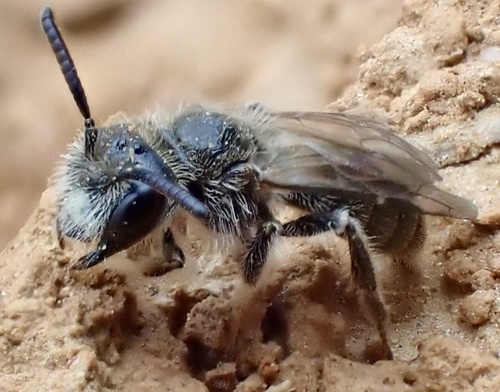





Panurginus polytrichus
Panurginus polytrichus
The Panurginus polytrichus is a small, fuzzy bee that loves to visit flowers. They are great at helping plants grow by spreading pollen while they collect nectar.
Habitat: Grasslands
The Panurginus polytrichus is a small, dark-bodied mining bee with a notably fuzzy appearance. Its thorax and abdomen are covered in dense, pale hairs, making it look quite fluffy. Males may sport distinctive yellow markings on their faces.
Category
InsectsRarity
Common
Danger
2/5 · Low
Snaps
Be the first to snap!
Each tiny baby bee gets a special pollen and nectar ball for food.
Panurginus polytrichus prefer sunny, sandy spots for digging their nests.
Their fuzzy bodies act like magnets, picking up pollen as they fly!
Wow! These bees are solitary, meaning each female builds her own nest!
Panurginus polytrichus has dense hairs that help them efficiently collect pollen from flowers like a living basket.
Panurginus polytrichus can dig intricate burrows because of its strong legs, creating safe underground nests for its young.
Panurginus polytrichus can spot specific flowers because it has special vision that detects nectar guides and ultraviolet patterns.
These fuzzy bees sip sweet nectar for energy and gather protein-rich pollen to feed their growing young!
Age differences: Larvae consume a pollen-nectar paste provisioned by the mother; adults feed directly on nectar and pollen.

Taraxacum officinale
Visits flowers to collect nectar and pollen.
Leucanthemum vulgare
An important pollinator for these common meadow flowers.
Philanthus triangulum
Predatory wasp that catches bees to feed its larvae.
Araneus diadematus
Caught in spider webs while foraging for nectar.
Furry describes animals possessing a dense covering of soft hair or fur.
Social animals live in organized groups, cooperating for survival benefits such as foraging, defense, and raising offspring.
Grassland habitats are terrestrial biomes dominated by grasses and herbaceous plants, supporting a variety of grazing animals.
This trait characterizes organisms whose diet consists entirely or primarily of plant material.
Describes plants that are particularly attractive and beneficial to a wide range of pollinating organisms.
Diurnal animals are primarily active during daylight hours, typically resting or sleeping at night.
Describes a species whose presence and role have a disproportionately large effect on its environment.
Describes organisms that transfer pollen, enabling the fertilization and reproduction of plants.
No aliases listed yet.
Danger
2/5 · Low
Be gentle and watch from a distance when you see bees. They are friendly but can sting if scared.
Look for six legs, antennae, three body sections and the shape of the wings. Beetles have hardened front wings; flies have just one working pair. Tiny insects may need a close view before their group is clear. Insect Identifier: upload a photo and compare the visible details.
8-15 mm
4-8 mm
20-40 days
15 km/h
These fuzzy bees sip sweet nectar for energy and gather protein-rich pollen to feed their growing young!
Grasslands
Foraging
Zoom in to split clusters and explore where this object has been snapped.
Recent snaps will appear here as new observations are added.
Take the discovery with you
Snap it with Snappit to identify it, learn what makes it special, and add the discovery to your collection.