





Paracorymbia maculicornis
Paracorymbia maculicornis
The Paracorymbia maculicornis is a special kind of beetle with beautiful patterns on its body. These beetles love to hide in trees and are great at blending in with their surroundings.
Habitat: Forests
The Paracorymbia maculicornis is an elongated longhorn beetle, typically dark brown to black, with reddish-brown wing covers often featuring a central darker stripe. Its most distinctive feature is its antennae, which are boldly banded with black and yellow or pale segments, making them appear 'spotted'.
Category
InsectsRarity
Common
Danger
1/5 · Very low
Snaps
Be the first to snap!
Its larvae spend years munching on dead wood hidden inside trees!
The adult beetle's antennae can be longer than its entire body!
They undergo an amazing transformation from wood-eating grubs to flying beetles!
This beetle helps clear forests by breaking down old, fallen trees.
Paracorymbia maculicornis has incredibly long, banded antennae that help them find mates and suitable wood to lay eggs in.
Larval Paracorymbia maculicornis have powerful mandibles to chew through tough, decaying hardwood, creating tunnels.
Paracorymbia maculicornis can quickly take flight with its wings to escape predators or find new food sources.
Larvae eat dead wood, adults sip on sweet flower nectar and pollen.
Age differences: Larvae are xylophagous, feeding on decaying hardwood. Adults feed on pollen and nectar from flowers.
Quercus robur
Larvae tunnel through its dead wood.
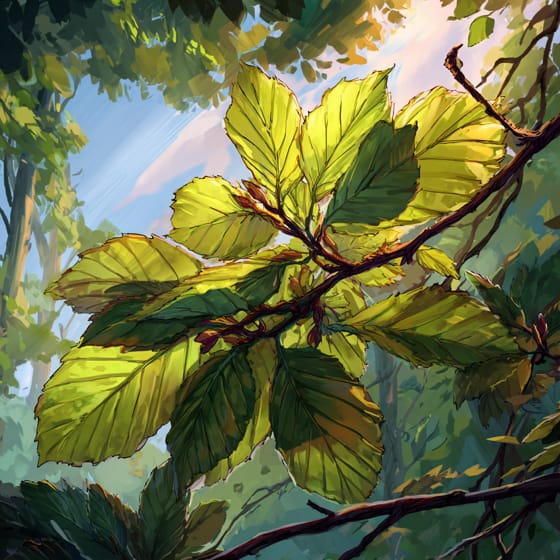
Fagus sylvatica
Larvae feed on its decaying wood.
%2C_Parc_de_Woluw%C3%A9%2C_Brussels_(13042792905).jpg&width=800)
Parus major
Birds may prey on adult beetles.
Marked with spots or patches of a different color.
Solitary animals live alone for most of their lives, only interacting with others for mating or parental care.
Camouflaged describes organisms that possess coloring or patterns that allow them to blend into their environment.
This trait characterizes organisms whose diet consists entirely or primarily of plant material.

Describes organisms that break down dead organic material, recycling nutrients back into the ecosystem.

Forest habitats are terrestrial environments dominated by dense tree cover, supporting a high diversity of plant and animal life.

Describes a species whose presence and role have a disproportionately large effect on its environment.

Nocturnal animals are primarily active during the nighttime hours, typically resting or sleeping during the day.

Describes organisms that transfer pollen, enabling the fertilization and reproduction of plants.
No aliases listed yet.
Danger
1/5 · Very low
It's best to look at beetles from a distance to keep them safe.
The easiest way to identify Paracorymbia maculicornis is to use the Snappit nature identifier app.
20-30 mm
10-16 mm
30-60 days
8 km/h
Larvae eat dead wood, adults sip on sweet flower nectar and pollen.
Forests
Foraging
Zoom in to split clusters and explore where this object has been snapped.
Recent snaps will appear here as new observations are added.
Take the discovery with you
Snap it with Snappit to identify it, learn what makes it special, and add the discovery to your collection.








.jpg&width=800)


