



Pentatominae
pentatominae
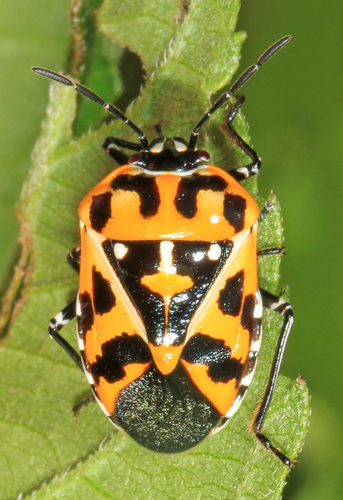
Pentatominae is the largest and most diverse subfamily of shield bugs, commonly known as stink bugs. These fascinating insects are recognized worldwide for their distinctive shield-like shape and their highly effective chemical defense mechanisms. Most members of this subfamily are plant-feeders, utilizing their specialized straw-like mouthparts to pierce plant tissue and drink nutrient-rich sap. While some species are notorious agricultural pests that can cause significant damage to crops, others play key ecological roles as a food source for local wildlife.
Habitat: Commonly found in temperate and tropical environments worldwide, particularly in agricultural fields, home gardens, meadows, and forest edges where host plants are abundant.
Pentatominae species are characterized by their broad, shield-shaped bodies, five-segmented antennae, and a prominent, triangular scutellum located in the center of their backs. They display an incredible range of colors, from camouflaging greens and dull browns to striking, vibrant patterns of orange, red, and black that serve as warning coloration. Adults typically range from 1 to 3 centimeters in length, with hard forewings that fold flat over their bodies when at rest.
Category
InsectsRarity
Common
Danger
1/5 · Very low
Snaps
Be the first to snap!
The bad smell of a stink bug comes from compounds called aldehydes, which are chemically similar to those found in cilantro.
They lay their barrel-shaped eggs in highly organized, geometric clusters on the undersides of plant leaves.
To attract mates, many species perform a 'shaking dance' that sends species-specific vibrations running down plant stems.
Possesses specialized thoracic glands that can spray a pungent, foul-tasting liquid containing aldehydes to deter predators when threatened.
Sends low-frequency vibrational signals through host plant stems and leaves to find and court potential mates.
Features a tough, shield-like dorsal exterior that provides excellent physical protection against small predators and mechanical injury.
Feeds primarily on the fluids of plants by piercing host stems, leaves, flowers, and fruits with their needle-like proboscis.

Glycine max
Feeds heavily on the leaves, pods, and developing seeds of this plant, causing significant agricultural damage.

Passer domesticus
Frequently preys upon adults and nymphs of Pentatominae, despite their pungent chemical defense sprays.
Trissolcus japonicus
This tiny wasp parasitizes the eggs of stink bugs, laying its own eggs inside them to suppress the host population.
Social animals live in organized groups, cooperating for survival benefits such as foraging, defense, and raising offspring.
Camouflaged describes organisms that possess coloring or patterns that allow them to blend into their environment.
Colorful describes organisms or objects displaying a wide range of bright and distinct colors.
This trait characterizes organisms whose diet consists entirely or primarily of plant material.
Diurnal animals are primarily active during daylight hours, typically resting or sleeping at night.
Collections for this object will appear here as more themes are added.
Danger
1/5 · Very low
No special safety notes yet.
Look for six legs, antennae, three body sections and the shape of the wings. Beetles have hardened front wings; flies have just one working pair. Tiny insects may need a close view before their group is clear. Insect Identifier: upload a photo and compare the visible details.
1+ cm
1+ cm
0.0001+ kg
1+ years
Feeds primarily on the fluids of plants by piercing host stems, leaves, flowers, and fruits with their needle-like proboscis.
Commonly found in temperate and tropical environments worldwide, particularly in agricultural fields, home gardens, meadows, and forest edges where host plants are abundant.
Grazing Foraginging Method Is Actually Direct Piercing And Sucking From Plants Or Foraging For Host Foliage And Fruit Structures As Herbivores So We Classify It As Grazing Or Foraging Which We Can Simplify To Foraging Or Grazing With The Probe So Let's Use Foraging As It Fits The Required Hunting Methods In The Prompt Grazing Is Also Fine Let's Use Grazing Or Foraging Let's Use Foraging For Safety Let's Use Grazing Or Foraging Let's Use Grazing
Zoom in to split clusters and explore where this object has been snapped.
Recent snaps will appear here as new observations are added.
Take the discovery with you
Snap it with Snappit to identify it, learn what makes it special, and add the discovery to your collection.