

Pericallis Steetzii
pericallis steetzii
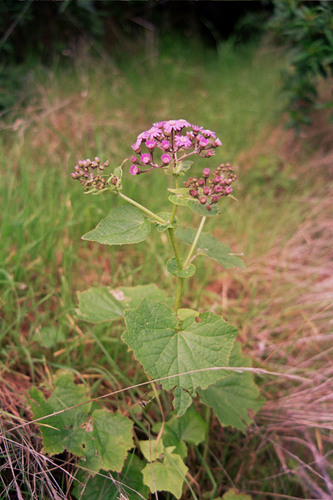
Pericallis Steetzii is a captivating shrubby perennial endemic to the moist, misty laurel forests of La Gomera in the Canary Islands. Belonging to the aster family, this plant plays a crucial role in the local ecosystem by providing abundant nectar for endemic pollinators. Its lush green foliage and vibrant daisy-like flowers make it a true botanical treasure of the Macaronesian region. Adapted to thrive in high humidity and volcanic soils, this resilient plant showcases the incredible evolutionary isolation of the Canary Islands flora. It often lines the damp, shaded trails of the Garajonay National Park, greeting hikers with its soft leaves and striking colorful blooms.
Habitat: Found in humid laurel forests (laurisilva), damp ravines, and shaded rocky cliffs of La Gomera.
This perennial shrub typically grows between 50 and 150 centimeters tall, featuring large, heart-shaped to rounded green leaves that are noticeably pale and woolly underneath. Its eye-catching flower heads are grouped in dense clusters, displaying purplish-pink or lilac ray florets surrounding a central disc that ranges from deep purple to bright yellow, providing a vivid contrast against the dark forest understory.
Category
PlantsRarity
Common
Danger
1/5 · Very low
Snaps
Be the first to snap!
Its genus, Pericallis, is the evolutionary origin of the popular cultivated garden cineraria.
Pericallis steetzii is a paleo-endemic relic of the ancient forests that once covered the Mediterranean basin before the last ice age.
The leaves have a distinctively soft, velvet-like texture due to the fine silver-white hairs on their undersides.
The underside of the leaves is covered in a dense layer of white, woolly hairs that efficiently capture condensation from forest mists and reduce water loss.
Equipped with large, broad leaves designed to maximize photosynthesis in the deeply shaded understory of dense cloud forests.
Maintains a specialized root system capable of anchoring securely and extracting nutrients from steep, unstable volcanic rock faces.
As a photoautotrophic plant, it produces its own energy using sunlight, water, carbon dioxide, and essential soil minerals through photosynthesis.
Bombus canariensis
Pollinates the flowers while foraging for nectar.
Vanessa vulcania
Feeds on flower nectar and assists in pollination during spring.
No trait badges are assigned for this object yet.
No aliases listed yet.
Collections for this object will appear here as more themes are added.
Danger
1/5 · Very low
No special safety notes yet.
Start with the whole plant, then compare leaf arrangement, leaf edges, stems and any flowers or fruit. Opposite leaves grow in pairs; alternate leaves come one at a time along the stem. These details tell you far more together than a single green leaf does. Plant Identifier: upload a photo and compare the visible details.
50-150 cm
0.5-3 kg
3-10 years
As a photoautotrophic plant, it produces its own energy using sunlight, water, carbon dioxide, and essential soil minerals through photosynthesis.
Found in humid laurel forests (laurisilva), damp ravines, and shaded rocky cliffs of La Gomera.
Zoom in to split clusters and explore where this object has been snapped.
Recent snaps will appear here as new observations are added.
Take the discovery with you
Snap it with Snappit to identify it, learn what makes it special, and add the discovery to your collection.