

Pine-Tree Lappet
dendrolimus pini
The Pine-Tree Lappet (Dendrolimus pini) is a stout, heavily built moth belonging to the snout moth family, Lasiocampidae. Highly respected for its exceptional camouflage, this species spends its life intricately tied to European coniferous forests, particularly those dominated by Scots pine. While the cryptically colored adults fly under the cover of night, the large, hairy caterpillars are notorious defoliators that feed voraciously on pine needles. During population outbreaks, they can pose a significant ecological challenge to forestry management. However, in balanced ecosystems, they serve as a crucial food source for forest birds and predatory insects, acting as a vital link in the woodland food web.
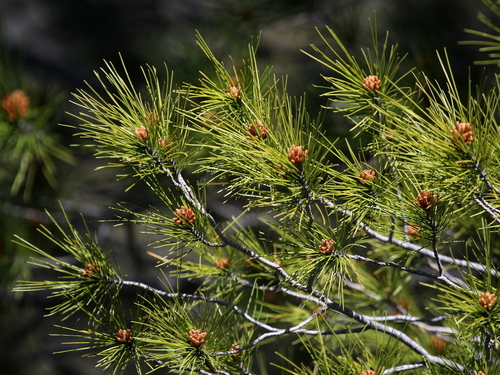
Habitat: Found in dense coniferous forests, predominantly those featuring Scots pine (Pinus sylvestris), across Europe and temperate Asia.
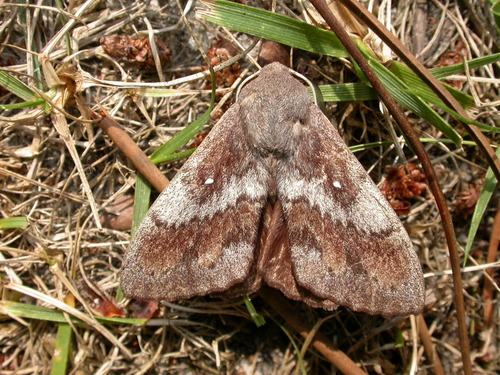
Adult Pine-Tree Lappets have a wingspan ranging from 5 to 8 cm, with females being significantly larger than males. Their forewings are intricately patterned in shades of grey, reddish-brown, and dark brown, mimicking the texture of pine bark, and are decorated with a characteristic small, white crescent-shaped spot and wavy transverse lines. In their larval form, the caterpillars are large and robust, growing up to 9 cm long, covered in dense greyish-brown hairs with distinctive blue-black bands across their thoracic segments that are revealed when threatened.
Category
InsectsRarity
Common
Danger
1/5 · Very low
Snaps
Be the first to snap!
Adult Pine-Tree Lappet moths do not possess a functional digestive system; they live only for a few days to mate, relying entirely on energy stored from their caterpillar days.
They can sometimes take two full years to complete their lifecycle in colder northern climates, overwintering twice as caterpillars before pupating.
When threatened, the caterpillar arches its body to expose bright, blue-black metallic warning bands on its neck as a visual deterrent to birds.
Adults rest flat against tree trunks during the day, where their mottled brown and grey wing patterns make them virtually invisible to predators.
The caterpillars possess specialized toxic, irritating hairs that can cause severe rashes or allergic reactions in predators and humans who touch them.
To survive freezing temperatures, the larvae crawl down to the forest floor and enter a state of suspended animation in the soil litter, resuming feeding only when spring arrives.
The larvae feed strictly on the needles of conifers, primarily pines, while the adult moths have vestigial mouthparts and do not feed at all.

Pinus sylvestris
The primary host plant whose needles provide nourishment for the growing caterpillars.
Cuculus canorus
A specialized bird that feeds on the large, hairy caterpillars, overcoming their defensive bristles.
Trichogramma embryophagum
A tiny parasitic wasp that lays its eggs inside the moth's eggs, controlling the moth population.
No trait badges are assigned for this object yet.
No aliases listed yet.
Collections for this object will appear here as more themes are added.
Danger
1/5 · Very low
No special safety notes yet.
Compare resting wing shape, forewing markings, antennae and body build. Small brown moths can hinge on fine details a phone photo can't always catch. Moth Identifier: upload a photo and compare the visible details.
3-9 cm
5-8 cm
0.001-0.005 kg
1 years
The larvae feed strictly on the needles of conifers, primarily pines, while the adult moths have vestigial mouthparts and do not feed at all.
Found in dense coniferous forests, predominantly those featuring Scots pine (Pinus sylvestris), across Europe and temperate Asia.
Grazing
Zoom in to split clusters and explore where this object has been snapped.
Recent snaps will appear here as new observations are added.
Take the discovery with you
Snap it with Snappit to identify it, learn what makes it special, and add the discovery to your collection.