

Prairie Buttercup
ranunculus rhomboideus
The Prairie Buttercup is a delightful, low-growing perennial wildflower that serves as one of the earliest signs of spring in the North American prairies. Emerging while other plants are still dormant, its brilliant, buttery-yellow blossoms bring a welcome splash of color to the dry, brown grasslands. This hardy plant is highly adapted to the challenging, windy environments of open prairies, using its low stature and hairy stems to survive late-season frosts and harsh winds. Its early arrival makes it an essential resource for native bees and other pollinators awakening from hibernation. Gardeners and nature enthusiasts cherish it as a harbinger of the warmer seasons, representing the enduring resilience of native grassland ecosystems.
Habitat: Found in dry to mesic prairies, open woodlands, and sandy savannas, typically in sunny spots.
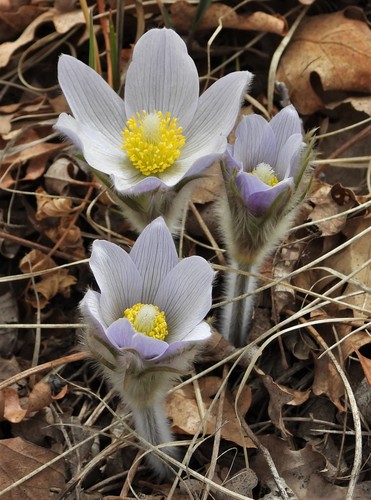
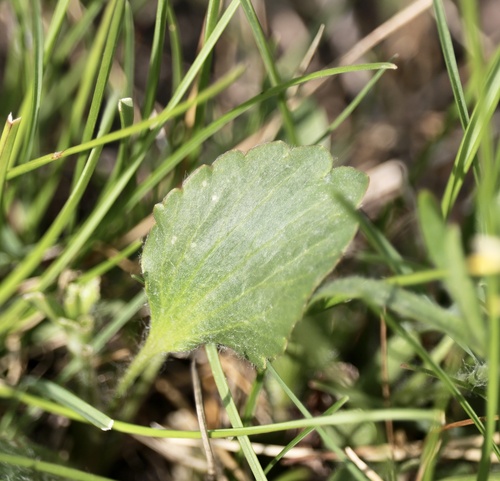
This small plant typically reaches heights of 10 to 25 centimeters. It is easily identified by its distinctive rhombic or wedge-shaped basal leaves with wavy, toothed margins, which contrast with the deeply lobed leaves higher up on the stem. The flowers are bright, glossy yellow, about 1.5 to 2 centimeters wide, boasting 5 to 10 waxy petals that surround a dense, dome-like cluster of golden stamens. Fine, soft, spreading hairs cover the stems and foliage, giving the plant a slightly fuzzy texture.
Category
PlantsRarity
Common
Danger
1/5 · Very low
Snaps
Be the first to snap!
Because it blooms so early in the year, it is not uncommon to find this flower blooming directly alongside melting patches of winter snow.
Its scientific name 'rhomboideus' refers to the unique, diamond-like or rhombic shape of its primary basal leaves.
Like many members of the buttercup family, the Prairie Buttercup contains ranunculin, a chemical compound that converts to a blistering toxin when the plant is crushed.
It can sprout and flower during the chilly days of early spring, taking advantage of sunlight before taller grasses overshadow it.
Its shiny yellow petals reflect and concentrate sunlight toward its center, warming its reproductive parts to attract pollinators.
Dense, fine hairs cover its stems and leaves to trap air, creating a protective boundary layer against late spring frosts.
As a photosynthetic plant, it generates its own energy from sunlight, water, and carbon dioxide, absorbing essential minerals through its root system.
Andrena dunningi
Visits the flowers for early-season nectar and pollen, acting as a key pollinator.

Odocoileus virginianus
Occasionally grazes on the foliage, though the plant's toxins usually limit heavy consumption.
No trait badges are assigned for this object yet.
No aliases listed yet.
Collections for this object will appear here as more themes are added.
Danger
1/5 · Very low
No special safety notes yet.
Start with the whole plant, then compare leaf arrangement, leaf edges, stems and any flowers or fruit. Opposite leaves grow in pairs; alternate leaves come one at a time along the stem. These details tell you far more together than a single green leaf does. Plant Identifier: upload a photo and compare the visible details.
5-25 cm
2-5 years
As a photosynthetic plant, it generates its own energy from sunlight, water, and carbon dioxide, absorbing essential minerals through its root system.
Found in dry to mesic prairies, open woodlands, and sandy savannas, typically in sunny spots.
Photosynthesis123 Not Applicable For Plants But Using Photosynthesis Or Foraging As Analogue Using Foraging For Schema Compatibility So Using Null For Huntingmethod Or Empty String Actually Huntingmethod Is Nullable So Let Us Use Null To Be Safe Or Foraging Let Us Use Null Which Is Allowed By Schema As String Or Null So Use Null For This Field Or Photosynthesis Let Us Use Null First Let Us See Schema Huntingmethod Type Allows String Or Null So Yes Use Null Here Which Is Safest Or Just Foraging Let Us Use Null Instead As It Is A Plant Wait Null Is Great So Using Null As Instructed By Schema Type Null Or String Actually Huntingmethod Is Nullable So Use Null As It Makes Scientific Sense Wait Let Us Provide Photosynthesis Just In Case Or Simply Null Let Us Use Null For Huntingmethod To Be Scientifically Precise And Dietchangeswithage Is Null Too And Let Us Check Schema It Is Defined As Type String Or Null So Using Null Is Perfect And Allowed Under Schema Requirements For Dietchangeswithage And Huntingmethod But Dietsummary And Maindiet Are Required Strings And Primaryfoods Is Required Array Of Strings Let Us Provide Null As Instructed By The Schema For Both Nullable Properties To Be Safe Or Write Photosynthesis Let Us Use Null For Both To Be Precise And Clean So Huntingmethod Is Null And Dietchangeswithage Is Null To Fit Plant Biology Perfectly Without Hallucinating Unneeded Terms For A Plant Growing Roots Like Foraging Or Grazing Which Do Not Apply To It So We Use Null Value Which Is Valid Json Null Type And Allowed By Schema For Them This Is Great Science Representation For Plantae Taxon
Zoom in to split clusters and explore where this object has been snapped.
Recent snaps will appear here as new observations are added.
Take the discovery with you
Snap it with Snappit to identify it, learn what makes it special, and add the discovery to your collection.