





Agarita
Berberis trifoliolata
Agarita is a spiky shrub with bright green leaves and yellow flowers. It grows in warm places and can be found in Texas and Mexico. Its berries are tasty and loved by birds!
Habitat: Desert
The Agarita is an evergreen shrub with distinctive stiff, holly-like leaves, usually in sets of three, topped with sharp spines. It produces clusters of small, fragrant yellow flowers in early spring, followed by bright red, edible berries, making it stand out in dry landscapes.
Category
PlantsRarity
Common
Danger
2/5 · Low
Snaps
3
Indigenous peoples historically used agarita roots to create a vibrant yellow dye for crafts.
Its three-part leaves give it the scientific name 'trifoliolata,' meaning 'three leaves'!
Many desert animals, from birds to coyotes, rely on its berries for vital food.
You can make delicious jelly, pies, or even wine from its tart, juicy red berries!
Agarita has razor-sharp, spiny leaves that act as a natural defense, protecting its tender branches from hungry herbivores.
Its tough, waxy leaves help Agarita conserve precious water, allowing it to thrive in hot, arid desert environments.
Agarita produces abundant, sweet red berries that attract animals, helping to spread its seeds far and wide for reproduction.
Apis mellifera
Bees gather nectar from its early spring flowers.

Toxostoma curvirostre
Thrashers feast on the agarita's sweet red berries.
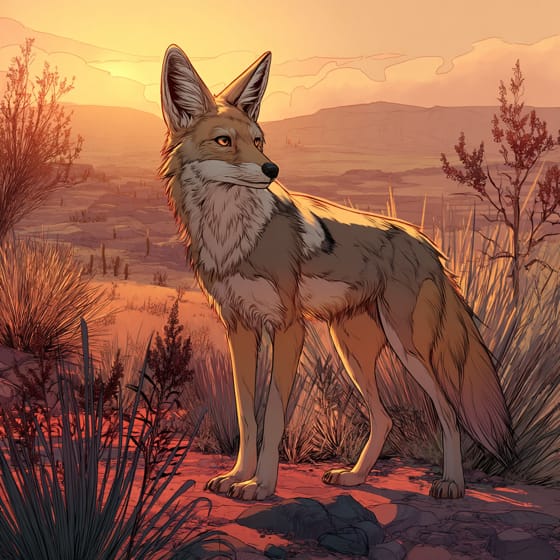
Canis latrans
Coyotes eat agarita berries, helping spread seeds.
A shrub is a woody plant smaller than a tree, typically with multiple stems branching from or near the ground.
Spring blooming plants produce their flowers during the spring season, often signifying the end of winter and the start of new growth.
Evergreen plants retain their foliage throughout the year, never shedding all their leaves at once.
Fragrant flowers emit a pleasant aroma, often to attract pollinators or for defense.

Fruit-bearing plants produce fruits, which are the mature ovaries of flowering plants containing seeds.

Edible plants are those parts of a plant that are considered safe for human consumption.

Desert habitats are arid regions characterized by extremely low precipitation and often extreme temperatures, supporting specialized flora and fauna.

This trait characterizes organisms with an exceptionally long lifespan compared to others of their kind.

Possessing sharp, pointed projections or spines on the body or surface.

Describes a species whose presence and role have a disproportionately large effect on its environment.
No aliases listed yet.
Danger
2/5 · Low
Be careful of the sharp leaves when exploring around Agarita.
The easiest way to identify Agarita is to use the Snappit nature identifier app.
100-300 cm
100-200 cm
0.5-0.8 cm
Late_winter-early_spring
Yes
None
Perennial
Zoom in to split clusters and explore where this object has been snapped.

Texas, US
You might spot Antelopehorn Milkweed and Lindheimer's Senna.
View guide →
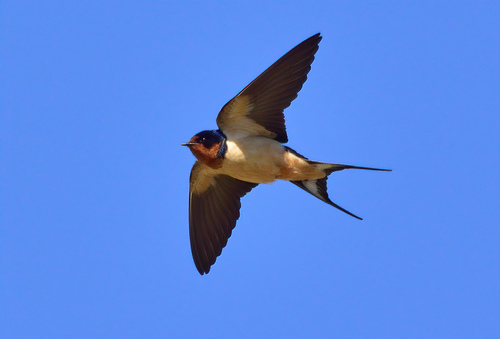
Texas, US
You might spot Barn Swallow, House Sparrow, and Indian Peafowl.
View guide →
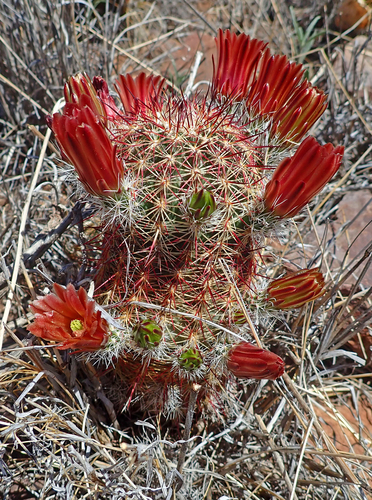
Texas, US
You might spot Texas Hedgehog Cactus, Cactus Wren, and Ornate Tree Lizard.
View guide →

Texas, US
You might spot Leonora's Dancer and Ornate Tree Lizard.
View guide →

Texas, US
You might spot Pipevine Swallowtail, Texas Spiny Lizard, and Queen.
View guide →

Texas, US
You might spot Mexican Buckeye, Agarita, and Monarch.
View guide →
Take the discovery with you
Snap it with Snappit to identify it, learn what makes it special, and add the discovery to your collection.









.jpg&width=800)


_001.jpg&width=800)

