



Pristepyris
Pristepyris
Pristepyris is a unique insect that loves to hide in leaves and flowers. It has bright colors that help it blend in with nature, making it a fun little creature to discover!
Habitat: Forests
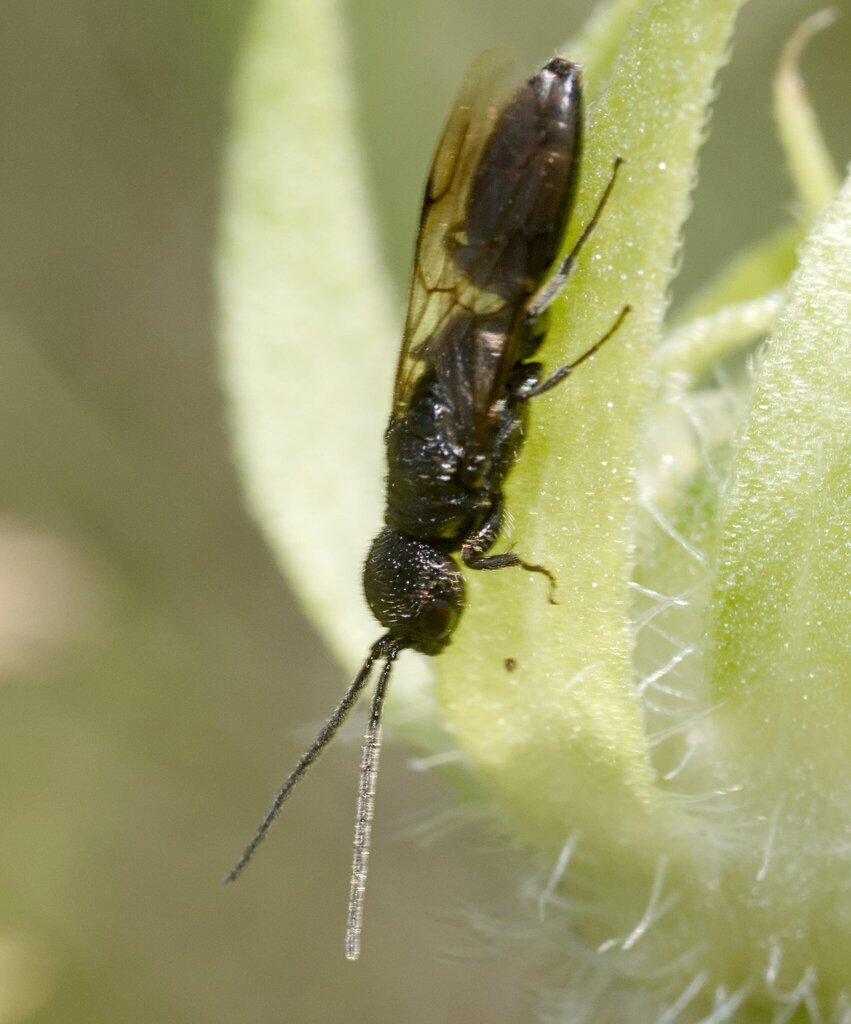
The Pristepyris is a slender, dark-bodied wasp, often appearing shiny black or brownish-black. Females may be entirely wingless or possess very short wings, contrasting sharply with the fully winged males, and both sexes have distinct antennae.
Category
InsectsRarity
Common
Danger
1/5 · Very low
Snaps
Be the first to snap!
Baby Pristepyris grow by eating their host from the inside out!
Instead of flying, many female Pristepyris walk like ants to find their hidden prey!
Some Pristepyris mothers can lay just one egg on a single beetle larva!
These tiny wasps are expert detectives, sniffing out wood-boring beetles in your house!
Pristepyris can locate hidden beetle larvae by detecting subtle chemical scents because of their sensitive antennae, which helps them find food for their babies.
Pristepyris females often have no wings at all, while males have full wings, which helps females explore tight spaces and males find mates.
Pristepyris can paralyze its host prey with a venomous sting, which helps ensure the host stays still for the wasp's egg to develop safely.
Pristepyris larvae feast on paralyzed insect larvae, mainly beetle grubs, that their mother finds.
Age differences: Larvae eat their hosts; adults may drink nectar or water.

Stegobium paniceum
Pristepyris parasitizes its larvae.
Lasioderma serricorne
The wasp targets its larvae as hosts.
Argiope aurantia
Adult wasps can become prey in their webs.

Parus major
Foraging birds may eat adult wasps.
Solitary animals live alone for most of their lives, only interacting with others for mating or parental care.
Camouflaged describes organisms that possess coloring or patterns that allow them to blend into their environment.
Colorful describes organisms or objects displaying a wide range of bright and distinct colors.
This trait characterizes organisms whose diet consists entirely or primarily of plant material.
Describes plants that are particularly attractive and beneficial to a wide range of pollinating organisms.
Forest habitats are terrestrial environments dominated by dense tree cover, supporting a high diversity of plant and animal life.
Diurnal animals are primarily active during daylight hours, typically resting or sleeping at night.
Pertaining to species that are significantly smaller than typical or average for their kind.
Describes organisms that transfer pollen, enabling the fertilization and reproduction of plants.
No aliases listed yet.
Danger
1/5 · Very low
Always look but don't touch insects unless you know they are safe!
Look for six legs, antennae, three body sections and the shape of the wings. Beetles have hardened front wings; flies have just one working pair. Tiny insects may need a close view before their group is clear. Insect Identifier: upload a photo and compare the visible details.
4-10 mm
2-6 mm
10-30 days
2 km/h
Pristepyris larvae feast on paralyzed insect larvae, mainly beetle grubs, that their mother finds.
Forests
Ambush
Zoom in to split clusters and explore where this object has been snapped.
Recent snaps will appear here as new observations are added.
Take the discovery with you
Snap it with Snappit to identify it, learn what makes it special, and add the discovery to your collection.