

Red Buffalo-Bur
solanum sisymbriifolium
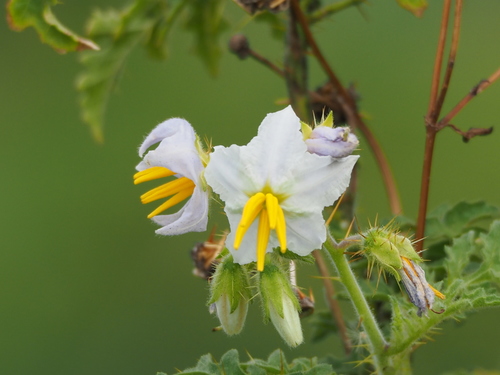
The Red Buffalo-Bur (Solanum sisymbriifolium), also known as sticky nightshade or litchi tomato, is an eye-catching yet formidable member of the nightshade family. Native to South America, this resilient, heavily armed plant has spread to many temperate and tropical regions worldwide. It is famous for its dense armor of yellow-orange spines covering the stems, leaves, and even the flower calyxes, making it virtually untouched by grazing animals. Highly valued in sustainable agriculture, the Red Buffalo-Bur serves as an exceptional trap crop for potato cyst nematodes. It produces lovely star-shaped white or light blue flowers followed by bright red, edible berries nestled inside spiny husks that peel back when ripe. Gardeners and farmers appreciate it both for its unique aesthetic and its ecological utility in pest management.
Habitat: Found in disturbed soils, agricultural fields, waste areas, and roadsides.
This erect shrub typically grows between 50 to 150 centimeters tall, characterized by deeply lobed, bright green leaves covered in sticky glandular hairs and sharp yellow spines. Its five-petaled flowers are white to pale blue with prominent bright yellow anthers clustered in the center. The most distinct feature is the fruit: a spherical, glossy red berry about 1 to 2 centimeters in diameter, initially enclosed in a densely spiny green calyx (husk) that splits open and peels back as the fruit matures, resembling a tiny, prickly red crown.
Category
PlantsRarity
Common
Danger
1/5 · Very low
Snaps
1
Despite being related to highly toxic nightshades, its ripe red fruits are edible and often used in pies, jams, or eaten fresh.
It is so thoroughly armed with spines that even goats and other hardy grazing animals generally avoid eating it.
The spiny husk completely encloses the developing berry, only peeling back to reveal the bright red fruit when it is fully ripe and ready to be dispersed.
The plant's roots release chemicals that stimulate potato cyst nematode eggs to hatch, but the larvae cannot successfully feed or reproduce on its roots, effectively starving the pest population.
Nearly every surface of the plant, including the leaf veins and fruit husks, is densely covered in sharp, stiff prickles that deter large herbivores from feeding.
Foliage is covered in sticky, glandular trichomes that trap small insect pests and discourage insects from climbing or laying eggs on the leaves.
As a photoautotrophic plant, it produces its own food through photosynthesis using sunlight, water, and carbon dioxide, aided by soil nutrients absorbed through its root system.
Globodera rostochiensis
Acts as a dead-end host for the potato cyst nematode, preventing them from reproducing.
Bombus terrestris
Attracts bumblebees to pollinate its showy, pollen-rich flowers.
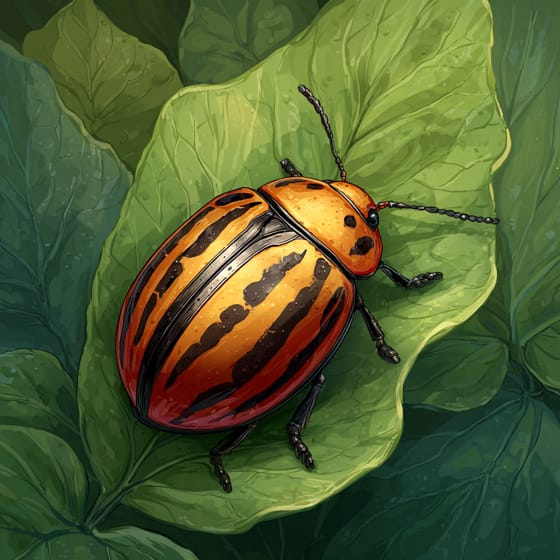
Leptinotarsa decemlineata
Serves as an alternative host plant and food source for potato beetles.
No trait badges are assigned for this object yet.
No aliases listed yet.
Collections for this object will appear here as more themes are added.
Danger
1/5 · Very low
No special safety notes yet.
The easiest way to identify Red Buffalo-Bur is to use the Snappit nature identifier app.
50-150 cm
1-2 years
As a photoautotrophic plant, it produces its own food through photosynthesis using sunlight, water, and carbon dioxide, aided by soil nutrients absorbed through its root system.
Found in disturbed soils, agricultural fields, waste areas, and roadsides.
7-21 days
Zoom in to split clusters and explore where this object has been snapped.

Georgia, US
You might spot Brown Anole, Anole, and Gulf Fritillary.
View guide →

Alabama, US
You might spot Red Buffalo-Bur, Eastern Box Turtle, and Anole.
View guide →

Alabama, US
You might spot Red Buffalo-Bur, Anole, and Eastern Box Turtle.
View guide →
Take the discovery with you
Snap it with Snappit to identify it, learn what makes it special, and add the discovery to your collection.











.jpg&width=800)



_001.jpg&width=800)




