





rock harlequin
Capnoides sempervirens
The rock harlequin is a special plant that grows in rocky places. It has beautiful green leaves and tiny yellow flowers that look like little stars. This plant loves sunshine and can be found in nature's hidden spots.
Habitat: Mountain regions
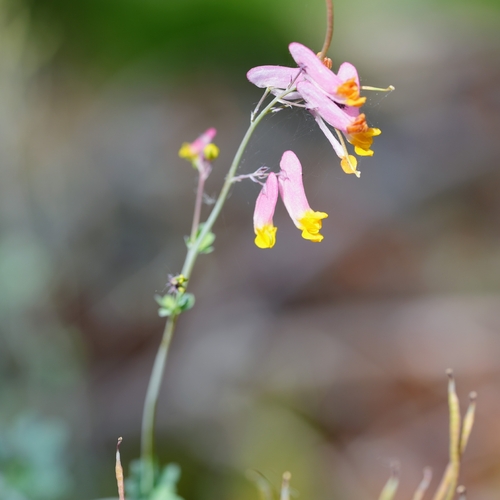
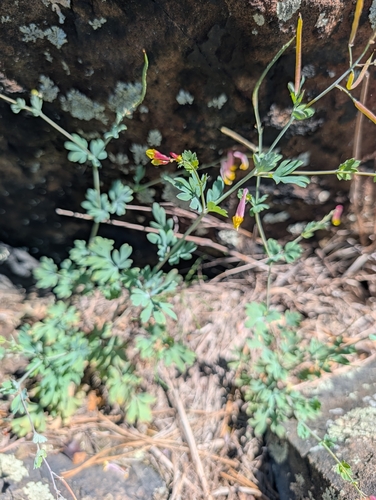
The rock harlequin has delicate, fern-like blue-green leaves. Its small, spurred flowers are bright yellow, often with pinkish or reddish tips, appearing in loose clusters. This combination makes its jester-like blossoms stand out.
Category
PlantsRarity
Common
Danger
1/5 · Very low
Snaps
20
It's a distant cousin to poppies, even though it doesn't look like one!
Its unusual name, "harlequin," describes its colorful, jester-like flowers!
This plant's leaves are so delicate, they look like tiny green feathers.
When its seeds are ripe, their pods can burst open with a surprising pop!
Rock harlequin produces seeds with a tasty, oily treat that attracts ants, which then carry the seeds to new places, helping the plant spread.
Rock harlequin can bloom in cooler spring and summer weather, making its bright flowers a welcome sight when other plants are just starting to grow.
Bombus impatiens
attracts with nectar
Apis mellifera
collects pollen and nectar
Aphaenogaster picea
disperses seeds via elaiosomes
Ornamental plants are cultivated primarily for their aesthetic appeal, enhancing landscapes and gardens with their attractive foliage, flowers, or form.
Spring blooming plants produce their flowers during the spring season, often signifying the end of winter and the start of new growth.
Evergreen plants retain their foliage throughout the year, never shedding all their leaves at once.
Drought-tolerant plants can survive and flourish in conditions with limited water availability.

Describes plants that are particularly attractive and beneficial to a wide range of pollinating organisms.

This habitat trait identifies species found in mountainous regions, characterized by high elevation, steep slopes, and varying climate zones.
No aliases listed yet.
Danger
1/5 · Very low
Always look but don't touch plants unless you know they are safe!
The easiest way to identify rock harlequin is to use the Snappit nature identifier app.
15-60 cm
15-45 cm
1-1.5 cm
Late spring to late summer
No
Mild
Perennial
Zoom in to split clusters and explore where this object has been snapped.
Jun 17, 2026
Grundy Lake Provincial ParkPhoto attribution
(c) Lauren H, some rights reserved (CC BY-SA)
License: CC BY-SA 4.0 ↗
Image may be shown cropped inside the card frame.
Jun 14, 2026
Mystic River ReservationPhoto attribution
(c) Zac Peterson, some rights reserved (CC BY)
License: CC BY 4.0 ↗
Image may be shown cropped inside the card frame.

Wisconsin, US
You might spot Purple Pitcher Plant, Papillose Peatmoss, and Tamarack.
View guide →

Maine, US
You might spot American Bullfrog and Three-Toothed Cinquefoil.
View guide →
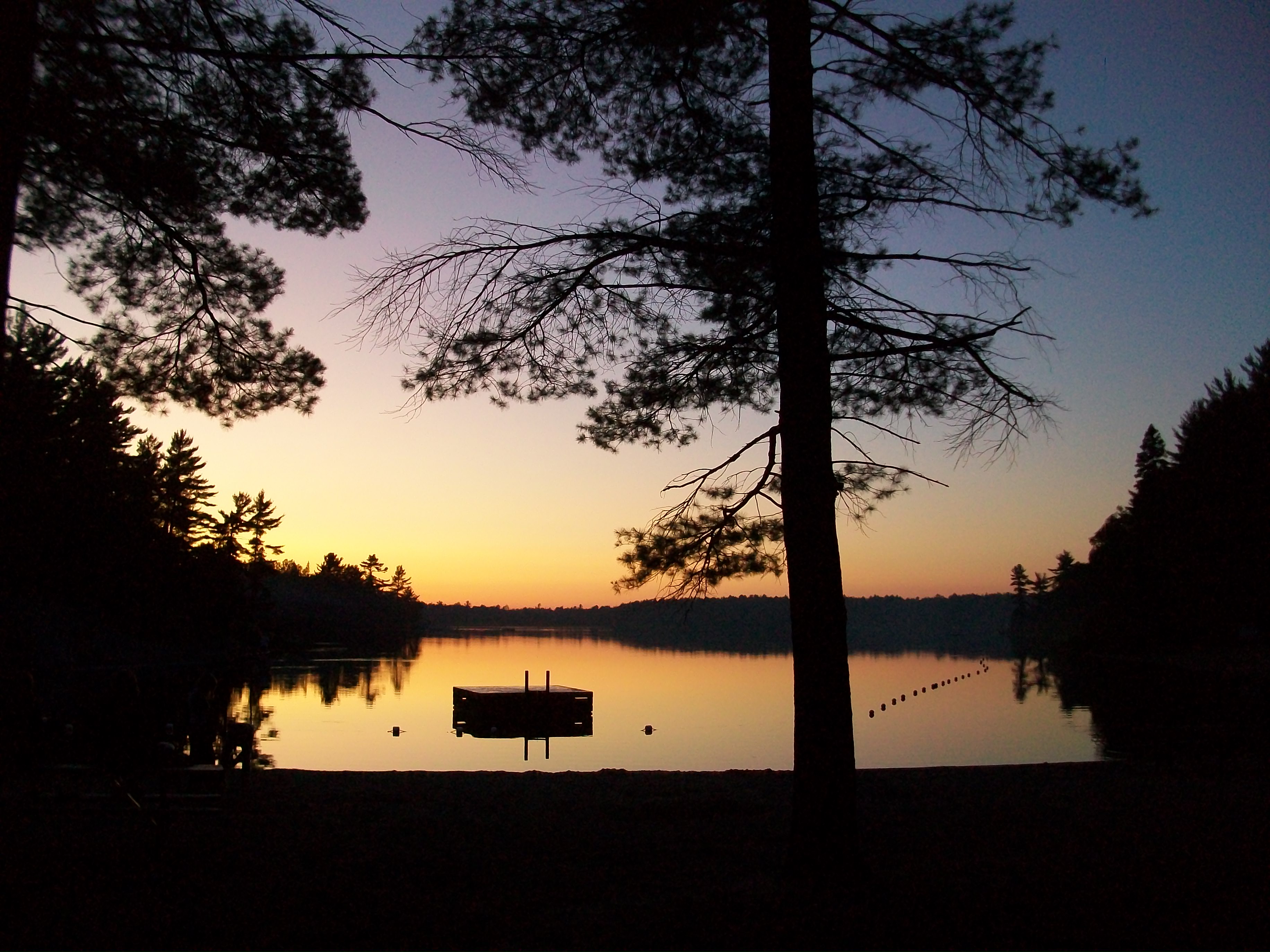
Ontario, CA
You might spot Painted Turtle, Common Watersnake, and Pickerelweed.
View guide →

Connecticut, US
You might spot Osprey, Diamondback Terrapin, and Monarch.
View guide →

Maine, US
You might spot Ghost Pipe, Pink Lady's Slipper, and Bluebead Lily.
View guide →

Wisconsin, US
You might spot American Cancer-Root and Eastern White Pine.
View guide →
Take the discovery with you
Snap it with Snappit to identify it, learn what makes it special, and add the discovery to your collection.









.jpg&width=800)



_001.jpg&width=800)



