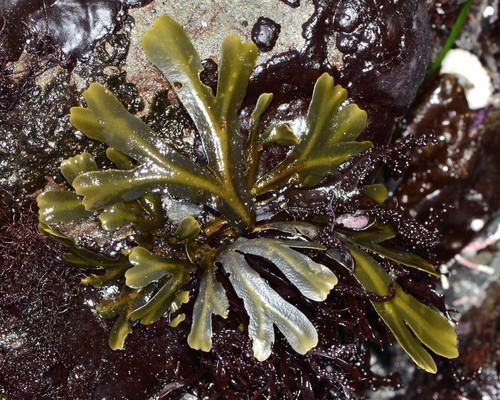


Rockweed
fucus distichus
Fucus distichus, commonly known as rockweed, is an unsung hero of the rocky intertidal zones across the Northern Hemisphere. This resilient brown alga forms dense, golden-brown mats that carpet the coastline, providing crucial shelter and sustenance for a myriad of marine creatures. Unlike many other seaweeds that perish when exposed to the air, Fucus distichus has evolved to thrive in harsh, dynamic environments, enduring extreme temperature swings, crashing waves, and prolonged periods of drying during low tide. Its presence transforms barren rock pools into bustling micro-habitats, sheltering tiny crustaceans, snails, and small fish from the beating sun and hungry predators. As a primary producer, it plays a foundational role in coastal ecosystems, capturing sunlight and nutrients to fuel the marine food web. Discovering a patch of rockweed during a coastal stroll is like peering into a rugged, miniature underwater forest.
Habitat: Found along rocky coastlines, typically attached to stones and boulders in the shallow intertidal zone.
Rockweed (Fucus distichus) is characterized by its flattened, leathery, olive-green to yellowish-brown fronds that branch in a distinctively Y-shaped, dichotomous pattern. A prominent midrib runs down the center of each blade, giving it structural support against crashing waves. Unlike some closely related species, Fucus distichus typically lacks paired air bladders, though it frequently develops swollen, textured, and slightly translucent reproductive tips called receptacles at the ends of its fronds during breeding season. The plant usually grows to a modest length of 10 to 30 centimeters, anchoring firmly to rocks and crevices via a strong, disc-like holdfast.
Category
AnimalRarity
Common
Danger
1/5 · Very low
Snaps
2
During reproduction, its swollen tips release so many microscopic gametes that they can temporarily turn the water in tide pools a milky, yellowish-orange color.
Fucus distichus has a unique antifreeze mechanism, allowing it to survive being frozen entirely solid in Arctic tide pools during the dark winter months.
It produces a slick, jelly-like substance called alginate that keeps it moist when the tide goes out, which is also extracted by humans for use as a thickening agent in cosmetics and food.
Unlike its close relative the bladderwrack, Fucus distichus lacks the characteristic air-filled bubbles on its fronds, adapting instead to lay flat against the rocks to avoid wave damage.
Produces a thick, mucilaginous coating that seals in moisture and prevents the alga from drying out when exposed to the sun and air during low tide.
Alters its cellular chemistry during the winter to prevent the formation of damaging ice crystals, allowing it to survive being frozen solid in Arctic rock pools.
Develops specialized swollen tips containing both male and female reproductive structures, significantly increasing the chances of successful fertilization in turbulent, fast-moving tide pools.
As a marine alga, it produces its own energy through photosynthesis, utilizing light and marine nutrients rather than consuming other organisms.
Littorina saxatilis
Rough periwinkles graze heavily on the fronds and microscopic epiphytes that grow on the surface of this rockweed.

Carcinus maenas
Provides critical shelter and a damp microclimate for juvenile crabs hiding from predators and low-tide desiccation.
No trait badges are assigned for this object yet.
No aliases listed yet.
Collections for this object will appear here as more themes are added.
Danger
1/5 · Very low
No special safety notes yet.
The easiest way to identify Rockweed is to use the Snappit nature identifier app.
10-30 cm
0.01-0.1 kg
2-3 years
As a marine alga, it produces its own energy through photosynthesis, utilizing light and marine nutrients rather than consuming other organisms.
Found along rocky coastlines, typically attached to stones and boulders in the shallow intertidal zone.
Photosynthesis
Zoom in to split clusters and explore where this object has been snapped.

California, US
You might spot Monarch, Canada Goose, and Western Gull.
View guide →

Washington, US
You might spot Bigleaf Maple, Mule Deer, and Oregon Grape.
View guide →

British Columbia, CA
You might spot Broad-Leaved Stonecrop, Harbor Seal, and Ochre Sea Star.
View guide →
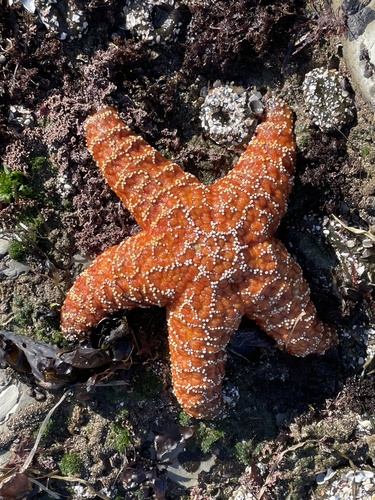
Washington, US
You might spot Ochre Sea Star, Purple Shore Crab, and Strawberry Tree.
View guide →

British Columbia, CA
You might spot Ochre Sea Star and Yellow Shore Crab.
View guide →
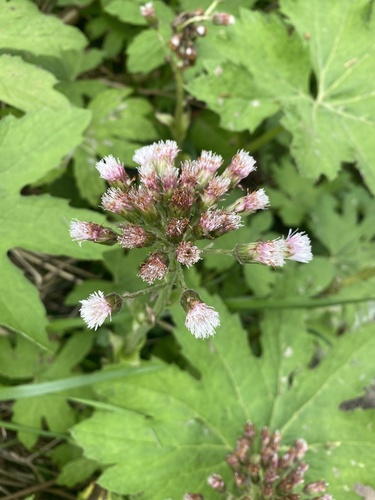
Washington, US
You might spot Arctic Butterbur, Red Valerian, and American Brooklime.
View guide →
Take the discovery with you
Snap it with Snappit to identify it, learn what makes it special, and add the discovery to your collection.